
For an Australian patient committing to cross-border medical travel, executing a hair transplant in Turkey is not a single surgical event; it is a comprehensive, fourteen-month clinical operation. The journey encompasses far more than the operative day or the brief Istanbul itinerary. It spans the entire arc from initial vendor evaluation to the definitive twelve-month post-operative medical audit.
This timeline serves as an operational blueprint for the hair transplant recovery and logistical journey. It provides granular, week-by-week directives for the critical planning phases and a structured, month-by-month medical forecast for the extended recovery, ensuring international patients navigate the process with absolute clinical predictability.

Weeks One to Four: Clinical Research and Vendor Evaluation
The research phase initiates the moment a patient transitions from casual interest to active procurement. This is the most consequential due diligence of the entire medical travel logistics process.
Week one focuses on biological orientation. The objective is to understand androgenetic alopecia, the mechanics of FUE hair transplant extraction, and realistic graft yield capacities based on your specific donor density. This foundational medical literacy protects patients from falling victim to aggressive, unrealistic clinic marketing.
Week two shifts to vendor identification. Utilizing longitudinal patient archives, isolate a pool of five to eight Turkish facilities demonstrating consistent, verifiable results. Look specifically for documented Australian patient cohorts with strict, multi-stage photographic evidence. Prioritize clinics corroborated by independent medical forums over those relying solely on proprietary promotional media.
Week three is the initial clinical triage. Submit a structured diagnostic inquiry to your shortlisted clinics. Include high-resolution scalp photography (anterior, lateral, vertex, and donor zones) alongside a comprehensive medical history and pharmacological profile. Critically evaluate the response: Does the medical team provide a bespoke surgical strategy and precise graft count rationale, or do they deploy automated sales templates?
Week four is the final audit. Narrow the selection to two elite facilities and demand absolute operational transparency: Who is the lead surgeon? Will they maintain continuous presence during the incisions? What are their verifiable medical credentials? Does the hair transplant package explicitly cover all clinical costs, and how robust is the remote diagnostic framework for returning patients?
‘Red Flags of a Bad Hair Transplant Clinic: The Definitive Checklist‘ – the specific criteria that distinguish a reputable Turkish clinic from one that should be avoided are applied systematically in weeks three and four of the research phase; this checklist provides the complete evaluation framework.

Weeks Five to Eight: Operational Booking and Medical Clearance
Week five is the definitive decision point. With your comparative analysis complete, confirm the surgical booking with your chosen Istanbul clinic. Secure the procedure date and immediately initiate formal leave protocols with your employer.
Week six governs international logistics. Secure direct aviation routes from Sydney to Istanbul aligning with your surgical window. Procure specialized medical travel insurance explicitly underwriting elective, overseas surgical complications. Finalize local ground logistics; premium providers like EsteFavor handle all secure VIP transfers and four-star clinical accommodation automatically as part of their standard operational package.
Week seven focuses on local medical coordination. Consult your Australian General Practitioner to outline the impending hair restoration surgery. Establish a strict cessation timeline for contraindicated medications, execute any mandatory pre-operative hematology panels (blood tests), and review your dermatological history.
Week eight solidifies the itinerary. Reconfirm the exact clinical consultation and operative times. Transmit your finalized flight manifest to the clinic’s logistical coordinators for airport extraction. Forward all completed medical diagnostics. Initiate critical physiological optimization: strict alcohol reduction leading into the final pre-operative week, and immediate cessation of nicotine to protect graft vascularization.
Weeks Nine to Twelve: Pre-Flight Logistics and Baseline Optimization
Week nine is the critical pharmacological cut-off. All requested medication cessations must be fully executed. Anticoagulant supplements—including high-dose Vitamin E, Omega-3s, and specific herbal vasodilators—must be purged from your system to prevent intra-operative hemorrhaging. Total alcohol cessation is mandatory during this final physiological runway.
Week ten shifts to practical deployment. Pack strategically for the post-operative care protocol: procure button-down garments that bypass the cranial zone, secure travel pillows to enforce a supine sleeping posture on the return flight, and ensure high-grade UV protection for the Turkish climate. Consolidate all critical documentation offline, including your clinical contact matrix, medical insurance dossiers, and surgical itineraries.
Week eleven serves as the final operational sweep. Re-verify all flight and transfer logistics with the Istanbul team. Ensure your Australian medical team is briefed on your departure. Finalize workplace handovers to guarantee a stress-free initial recovery window.
Week twelve is deployment. The direct transit from Australia to Turkey spans approximately seventeen hours. Upon touchdown, day one in Istanbul is strictly mandated as a physiological recovery and hydration day, with zero clinical or tourism deviations.

The Istanbul Surgical Window: A Clinical Itinerary
Day one: Ground extraction and stabilization. You are received via secure VIP transfer and delivered to your accommodation. The protocol demands strict rest, hydration, and circadian adjustment. Alcohol and exhaustive sightseeing are strictly prohibited.
Day two: The pre-operative diagnostic summit. At EsteFavor, this involves advanced microscopic scalp analysis, definitive hairline design architecture, calculation of the exact extraction parameters, and finalized surgical charting. You are discharged to your hotel with absolute pre-operative fasting and sanitation directives.
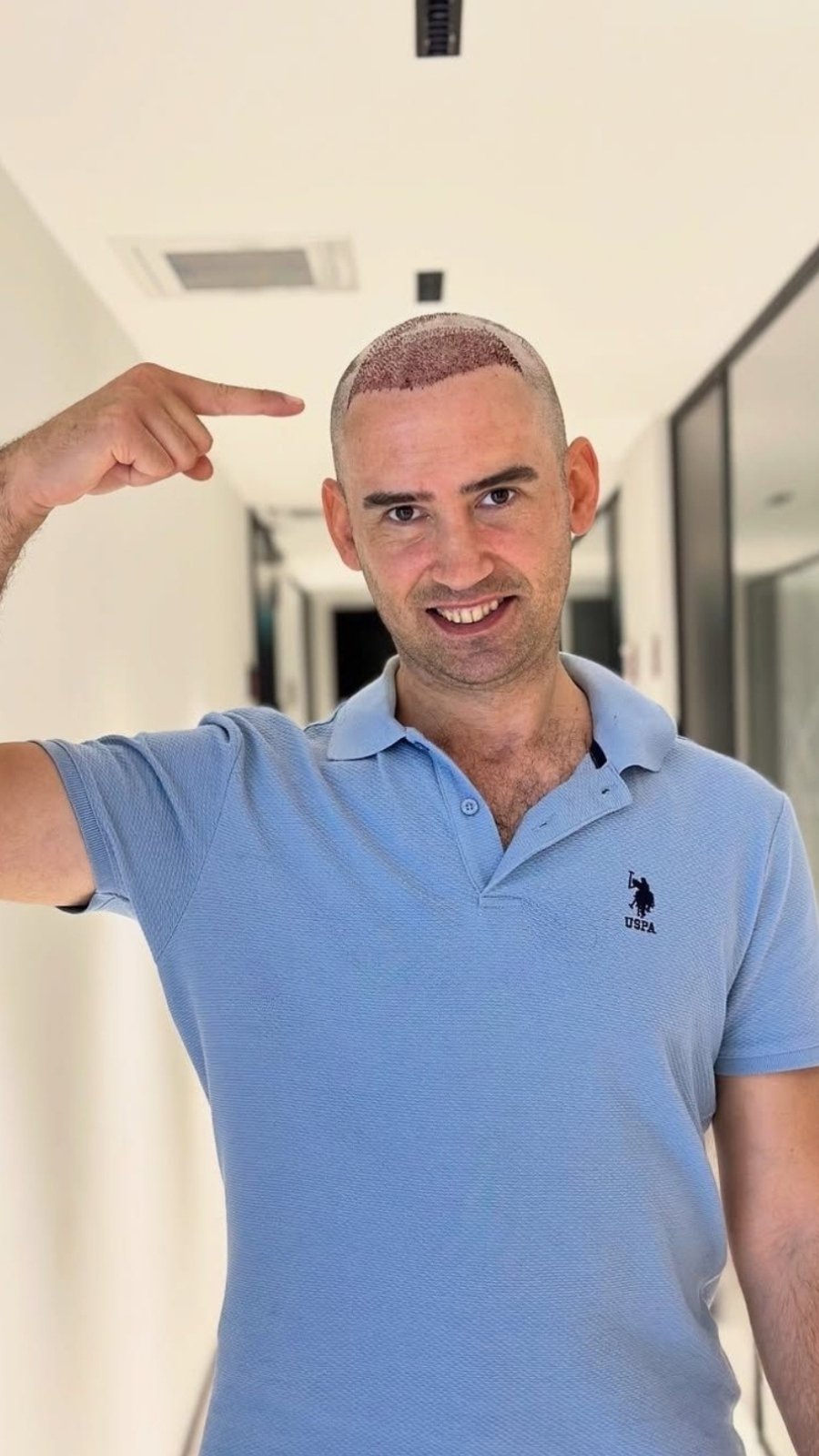
Day three: The operative procedure. Arrival at the clinical theater. Administration of local anesthesia. The surgical team executes donor extraction, graft preservation, recipient site micro-incisions, and implantation. Depending on the complexity and hair graft volume, this highly intricate operation spans four to eight hours.
Day four: Acute post-operative phase (Day 1). Forehead edema (swelling) is common and peaks at this stage. The clinic initiates the first highly controlled hair wash protocol. You remain under strict physical limitations and clinical observation.
Day five: Acute post-operative phase (Day 2). Edema begins to subside. You master the independent execution of the post-operative care protocol. Systemic comfort improves significantly as the localized trauma stabilizes.
Day six or seven: Medical discharge and repatriation. Final clinical review and exit briefing. A secure VIP transfer returns you to the airport for the direct transit back to Australia, equipped with your complete medical dossier.

Month One: The Telogen Shift (Shedding Phase)
The initial four weeks back home are defined by the mandatory shedding phase (shock loss), typically initiating between week two and week five. The newly transplanted hair shafts, which appeared secure, systematically detach. The recipient scalp rapidly reverts to its sparse, pre-surgical aesthetic.
This visual regression is not a surgical failure; it is a documented physiological defense mechanism. The trauma of extraction forces the implanted follicle into telogen—a dormant survival state. The visible shaft is jettisoned, but the critical biological root remains deeply anchored and vascularized within the dermal tissue. Every single patient enduring a technically sound hair transplant will experience this temporary loss.
Executing this phase from Australia demands unwavering adherence to the EsteFavor care protocols and a strict reliance on the remote clinical diagnostic team. Do not rely on self-assessment; utilize the formal month-one photographic audit to secure professional medical validation that your shedding metrics remain within standard operational parameters.

Months Two to Four: Cellular Dormancy
The chronological window between week six and month four constitutes the dormant phase. The hair follicles are resting deep beneath the epidermis. The shed shafts are gone, and new anagen growth has yet to breach the surface. Visually, the scalp appears entirely inactive.
Psychologically, this is the most grueling sector of the hair transplant recovery timeline. The required operational response is absolute patience and protocol adherence. Maintain optimal scalp hygiene, avoid traumatic physical impact or severe UV exposure, and completely dismiss the urge to interpret this quiet phase as a failed yield. The biological engine is active; it is simply operating below the visible surface.
Rigid compliance with the EsteFavor remote diagnostic schedule during this void provides critical external reassurance. Submitting high-resolution imagery allows the medical team to verify the absence of dermatological complications and confirm the timeline is structurally sound.
Months Four to Six: Vascular Integration and Early Yield
Transitioning into the third and fourth months, the resting follicles aggressively re-enter the active growth cycle. This early hair growth emerges as fine, unpigmented vellus hair, typically displaying an irregular, patchy distribution across the recipient grid. This is a preliminary aesthetic and does not reflect terminal density.
Growth velocity is highly variable, dictated by individual cellular metabolism and graft placement. While some patients observe measurable density by month four, others may not detect significant structural yield until month six. Both trajectories represent standard clinical deviations. Attempting to audit the final outcome during this preliminary growth phase is a severe diagnostic error.
By this stage, the rigid post-operative restrictions are obsolete. Patients return to standard haircare regimens, active cardiovascular training, and normal environmental exposure, provided baseline UV protection is maintained.
Months Six to Twelve: Terminal Maturation and Final Audit
The final six months encompass progressive terminal maturation. Graft density multiplies as lagging follicles exit dormancy. The individual hair shafts thicken, normalize in pigmentation, and integrate seamlessly with the native temporal and parietal zones. The strategic geometry of the hairline design fully materializes.
The twelve-month juncture serves as the definitive clinical endpoint. The transplanted grafts have executed a complete biological lifecycle, establishing permanent, mature coverage. This milestone mandates a comprehensive photographic audit submitted to the EsteFavor medical board, facilitating a final comparative analysis against the day-zero surgical blueprints.
For Australian patients who executed rigorous initial due diligence, selected an elite surgical vendor, and maintained unbreakable discipline regarding the post-operative protocols, this final assessment validates the monumental logistical effort. The achieved density and architectural naturalness represent a permanent physiological upgrade.
Conclusion
The comprehensive trajectory of a Turkey hair transplant for an Australian patient is a rigorous fourteen-month medical operation. The most critical risk-mitigation occurs at the very beginning through aggressive clinic vetting, while the highest demand for psychological endurance occurs in the middle during the shedding and dormant phases. The permanent surgical yield at the end of this timeline is the direct result of discipline and protocol adherence.
Securing a total understanding of this timeline prior to booking eliminates operational surprises. When you map the biological and logistical checkpoints in advance, you strip the anxiety from the recovery process, allowing you to execute each phase with the cold, informed precision required for a world-class medical outcome.
