
Wearing a hat is one of the first things many hair transplant patients want to do after surgery, and for very understandable reasons. A hat offers privacy, hiding the redness, crusting, and obvious signs of a recent procedure from colleagues, friends, and strangers, and it protects the scalp from the sun. Yet a hat also sits directly on the area that has just been transplanted, which raises an obvious concern: could wearing a hat dislodge or damage the delicate new grafts? The answer is that timing and the type of hat matter enormously. Worn too soon or of the wrong kind, a hat can genuinely disturb the grafts, while worn at the right time and in the right way, a hat is a useful and safe part of recovery.
This guide explains when it is safe to wear a hat after a hair transplant, why the early days are the sensitive period, which types of hats are safest, and how to wear one without risking your grafts. The general principle is that in the first days the grafts are too vulnerable for anything to rest on them, so hats are avoided or used only exactly as your clinic directs, while after the initial healing period a loose hat can be worn with care, and once healing is complete hats can be worn normally. Understanding this timeline lets you get the privacy and protection a hat offers without endangering your result.

Why the Early Days Are the Sensitive Period
To understand the hat guidance, it helps to understand why the early period is so sensitive, because the reasons explain exactly what the risk is. In the first days after a hair transplant, the grafts sit in their channels in the recipient area but are not yet firmly anchored in place. During this early window, they can be dislodged relatively easily by pressure, rubbing, or friction, and a dislodged graft is a lost graft that will not grow.
A hat is a concern precisely because it rests directly on the transplanted area and can rub against it. If a hat presses down on the grafts, or rubs against them as you put it on, take it off, or move around, it can disturb or dislodge the grafts during this vulnerable phase. The friction of the hat’s material against the grafts is a particular risk, as is the pressure of a tight or fitted hat. This is why hats are generally avoided in the very first days, or worn only under specific guidance from your clinic, since nothing should rest on or rub against the freshly placed grafts while they are at their most vulnerable. Understanding that the early risk is about pressure and friction on unanchored grafts makes the timeline and the choice of hat type make sense.
The General Timeline for Wearing a Hat
The safe timeline for wearing a hat follows the healing of the grafts, progressing from avoidance in the first days to careful use after the initial healing and normal use once healing is complete, always subject to your own clinic’s specific advice. Here is the general pattern.
In the first several days, hats are generally best avoided, because the grafts are at their most vulnerable and anything resting on or rubbing them risks dislodging them. Some clinics may provide or permit a specific loose covering under particular guidance, but in general the first days are the time to keep anything off the grafts. This is another reason to plan privacy around this period in other ways, such as staying home or working from home, rather than relying on a hat immediately.
After the initial healing period, often around the point where the grafts have become more secure and the early healing has progressed, a loose hat can typically be worn with care, following your clinic’s guidance on timing. At this stage the grafts are more anchored and better able to tolerate a loose covering worn carefully, though caution is still warranted. Once healing is complete, generally after the crusts have cleared and the scalp has healed, hats can be worn normally without special concern, as the grafts by then are secure. Your clinic will give you the specific timeline for your case, which is why staying in contact through recovery is valuable, but the general progression is: avoid at first, then loose and careful, then normal once healed. Este Favor guides patients on when and how they can safely wear a hat based on their individual healing, tracked through the Post-Op Digital Monitoring System, so the advice fits the patient rather than a generic rule.

Which Types of Hats Are Safest
When the time comes that you can wear a hat, the type of hat matters, because some are far gentler on the grafts than others. Choosing the right kind of hat reduces the risk and makes wearing one safely much easier.
The safest hats are loose fitting, because a loose hat does not press down tightly on the grafts. A hat that fits loosely, resting gently without squeezing the scalp, is much safer than a tight, fitted one that presses on the transplanted area. Soft materials are also preferable, since a soft hat is gentler against the grafts than a stiff or rough one. Hats that go on and off easily without dragging across the scalp are better than tight styles that have to be pulled or forced on, because the act of putting a hat on and taking it off is itself a moment of friction risk. A loose fitting bucket hat or a loose soft hat that can be lowered onto the head gently, rather than pulled tightly over it, is the kind of option often preferred once hats are permitted, since it minimizes both pressure and friction.
Conversely, tight fitted caps, hats made of stiff or rough materials, and any hat that has to be forced on or that grips the scalp tightly are the ones to avoid in the earlier stages, because they carry more risk of pressing on or rubbing the grafts. As healing completes and the grafts become fully secure, the type of hat matters less, but in the careful middle period, choosing a loose, soft, easy on hat is the safe approach. Selecting the right hat, when the timing allows, is a simple way to enjoy the privacy and protection of a hat without endangering the result.
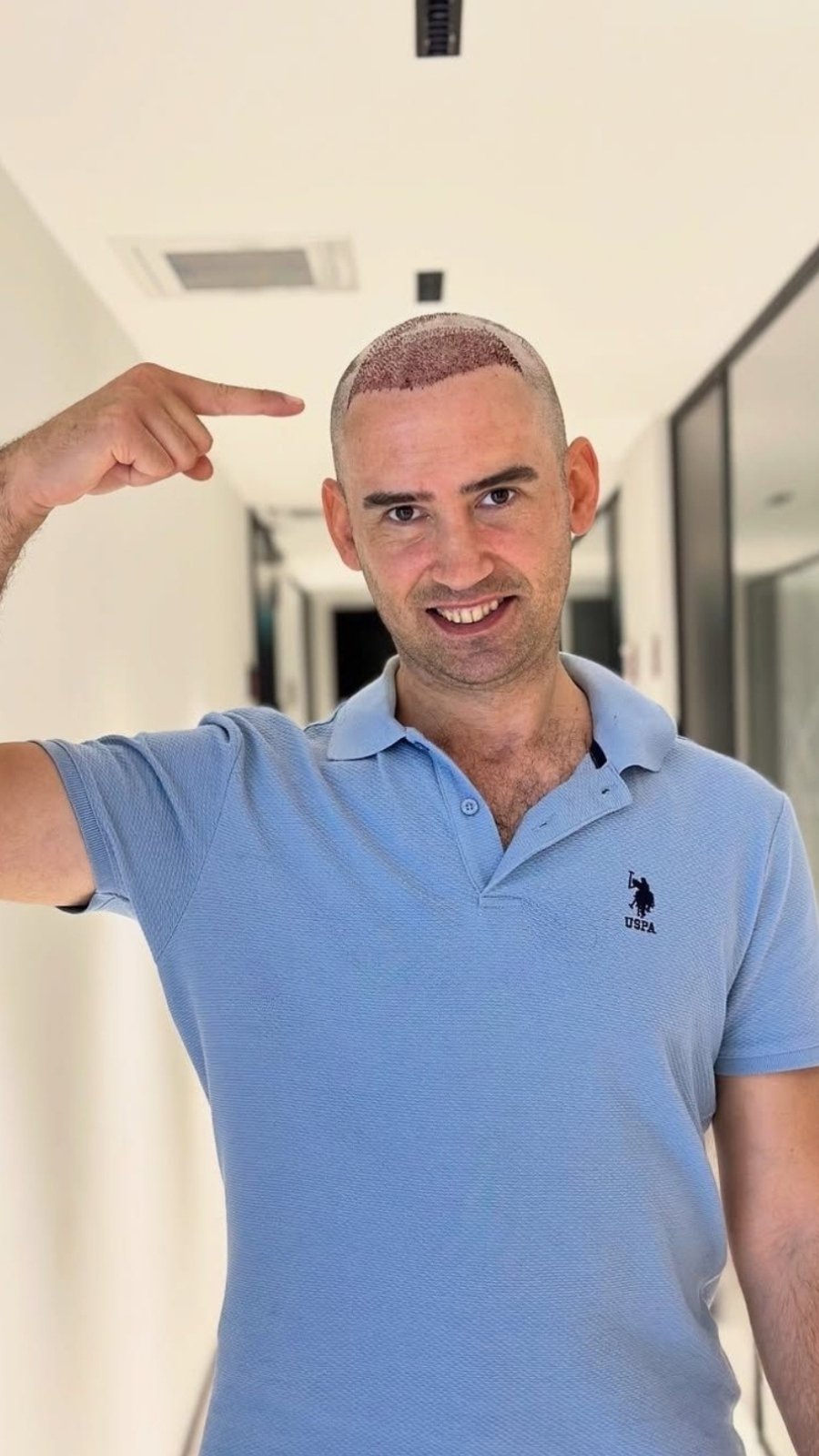
How to Wear a Hat Without Risking Your Grafts
Beyond timing and hat type, how you actually put on, wear, and remove a hat affects the risk, and a few careful habits protect the grafts during the period when you can wear a hat but still need caution. When putting a hat on, lower it gently onto your head rather than pulling or dragging it across the transplanted area, so the material does not rub against the grafts. When taking it off, lift it off carefully rather than sliding it, again avoiding friction across the grafts. Avoid adjusting or repositioning a hat repeatedly on your head, since each movement is a moment of friction. Do not wear a hat so tightly that it presses on the grafts, and avoid wearing one for very long unbroken periods in the earlier stages, giving the scalp air and avoiding prolonged pressure. And keep any hat you wear clean, since hygiene matters for the healing scalp.
These careful habits, combined with the right timing and a loose, soft hat, allow you to wear a hat safely once the initial vulnerable period has passed. The guiding idea throughout is to minimize pressure and friction on the grafts, so gentleness in how you handle the hat matters as much as the hat itself during the careful middle period. Once healing is fully complete, these precautions relax, and you can wear hats as you normally would.
Balancing Privacy, Sun Protection, and Graft Safety
Much of the desire to wear a hat early comes down to privacy and sun protection, and it helps to think about how to meet those needs safely during the period when hats must be limited. For privacy in the first days, when hats are best avoided, other strategies work well, such as staying home, working from home, or planning the most visible healing phase during time off, so you do not need a hat to hide the signs before it is safe to wear one. This is one reason planning your time off thoughtfully around the visible healing period is useful.
For sun protection, the healing scalp does need to be protected from strong sun in the early weeks, but since a hat may not be advisable in the very first days, this is another reason to simply avoid strong sun exposure during that period, staying out of intense sunlight rather than relying on a hat too soon. Once a loose hat can be worn with care, it can serve both privacy and sun protection purposes, and once healing is complete, a hat provides easy sun protection going forward, which remains sensible for the scalp. The key is not to compromise graft safety for the sake of privacy or sun protection in the first vulnerable days, but instead to meet those needs through other means until a hat can be worn safely. Balancing these needs sensibly, guided by your clinic, lets you protect both your privacy and your grafts. Este Favor advises patients on protecting privacy and the scalp during the early period while keeping the grafts safe, so patients do not feel forced to choose between hiding the signs and protecting their result.

Why Following the Guidance Matters
It can be tempting to wear a hat sooner than advised, especially for patients anxious about privacy, but understanding the stakes makes the case for patience clear. Wearing a hat too soon, or wearing a tight or rough one that presses on and rubs the grafts, risks dislodging the very grafts you paid for, and lost grafts do not grow back. The whole purpose of the careful timeline is to protect graft survival through the vulnerable early period, and rushing it can undermine the result.
The reassuring point is that the restriction is temporary. You are asked to avoid or limit hats only during the short vulnerable window, after which you can wear a hat with care, and soon after that, normally. A little patience during the early days, meeting your privacy and sun protection needs through other means, protects a permanent result. Seen that way, the temporary limitation on hats is a small, worthwhile precaution. Following your clinic’s specific guidance on when and how to wear a hat, rather than rushing it, is part of protecting the investment of the whole procedure. Patients who respect the timeline get both a safe result and, before long, the freedom to wear hats as they wish.

How Este Favor Guides Patients on Wearing a Hat
Something as simple as wearing a hat illustrates why detailed aftercare guidance matters so much, because the right timing and approach protect the grafts while the wrong ones risk them. A clinic that gives clear, individual guidance on when and how to wear a hat, and that supports patients through the vulnerable early period, protects the result, while a clinic that leaves patients to guess risks avoidable graft loss.
Este Favor treats every detail of recovery, including something as everyday as wearing a hat, as part of protecting the result. Patients are guided on when and how they can safely wear a hat based on their individual healing, and on how to meet their privacy and sun protection needs safely in the meantime, with recovery tracked through the Post-Op Digital Monitoring System. This attention to aftercare sits alongside the surgical standards that give the grafts the best foundation, the Precision Extraction System during extraction, the Doctor-Only Channel Opening Protocol for the critical placement, the Natural Angle Design Technique for a natural result, and the Fibroblast Supported Healing System to support healing. Caring about every detail that affects graft survival is what defines Este Favor’s approach.
You will be able to wear hats freely again before long, and the first step to protecting your grafts in the meantime is a clinic that guides you on when and how to do so safely based on your actual healing.
