
Most people picture hair loss as a receding hairline or a bald crown, the classic pattern where clear bald zones sit against areas of healthy hair. But a large number of people experience something different and far trickier to treat: diffuse thinning, where the hair thins broadly and evenly across the scalp rather than disappearing in a defined pattern. If you have diffuse thinning and you are wondering whether a hair transplant can help, the honest answer is that it depends heavily on the type of diffuse thinning you have, and that this is one of the situations where a careful assessment matters more than anywhere else in hair restoration.
This guide explains what diffuse thinning is, why it complicates hair transplant planning, who is and is not a good candidate, and why an honest assessment is essential before any diffuse thinning patient commits to surgery. Getting this wrong is one of the most common ways a hair transplant fails, so it is worth understanding properly.
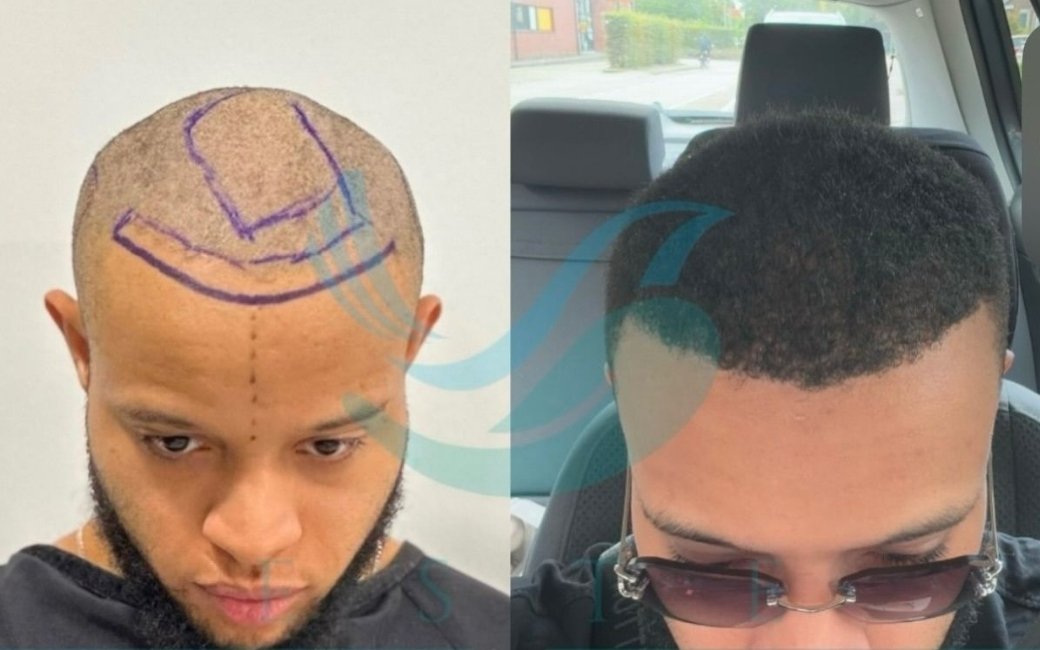
What Diffuse Thinning Actually Is
Diffuse thinning describes hair loss that spreads across the scalp rather than concentrating in specific zones. Instead of a sharp line between bald and non-bald areas, the whole area thins gradually, so the scalp becomes more visible through the hair generally. Density drops across a wide region, and the hair looks finer, wispier, and less full overall, often without any single spot going completely bald.
For the patient, diffuse thinning is frustrating in a particular way. Because there is no obvious bald patch, other people often tell them their hair looks fine, while the patient themselves can clearly see the scalp showing through under bright light, in photos, or when the hair is wet. It is a real and distressing form of hair loss even when it is not dramatic to an outside observer, and patients with diffuse thinning deserve to be taken seriously rather than dismissed.
Why Diffuse Thinning Complicates a Hair Transplant
To understand why diffuse thinning is difficult to hair transplant, you have to understand what makes a standard hair transplant work. A conventional transplant relies on a clear distinction between two areas: a balding recipient zone that needs hair, and a stable, dense donor zone at the back and sides that can safely supply it. The whole procedure depends on that donor area being reliable, dense, and permanent.
Diffuse thinning breaks this assumption in two ways. First, when thinning is spread across the top of the scalp, it can be hard to define exactly which areas need grafts, because there is no clear boundary between bald and non bald. Second, and much more importantly, some forms of diffuse thinning also affect the donor area itself. If the back and sides are thinning too, then the donor supply is not stable and dense as a transplant requires, and taking grafts from an already thinning donor area is a serious mistake that can leave the back of the head visibly damaged without producing a good result on top.
This is why diffuse thinning cannot be treated with a one size fits all approach. The critical question is not simply whether the top is thinning, but whether the donor area is stable enough to supply grafts safely. That question can only be answered by a proper assessment.

The Crucial Distinction: Stable Donor vs DUPA
Within diffuse thinning, there is one distinction that decides almost everything about whether a hair transplant is possible. It is the difference between diffuse thinning with a stable donor area and a condition often referred to as diffuse unpatterned alopecia, or DUPA.
In some patients, the thinning affects the top of the scalp diffusely, but the donor area at the back and sides remains dense, stable, and DHT resistant. These patients still have a reliable donor supply, and while their case needs careful planning, a hair transplant may well be possible for them. The transplant can add density to the thinning top using the stable donor hair, and the result can be genuinely worthwhile.
In other patients, the diffuse thinning affects the entire scalp, including the donor area. The back and sides, which should be the permanent safe zone, are themselves thinning. This is the pattern often called DUPA, and it is the single most important thing a diffuse thinning patient needs assessed, because it changes the answer completely. If the donor area is unstable, then there is no safe, permanent supply of grafts to move. Transplanting in this situation is likely to fail, because the transplanted hair may itself thin over time, and harvesting from an already compromised donor area causes damage without delivering a lasting result. For these patients, a hair transplant is usually not appropriate, and an honest surgeon will say so clearly rather than take the money and hope.
Telling these two situations apart is not something a patient can reliably do by looking in the mirror, and it is not something a clinic can do responsibly from a single phone photo. It requires proper scalp analysis. Este Favor assesses the stability and density of the donor area directly with AI Hair Mapping before making any recommendation, precisely because this distinction determines whether surgery should happen at all.

Who Is a Good Candidate
Drawing this together, the strongest candidates among diffuse thinning patients share a clear set of characteristics. They have diffuse thinning on top but a genuinely stable, dense donor area that can safely supply grafts. They have realistic expectations about what added density will and will not achieve, understanding that a transplant supplements thinning hair rather than restoring the density of youth. And their case has been assessed properly, with the donor area confirmed as stable before any surgery is planned.
Diffuse thinning patients with an unstable donor area, particularly those with the DUPA pattern, are generally not good candidates, and the responsible course is to tell them so. It is far better to hear an honest no before surgery than to discover after paying that the transplant was never likely to work. A clinic willing to turn away a diffuse thinning patient whose donor area cannot support surgery is demonstrating exactly the honesty you want in a surgeon.
The Risk of Transplanting Into Thinning Native Hair
Even for suitable candidates, diffuse thinning brings one specific technical challenge that deserves attention: the presence of existing native hair in the area being treated. Unlike a bald zone, a diffusely thinning area still contains living native follicles, and this creates a risk during surgery.
When grafts are implanted among existing native hairs, there is a possibility of shock loss, where the trauma of the procedure temporarily causes some of the surrounding native hairs to shed. In most cases this native hair recovers and regrows, but the risk means the surgeon must place grafts with particular care to avoid damaging the follicles that are already there. A careless or aggressive approach can cost the patient some of the native hair they were trying to supplement. This is another reason diffuse thinning cases demand a skilled, careful surgical hand rather than a high speed, high volume approach. Este Favor performs the critical channel opening under its Doctor-Only Channel Opening Protocol, which matters especially when placing grafts among existing native hair, where precision protects the hair the patient still has.

Managing Expectations for Diffuse Thinning Patients
Suppose you are a good candidate: diffuse thinning on top, stable donor area, realistic outlook. What result should you actually expect? Honesty here is essential, because diffuse thinning results are different from the dramatic before and after transformations seen in patients with clear bald zones.
For a diffuse thinning patient, a hair transplant adds density to a thinning area rather than creating hair where there was none. The result is a fuller, thicker looking head of hair, with less scalp showing through, rather than the striking bald to full transformation seen in patterned loss. This is a genuinely valuable improvement for the right patient, but it is a different kind of result, and patients who expect a dramatic transformation may be disappointed even by a technically excellent outcome. The patient who understands that the goal is added density and reduced scalp visibility, planned carefully around their stable donor supply, is the patient who ends up satisfied.
There is also the ongoing question of future thinning. Because diffuse thinning patients by definition have thinning native hair, that native hair may continue to thin over time. Good planning accounts for this, and some patients may benefit from further work in future. An honest surgeon discusses this openly rather than presenting a single procedure as a permanent end to all thinning.
Why an Honest Assessment Matters More Here Than Anywhere
If there is one message that matters most for diffuse thinning and hair transplants, it is that the assessment is everything. In patterned hair loss, the donor area is usually clearly stable and the main questions are design and graft numbers. In diffuse thinning, the fundamental question of whether surgery should happen at all hinges on a careful assessment of donor stability, and that assessment cannot be shortcut.
A clinic that offers a diffuse thinning patient surgery without properly checking whether the donor area is stable is being dangerously irresponsible, because it may be harvesting from a donor zone that is itself failing. A clinic that assesses carefully, and is willing to say no when the donor area cannot support surgery, is the one to trust. This is exactly the kind of situation where the difference between a volume clinic and a responsible one becomes a difference in outcomes, because the volume model is tempted to operate regardless while the responsible model assesses first. Este Favor assesses diffuse thinning cases individually with AI Hair Mapping and recommends surgery only when the donor area can genuinely support it.
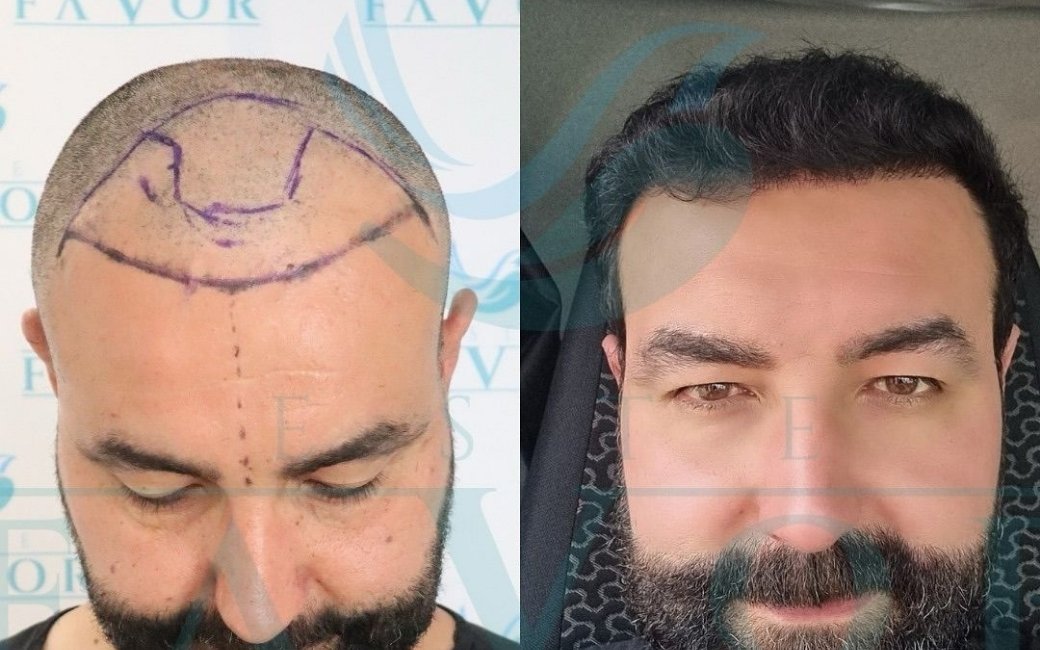
How Este Favor Assesses Diffuse Thinning
Diffuse thinning is a test of a clinic’s honesty and diagnostic care. The condition is easy to misjudge, tempting to operate on regardless, and unforgiving of a clinic that harvests from an unstable donor area. Only a clinic willing to assess carefully, distinguish stable donor cases from unstable ones, and turn away patients who cannot be helped safely can be trusted with a diffuse thinning case.
Este Favor approaches diffuse thinning with exactly that care. Donor stability and density are assessed directly with AI Hair Mapping before any recommendation, so surgery is offered only when it can genuinely help. The critical channel opening is reserved for the surgeon under the Doctor-Only Channel Opening Protocol, which protects existing native hair during placement, grafts are protected during extraction with the Precision Extraction System, placement is designed with the Natural Angle Design Technique, and recovery is supported by the Fibroblast Supported Healing System and tracked through the Post-Op Digital Monitoring System. Assessing honestly rather than operating regardless is what defines Este Favor’s approach.
If you have diffuse thinning and are wondering whether a hair transplant can help, the first and most important step is an honest assessment of whether your donor area is stable enough to support surgery at all.
