
The question most American patients never want to need the answer to is this one: something has gone wrong after my Turkey hair transplant, I am back in the United States, and I need to know what my options are.
For most patients, the answer is never needed because nothing goes wrong. But the subset of American patients who return home with a genuine complication: or with a result that falls significantly short of what they were promised: deserves an honest, practical account of what the options actually are, rather than a vague reassurance that “everything will be fine” or a catastrophic warning that “you have no recourse.”
This article covers the realistic range of post-procedure situations that American patients encounter, what can be done about each one, which US practitioners are accessible and helpful, and what the genuine limits of the available options are.
The Range of Post-Procedure Situations
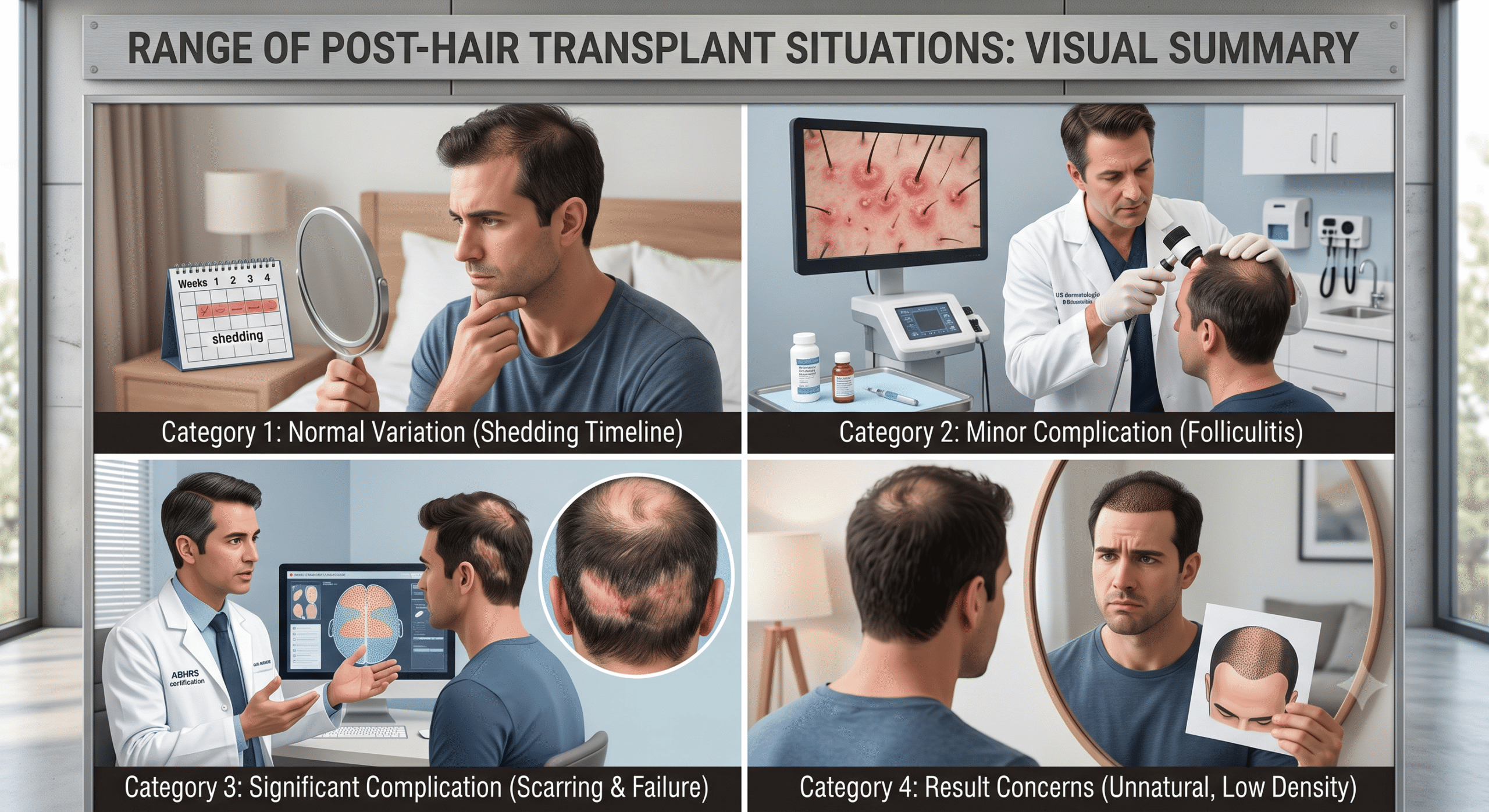
It is useful to distinguish between different categories of concern, because the appropriate response and available options differ significantly between them.
Category one: Normal post-operative variation misread as a problem. The shedding phase, temporary scalp texture changes, the appearance of small bumps or pimples during regrowth, and the slow pace of the growth timeline all produce concern in patients who were not adequately prepared for them. These are not complications. They are normal features of recovery that resolve on their own with appropriate care.
Category two: Minor complications that require local management. Mild infection in the scalp, folliculitis, persistent inflammation, or healing that is slower than expected can occur after any hair transplant. These situations typically require treatment from a US practitioner: a dermatologist or a primary care physician: but they are manageable with standard medical care and do not require specialist hair restoration expertise.
Category three: Significant complications requiring specialist assessment. Severe infection, significant scarring, widespread graft failure visible at the twelve-month point, or donor area damage that is visibly affecting the back and sides of the scalp are more serious situations that benefit from assessment by a US-based hair restoration specialist.
Category four: Result concerns at twelve months. The procedure worked technically: the grafts survived: but the result does not match the pre-procedure expectations. The hairline design looks unnatural, the density is lower than promised, or the distribution pattern does not look the way the consultation represented it would.
Each of these situations has different available options.
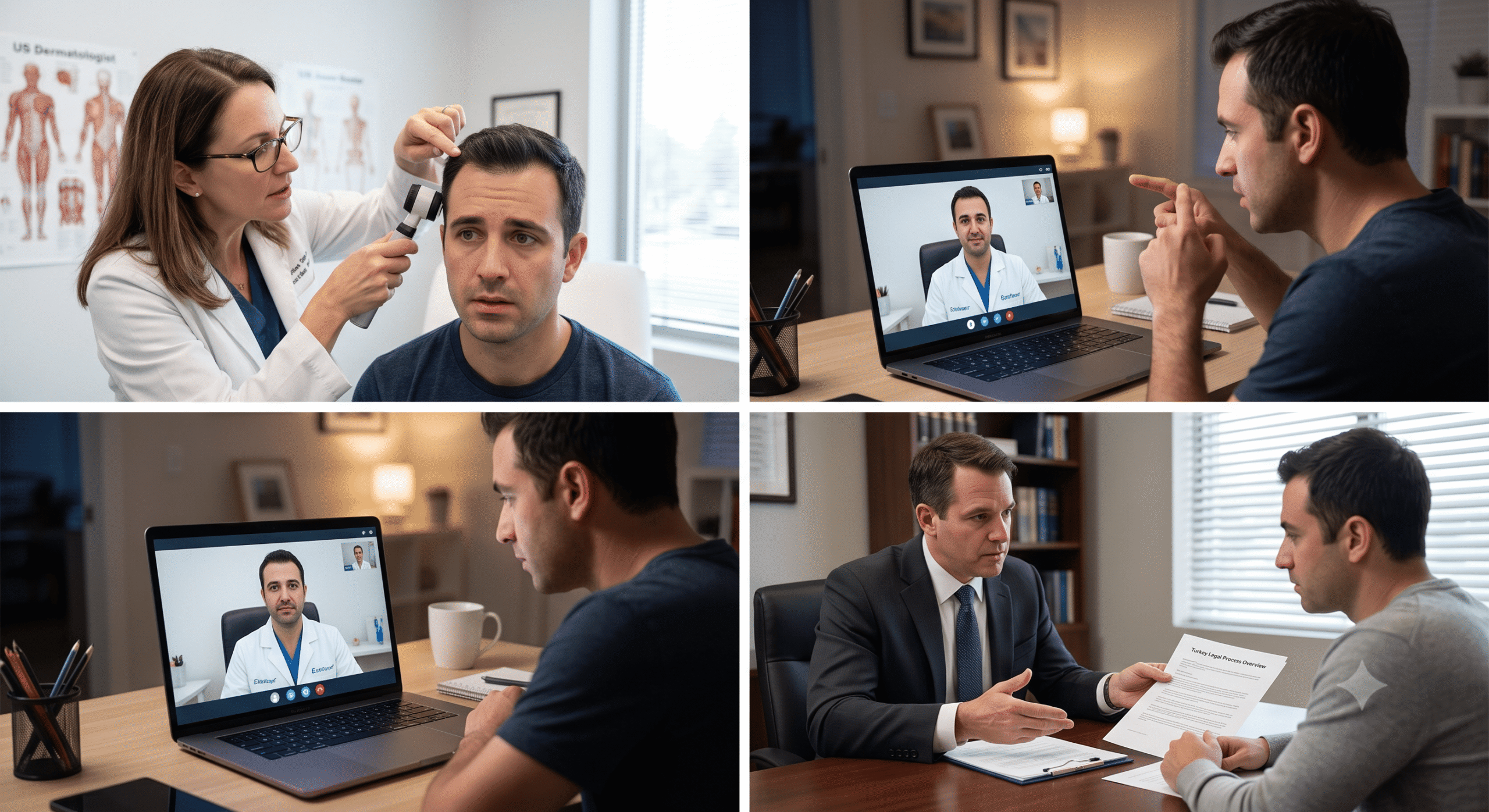
What to Do in Category One and Two Situations
For normal post-operative variation and minor complications, the sequence of appropriate action is:
First: Contact the Istanbul clinical team. A reputable Istanbul clinic’s remote follow-up programme is the appropriate first contact for any concern during the twelve-month recovery period. The team who performed the procedure knows its specifics in a way that no US practitioner does. They can assess the situation from photographs, confirm whether it falls within normal range, and provide specific guidance. This contact should happen before a US practitioner visit, not instead of it.
At EsteFavor, the remote follow-up programme provides American patients with clinical team access throughout the twelve months following the procedure. Response times are within the business day range and responses come from clinical staff rather than administrative coordinators.
Second: See a US primary care physician or dermatologist if treatment is needed locally. For a minor infection, folliculitis, or inflammation that requires antibiotic treatment or topical medication, a US dermatologist or primary care physician can assess and treat the condition. They do not need specialist hair restoration expertise to treat a scalp infection. Standard dermatological care is appropriate and available through the normal US healthcare system.
Medicare and most private insurance plans cover GP and dermatology consultations in the US. The fact that the underlying condition relates to a procedure done overseas does not affect coverage for the domestic medical visit.
What to tell the US physician: A brief description of the procedure performed: FUE hair transplant, graft count, procedure date, clinic name and location: is sufficient context for a US physician to assess a straightforward medical concern. Most US physicians who are not specialist hair restoration surgeons are not familiar with the specifics of the procedure but can address the local medical issue without needing that context.
‘Is a Hair Transplant in Turkey Safe for Americans? What ISHRS and ABHRS Data Actually Shows‘ – the safety risk profile for American patients at reputable Istanbul clinics, including the distinction between the minor complications that are manageable from the US and the more serious outcomes associated with unlicensed facilities.
Finding a US Practitioner Willing to Help
One documented challenge for American patients returning home with concerns from a Turkey procedure is that some US hair restoration specialists are reluctant to take on cases from overseas procedures. This reluctance is partly professional (uncertainty about what was done and how), partly commercial (the domestic referral ecosystem creates disincentives for assisting overseas patients), and partly liability-related (concern about inheriting responsibility for work performed by others).
This reluctance is real but not universal. Several categories of US practitioner are generally accessible:
Primary care physicians and dermatologists: For minor complications and infection management, these practitioners do not need to be hair restoration specialists and their reluctance to assist with Turkey cases is generally lower. They address the local medical issue: the infection, the inflammation: without needing to evaluate the hair transplant itself.
Board-certified dermatologists with trichology interest: Some US dermatologists have specific interest in hair and scalp health. They are more likely to engage with post-hair-transplant concerns in a clinically useful way and are more knowledgeable about the normal recovery timeline, the signs of complications, and the appropriate management.
ABHRS-certified hair restoration surgeons for second opinions: Some US hair restoration surgeons will provide second opinion consultations for patients who have had procedures overseas. They will not all take on active management of the case, but some will provide an honest clinical assessment of the result and a description of what corrective options are available. Finding a practitioner willing to do this may require contacting several before locating one who is comfortable.
Requesting a second opinion specifically: Framing the consultation as a second opinion on a result: rather than asking a US surgeon to take over management of someone else’s case: tends to be received better. Most practitioners are comfortable providing an opinion on a result and describing what they observe and what the options are.
Category Three: Significant Complications
For more serious complications: severe infection, significant scarring, visible donor damage, or widespread graft failure: the options available to American patients are:
Remote assessment with the Istanbul clinic: A reputable clinic’s response to a significant complication should include a specific clinical assessment of the situation from photographs, an honest explanation of what occurred and why, and clear guidance on what the appropriate management steps are. If the Istanbul clinic is unresponsive or dismissive in the face of a documented significant complication, this is itself informative about the clinic’s standards.
US specialist evaluation: A consultation with a US-based ABHRS-certified surgeon provides an independent clinical assessment of what is visible in the scalp, what caused the outcome, and what corrective options are available. This is the most useful step for American patients with significant result concerns at twelve months or significant complications at any stage.
Corrective work options: For result concerns at twelve months that warrant corrective work, a second procedure at a reputable Istanbul clinic is one option: and for patients whose first experience was at a quality institution, returning to that clinic is appropriate. For patients who had a poor first experience, corrective work at a US-based ABHRS-certified surgeon or at a different Istanbul clinic is the alternative.
Corrective work is more complex than a primary procedure, requires additional donor supply, and may have limitations based on the condition of the recipient area and the remaining donor zone. Managing expectations about what is achievable in correction is as important as it is in primary procedures.
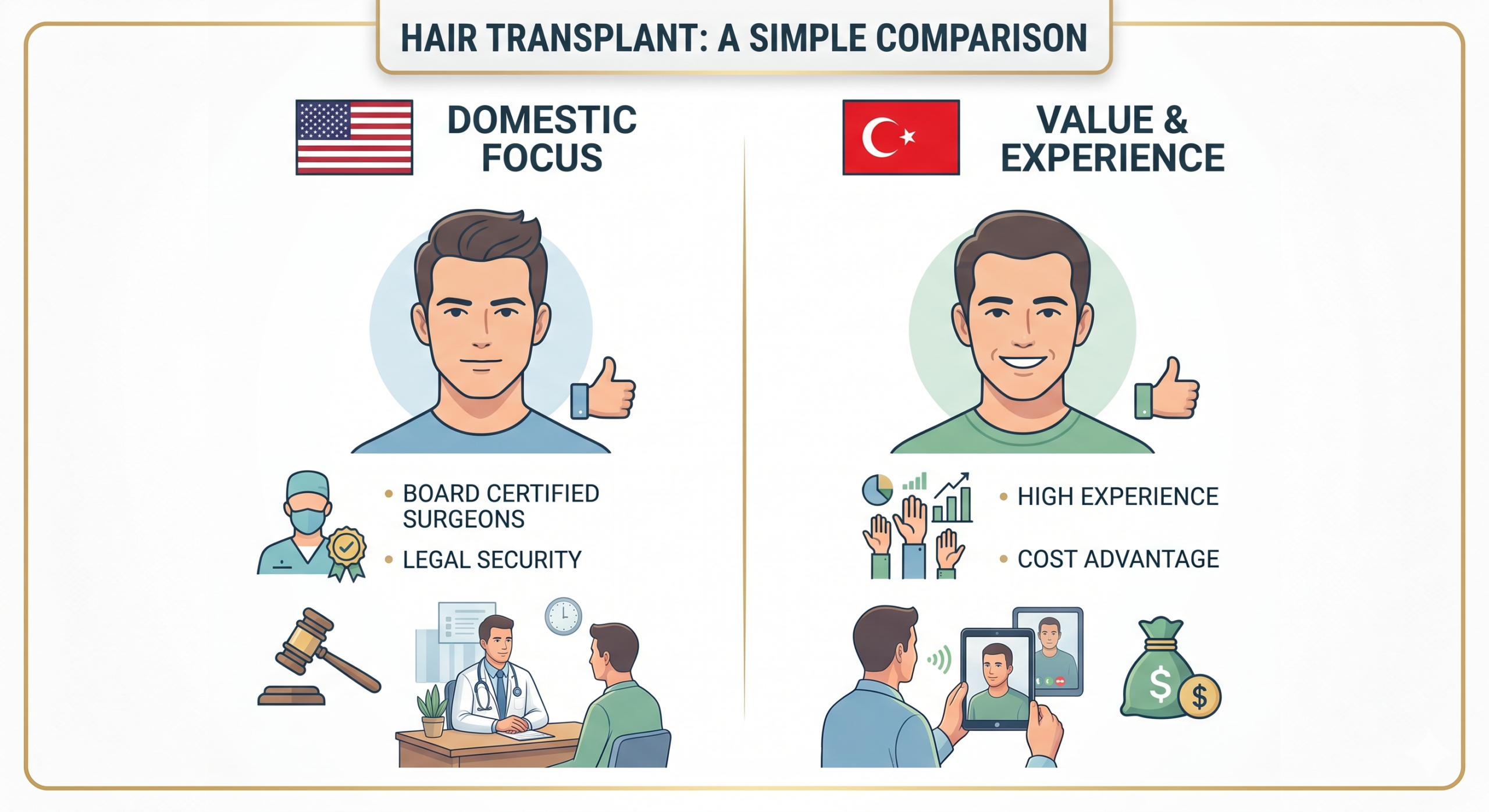
The Legal Reality for American Patients
As addressed in detail elsewhere in this series, American patients who have procedures in Turkey do not have US legal recourse through domestic courts. Malpractice claims against Turkish clinics must be pursued through Turkish legal channels.
For most American patients dealing with complications or poor results, the practical reality is that legal action against a Turkish clinic is not a viable option: the barriers of language, jurisdiction, and physical distance are high enough that very few foreign patients successfully pursue Turkish malpractice claims.
This does not mean the patient has no options. It means the practical options are:
- The remote support of a reputable Istanbul clinic (most valuable for patients at quality institutions)
- US medical management of any local complications
- Second opinion and potential corrective work from a US specialist
- Documentation of the experience shared through independent review channels (patient forums, review platforms) which provides accountability through reputational rather than legal mechanisms
None of these are equivalent to a US malpractice claim. They are the available alternatives, and for most patients dealing with manageable concerns, they are sufficient.
‘What Americans Give Up Legally When They Go to Turkey for a Hair Transplant‘ – the specific legal framework that applies (and does not apply) to American patients who experience complications from Turkish procedures, and what the practical options are within the available accountability mechanisms.
What Happens if the Istanbul Clinic Goes Dark
A specific scenario that some American patients encounter is the clinic becoming unresponsive after the patient returns home. This ranges from slow response times to complete communication breakdown when a concern is raised that the clinic does not want to address.
If the Istanbul clinic stops responding:
Document everything. All previous communications, the consultation record, the procedure documentation, before and after photographs, and any previous responses from the clinic should be archived in a format that is accessible independently of the clinic’s own records.
Pursue US-based options independently. The failure of a clinic’s remote follow-up does not leave the patient without options. US medical care for local complications, US specialist second opinions, and US-based corrective work are all available without the clinic’s cooperation.
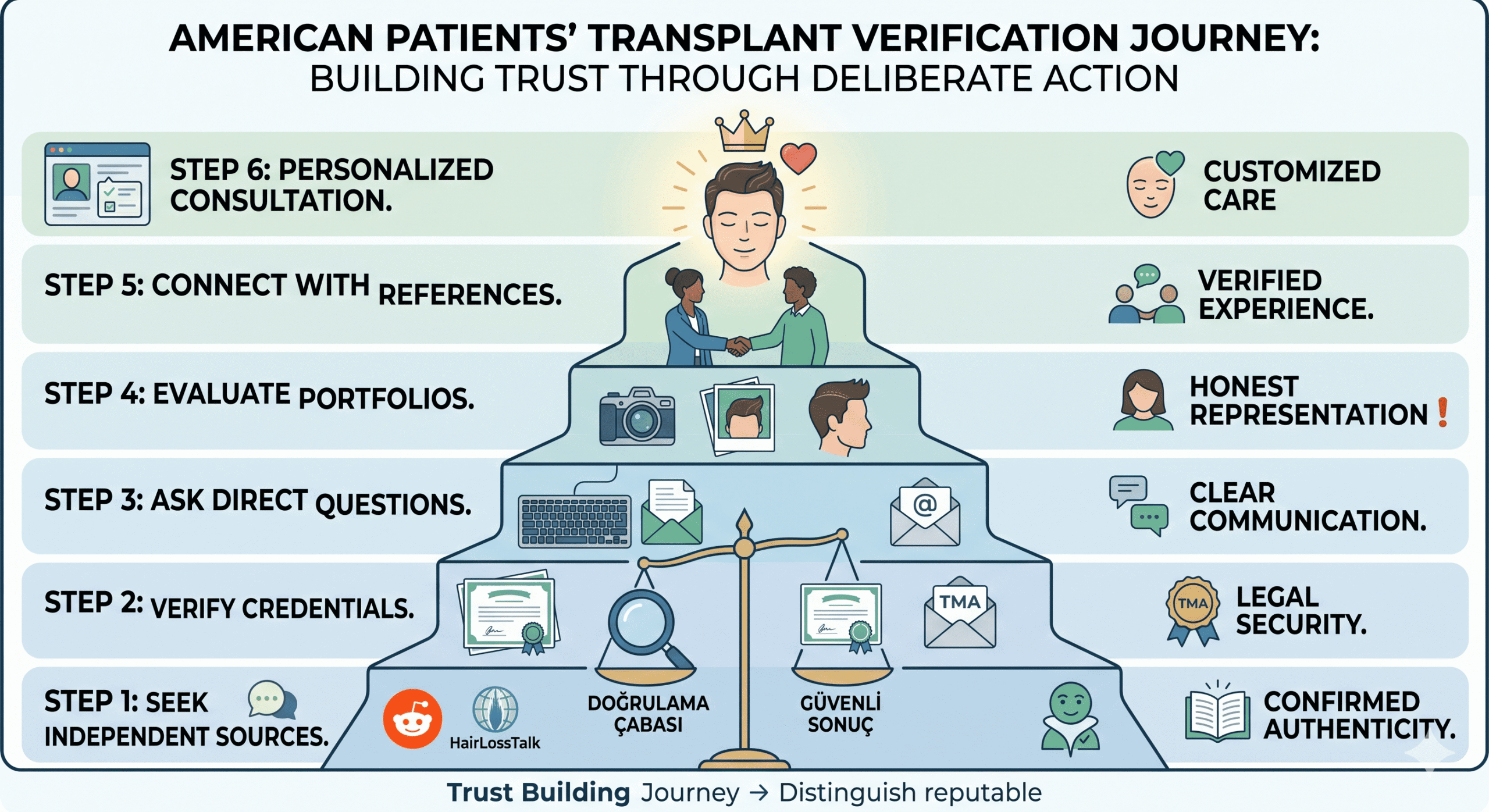
Report the experience on independent platforms. r/HairTransplants, HairLossTalk, and RealSelf all allow patients to document their experiences including negative ones. This provides accountability through the patient community that directly affects the clinic’s ability to attract future patients: and it provides other American patients with information that helps them avoid the same situation.
Contact the Turkish Ministry of Health. Foreign patients who have experienced complications at licensed Turkish clinics can submit complaints to Turkey’s Ministry of Health. The practical impact is uncertain, but it is an available mechanism for formal feedback to the regulatory authority.

Preparing for the Return Before You Leave Istanbul
The most effective action American patients can take to manage the post-return period is preparation before they leave Istanbul.
Before leaving the clinic:
- Confirm the remote consultation channel and test it with a message
- Obtain written aftercare instructions covering the full first four weeks
- Get the procedure documentation in English: graft count, technique, date, clinic and surgeon name: for use with US practitioners
- Ask specifically what signs would warrant contacting the clinic urgently vs what can wait for a scheduled assessment
- Confirm the scheduled assessment dates and what the assessment process involves
At EsteFavor, this pre-departure briefing is a structured part of the final clinic visit before the return flight. American patients leave Istanbul with documented clinical records, clear written aftercare instructions, confirmed remote access to the clinical team, and scheduled assessment dates for the twelve-month follow-up period.

Conclusion
American patients who return from Turkey with a hair transplant complication or a result concern are not without options: but the options are different from those available to patients who have had domestic procedures, and understanding them honestly is more useful than either dismissing them as adequate or catastrophising them as nonexistent.
For most concerns, the sequence is: contact the Istanbul clinical team first, see a US physician for any local medical management needed, and seek a US specialist second opinion for significant result concerns at twelve months. The remote support of a reputable Istanbul clinic is the most valuable resource for American patients managing the recovery period from home, which is why the quality of that follow-up programme is one of the most important factors in clinic selection: before the procedure, not after.
