
A hair transplant can be technically flawless — every graft surviving, excellent donor extraction, no complications — and still produce a result that looks obviously surgical. The reason is almost always the same: the hairline was designed wrong. Too low, too straight, too dense at the front, or drawn without accounting for the face it is supposed to frame or the hair loss that will continue to occur around it.
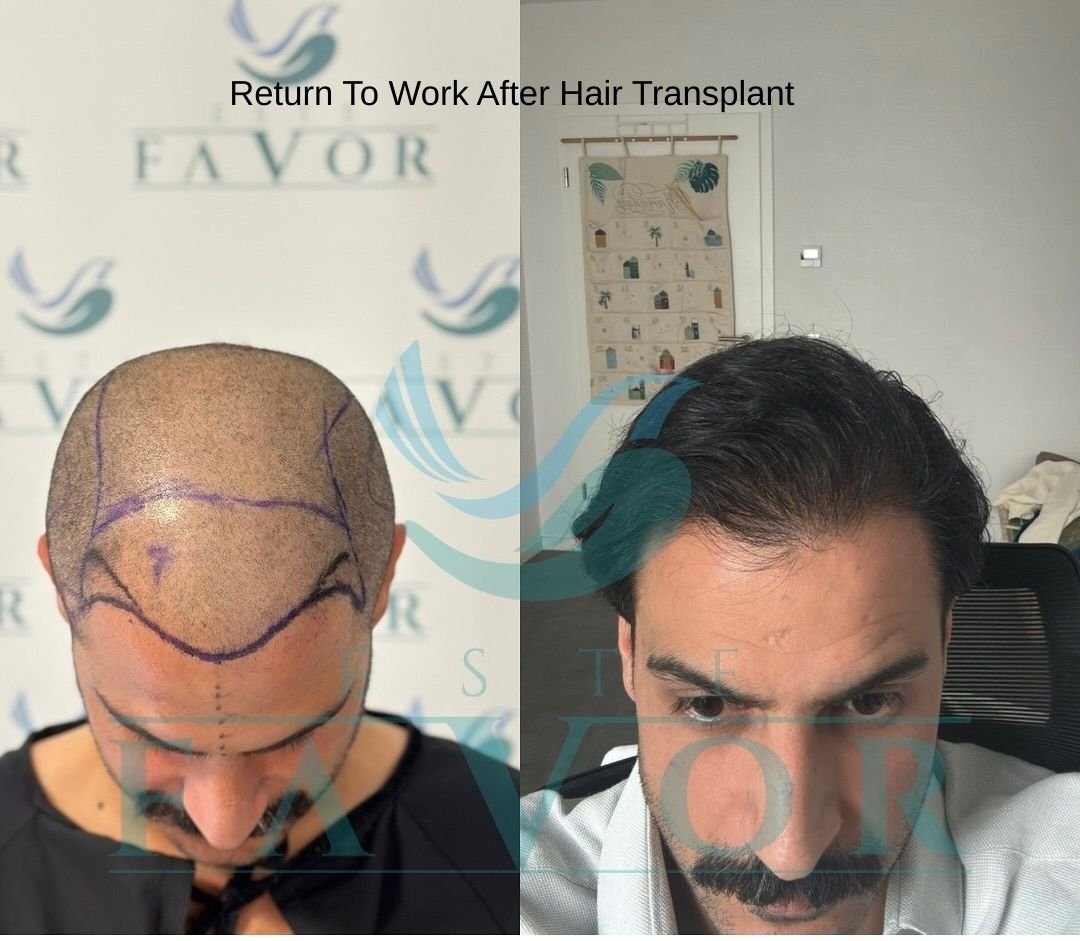
The frontal hairline is the part of a hair transplant that everyone sees first. It is the frame of the face, the element the human eye uses most reliably to assess age and appearance. Small errors in hairline design are disproportionately visible, and they are among the hardest results to repair. Getting it right requires a combination of anatomical knowledge, aesthetic judgment, patient-specific planning, and surgical technique that no algorithm or template can replace.
This article explains in detail what good hairline design actually involves: the facial proportions that guide positioning, the anatomical zones that determine how density is distributed, the graft angle and direction principles that determine whether hair lies naturally, the difference between male and female hairline design, the long-term planning considerations that separate a result that ages well from one that does not, and the specific errors that cause transplants to look unnatural.
Why Hairline Design Matters More Than Graft Count
Many patients approaching hair transplant surgery focus primarily on graft numbers, assuming that more grafts equals a better result. The relationship between graft count and outcome is real but secondary to design. A hairline drawn at the wrong height, in the wrong shape, or with the wrong graft distribution will look artificial regardless of how many follicular units were placed.
The reason is visual hierarchy. When a person looks at another’s face, their gaze moves to the hairline within the first seconds of observation. The hairline signals age, health, and proportion more directly than any other facial feature. A natural hairline has specific characteristics — soft, irregular, slightly asymmetric, with a gradual transition from scalp skin to hair density — that the brain recognises subconsciously as real. When those characteristics are absent, the result reads as artificial even if the observer cannot articulate why.
This is why experienced hair restoration surgeons consistently say that hairline design is where transplants succeed or fail. Technical extraction and implantation have become highly standardised. The artistic and planning dimension of hairline creation has not. It is the last remaining variable that separates an excellent outcome from an obvious one.

A well-designed hairline with 1,500 grafts can look more natural than a poorly designed one with 4,500. The number of grafts sets the ceiling of what is possible. The design determines how close to that ceiling the result comes.
The Anatomy of a Natural Hairline
Understanding what makes a hairline look natural requires looking at what natural hairlines actually are, rather than what patients imagine them to be.
The mid-frontal point and hairline height
The central reference point of the hairline is the mid-frontal point — the apex of the frontal hairline directly above the midline of the face. For most adults, this point sits approximately 7 to 9 centimetres above the glabella, which is the flat area between the eyebrows. The classical rule of thirds in facial aesthetics divides the face into three roughly equal horizontal segments: hairline to brow, brow to base of nose, and base of nose to chin. When these segments are proportionally balanced, the face reads as harmonious. Hair loss lengthens the upper third, disrupting this balance and creating the visual impression of ageing. Restoring the hairline to an appropriate height reestablishes equilibrium.
The critical word is appropriate. Appropriate does not mean low, and it does not mean the hairline the patient had at twenty. It means a position that complements the patient’s current facial structure, respects the biological reality of ongoing hair loss, and will continue to look natural as the patient ages over the following decades.

Macro-irregularity: the M-shape and temporal recession
A natural male hairline is not a straight horizontal line. It has macro-irregularity — the large-scale variation in contour that produces the characteristic M-shape, with mild recession at the frontotemporal corners and soft temporal peaks. This recession is not a flaw to be corrected in every patient. It is a feature of natural masculine hairlines, and surgeons who fill it in completely — creating a flat, helmet-like hairline without temporal definition — produce results that look feminine, artificial, or both.
The degree of temporal recession to design into the hairline depends on the patient’s existing pattern, their age, their facial shape, and their ethnicity. A 28-year-old with minimal native recession is designed differently from a 45-year-old whose natural pattern has included obvious frontotemoral recession for years. The goal in both cases is not a copy of a teenage hairline. It is a hairline that looks as though it belongs to this specific person at their current age.
Female hairlines have a different natural contour. They tend to be rounder and lower, with a more oval shape and less pronounced temporal recession. The frontotemporal corners are softer and less angular. A surgically created female hairline that incorporates the M-shaped recession of a male pattern will look mismatched and masculine. Female hairline design requires its own set of aesthetic principles, including an understanding of how hair part lines, overall density patterns, and hairline height interact with female facial proportions.
Micro-irregularity: the transition zone
Even within the overall shape of the hairline, nature creates variation at a smaller scale. Micro-irregularity refers to the subtle, non-linear variation in the exact position of hairs along the leading edge of the hairline. Natural hair does not emerge along a geometric line. It appears in small, irregular clusters, with gaps and projections that create a soft, diffuse visual effect. When this micro-irregularity is absent — when the leading edge is geometrically regular and every graft is placed at the same distance from the forehead — the hairline looks drawn rather than grown.

Recreating micro-irregularity requires deliberate technique. Surgeons create slight zig-zag patterns in the placement of front-row grafts, vary the forward projection of individual hairs within the leading edge, and build a transitional gradient of density that begins almost invisibly and increases moving backward into the scalp. This is the transition zone, and its execution is the most technically demanding part of hairline creation.
The Hairline Zones: How Density Is Distributed
A well-designed hairline is not a uniform field of grafts placed at even spacing. It is a structured gradient of density, graft type, and angulation across anatomically defined zones. Each zone has a specific function in creating the overall visual result.
| Zone | Graft type & density | Clinical purpose |
| Transition Zone (TZ) | Single-hair grafts only Low density, feathered, irregular | Creates the soft, diffuse leading edge. Placed at 10–15° angle, nearly flat against scalp. This zone is what separates a natural hairline from an obvious one. |
| Definition Zone (DZ) | 2-hair grafts predominating Density increasing | Sits immediately behind the TZ. Adds visible density while maintaining softness. The density gradient here creates depth and a sense of fullness. |
| Frontal Tuft (FT) | 2–3 hair grafts Higher density | The central mass of the frontal zone. Provides the visual weight of the hairline. Density here creates the impression of coverage even if the overall graft count is moderate. |
| Temporal Point | Single-hair grafts Extremely acute angle | Where the hairline transitions to the temples. Placed at 10–15°, radiating downward and laterally. One of the technically hardest zones to execute correctly. |
| Mid-scalp and Crown | Multi-hair grafts, variable density | These zones are designed separately, with priority given to natural swirl patterns and existing hair direction. Crown planning must account for ongoing future loss. |
Table 1. Hairline zones, graft distribution, and clinical function.
The transition zone is the element that most separates experienced surgeons from less experienced ones. Placing single-hair grafts at the correct angle, in an appropriately irregular pattern, across a zone that may be only a few millimetres deep at the very front of the hairline, requires both precision and restraint. The temptation to add density to the front row — to make it look fuller in the immediate post-operative period — is precisely what creates the pluggy appearance associated with less skilled or rushed procedures.
Never place a 2-hair or 3-hair graft in the first row of a hairline. This is one of the most reliable markers of an inexperienced or careless clinic. The leading edge must be exclusively single-hair grafts, placed at acute angles. Everything else produces a result that looks transplanted.

Graft Angle and Direction: The Technical Foundation of Naturalness
Every graft placed during a hair transplant will grow at the angle and in the direction of the channel created for it. The surgeon controls this with the blade or implanter pen used to create the recipient site. Getting angle and direction right is not optional — a graft placed at the wrong angle will grow visibly wrong for the lifetime of the patient, and correcting it requires removing and replacing the follicle, which is among the most complex repair work in hair restoration.
Angle
The correct angle for frontal hairline grafts is 10 to 15 degrees from the scalp surface — almost flat, lying forward toward the forehead. This acute angle allows transplanted hairs to lie against the scalp and move naturally with the rest of the hair. StatPearls clinical guidelines confirm this standard: frontal hairline grafts at 15 to 20 degrees, temporal grafts pointing downward. Moving posteriorly into the scalp, the angle increases progressively as the natural hair angle increases, until the crown is reached, where hair emerges at a more vertical angle and follows the whorl pattern.
Grafts placed at steeper angles than the natural angle at their location will stand up from the scalp rather than lying flat. This is immediately visible when the hair grows in and creates the characteristic ‘broomstick’ appearance associated with early or inexperienced transplants. It cannot be corrected with styling products.
Direction
Direction refers to which way each graft points within its zone. Natural hair radiates outward from a central point in a broadly radial pattern: hairs in the central frontal zone point forward, hairs toward the temples point laterally and slightly downward, and hairs in the temporal zone point downward. The overall effect is a fan-shaped distribution that follows the natural growth of the patient’s hair.

Maintaining this radial pattern requires the surgeon to assess the patient’s existing hair direction before any planning begins, and to create recipient channels that replicate it precisely. Where the patient has an existing cowlick or an unusual growth pattern, this must be incorporated rather than overridden. Transplanted hair placed against the natural growth direction will never blend with the surrounding native hair.
Bilateral symmetry in direction is equally important. The direction pattern on the left side of the hairline should mirror the right, with intentional and subtle variations to avoid the artificial appearance of a perfectly symmetrical result. Natural hairlines have slight asymmetries. These are not mistakes to correct but features to preserve.
Facial Proportions and the Planning Framework
Good hairline design begins with measurement and observation, not drawing. Before a surgeon marks a hairline on a patient, they should have assessed and documented facial proportions, identified the relevant anatomical landmarks, noted the patient’s facial shape and bone structure, reviewed the degree of existing hair loss and its pattern, and made a considered assessment of where the hair loss is likely to progress.
The rule of thirds and hairline height
The rule of thirds provides the starting point for vertical positioning. The face is divided into three equal horizontal segments, and the mid-frontal point of the hairline is positioned to maintain balance between them. For most adult men, this places the hairline approximately 7 to 9 centimetres above the glabella. This is not a fixed measurement — it is adjusted for forehead height, skull shape, and the degree of existing hair loss — but it provides the geometric framework within which the design operates.
The golden ratio (approximately 1.618:1) is referenced in some formal hairline design frameworks as an additional proportional guide, applied to the relationship between hairline height, forehead width, and facial thirds. In practice, the golden ratio is a supplementary reference rather than a rigid formula; its value lies in orienting the surgeon toward proportional harmony rather than producing a single geometrically correct answer. Facial shapes vary too much for any single mathematical ratio to be applied mechanically.

Facial shape and hairline contour
The patient’s facial shape influences the contour of the hairline. A round face benefits from a hairline that adds visual height through a soft central peak, which elongates the perceived face shape. An oblong or long face benefits from a lower, flatter hairline that reduces the visual length of the upper third. A square jaw benefits from a slightly rounded hairline that softens the overall profile. These adjustments are not large — the differences are in millimetres and in the softness or sharpness of curves — but their cumulative effect on the overall appearance is significant.
Hair characteristics also influence design. Coarser or curlier hair creates visual fullness more efficiently per graft than fine, straight hair, which means the hairline can be designed with more conservative graft density for equivalent visual coverage. Dark hair against light skin creates high contrast that makes the hairline more visually prominent — softness and irregularity become even more important. Light hair against light skin is more forgiving at the leading edge but requires more grafts to create visual density.
Age-Appropriate Design and Long-Term Planning
Hairline design is not only a question of what looks best today. It is a question of what will look appropriate and proportional in ten, twenty, and thirty years — as the patient’s face matures, as progressive androgenetic alopecia continues to take the hair behind the transplanted zone, and as donor resources that are used now are unavailable for future sessions.
The progressive hair loss problem
The most common design failure in hair transplant history is placing a hairline without modelling the likely course of the patient’s hair loss. A hairline transplanted at the right height for a 25-year-old may look completely natural at the time of surgery — and become an isolated island of hair stranded in the middle of a bald scalp by the time that patient is 40, if the Norwood progression continues and insufficient grafts were reserved for mid-scalp and crown coverage.

Responsible hairline design involves the surgeon modelling the expected final hair loss pattern before planning the position and graft allocation. The Norwood scale provides the framework for this assessment, supplemented by family history, current rate of progression, and donor density. If a patient is likely to progress to Norwood 6 or 7 based on these factors, a hairline designed at Norwood 2 height will eventually require either significant additional surgery or a very visible mismatch between the transplanted frontal zone and the bald surrounding scalp.
This is why experienced surgeons often recommend a slightly higher hairline position than a patient might initially request. The mature hairline — positioned appropriately for the patient’s current age and accounting for likely progression — is almost always a better long-term decision than the lowest possible position the patient desires. The hairline can always be lowered with additional grafts in a future session if the patient’s hair loss stabilises. A hairline placed too low, with too many grafts committed to the frontal zone, cannot be easily corrected.
The question to ask when designing a hairline is not: how low can this be? It is: will this hairline still look natural and proportional when this patient is sixty? The surgeon’s responsibility extends beyond the immediate result to the lifetime of the face they are framing.
Donor resource allocation
Every graft placed in the hairline is a graft that cannot be used elsewhere. The donor zone is a finite resource, and its allocation across the scalp must be planned with the total picture in mind. A patient who spends 3,000 grafts on a very low, dense frontal hairline has fewer grafts available for mid-scalp coverage, crown restoration, or future sessions when progressive loss continues. A surgeon who plans well will apportion grafts across zones in proportion to their visual priority and the patient’s likely future needs.
This is particularly important for younger patients who may have thirty or forty years of additional hair loss ahead of them. The decision made at age 25 about how many grafts to commit to the hairline will constrain every hair restoration decision that follows. Conservative planning at the outset preserves options. Aggressive early planning closes them.
Male vs Female Hairline Design: The Key Differences
Male and female hairlines are anatomically and aesthetically different in several important respects, and designing one for a patient of the other gender — or ignoring gender-specific conventions entirely — produces results that look mismatched.
Male hairlines are characterised by the M-shape with frontotemporal recession, a hairline height typically 7 to 9 centimetres above the glabella in adults, angular temporal points, and a design that anticipates ongoing androgenetic recession. The temples are a critical feature: the angle and direction of temporal grafts, placed at extremely acute angles and radiating laterally and downward, define the framing of the face from the side profile. Filling in temporal recession completely on a male face almost always produces an unnatural result.
Female hairlines sit slightly lower on average, follow a softer rounded or oval contour, and have less pronounced temporal recession. The frontotemporal corners in a natural female hairline are gentler curves rather than angular peaks. Female pattern hair loss follows different progressions from male androgenetic alopecia — typically more diffuse, affecting overall density rather than producing the defined recession zones of the Norwood scale — and female hairline design must account for this differently than male design does.
For female hair transplant patients in particular, the widow’s peak — a V-shaped central projection of the hairline — is a common feature that, when present in the native hair, should be preserved rather than flattened. Recreating or preserving a widow’s peak in a transplanted female hairline adds authenticity and individuality. Removing it in the design process produces a less distinctive, more generic result.

The Eight Most Common Hairline Design Errors
The errors below are collectively responsible for the majority of results that patients seek to repair. They are not all attributable to surgical inexperience — some are the result of accommodating patient requests that the surgeon should have redirected, and some reflect systemic failures in consultation and planning.
| Design error | What goes wrong |
| Too low placement | Looks youthful initially. As hair loss continues, it becomes an isolated island disconnected from receding native hair. |
| Perfectly straight line | Immediately signals surgery. No natural hairline is geometrically straight. A ruler-drawn edge is one of the most reliable tells of a poor transplant. |
| Multi-hair grafts at the leading edge | 2- and 3-hair grafts at the very front create density but destroy softness. The result is pluggy — the hallmark of older, discredited technique. |
| Filled-in temples in men | Eliminating natural temporal recession on a male face creates a feminine or unnatural ‘helmet’ appearance. Temple recession is a feature, not a flaw. |
| Wrong graft angle | Grafts placed at steep angles stand up from the scalp rather than lying flat. The result is immediately visible and notoriously difficult to repair. |
| Ignoring progressive hair loss | A hairline designed without modelling future loss will eventually strand the frontal zone as an isolated island when the mid-scalp and crown thin further. |
| Perfect bilateral symmetry | Identical left and right sides look artificial. Natural hairlines have slight, deliberate asymmetry. Perfect mirroring signals surgical origin. |
| Copying a reference photo | Replicating a celebrity or a teenage photo without considering current facial proportions, age, and donor supply leads to mismatch and dissatisfaction. |
Table 2. The most common hairline design errors and their consequences.
The Role of the Consultation in Hairline Design
The pre-operative consultation is where hairline design is either done well or already compromised. A serious consultation for a hair transplant is not a booking meeting. It is a clinical design session in which the surgeon and patient work together to establish what is anatomically possible, what is aesthetically appropriate, and what will serve the patient’s interests not just immediately but over the decades ahead.
In that consultation, the surgeon should examine and document the patient’s facial proportions, measure the relevant landmarks, assess scalp laxity and donor density, evaluate hair characteristics including calibre, curl, and colour, and discuss the likely trajectory of the patient’s hair loss with reference to their family pattern. The hairline is then drawn on the patient’s scalp with a marker, assessed in person and in photographs from multiple angles, and revised until both surgeon and patient are satisfied.

Patients who arrive at a consultation with reference photos of other people’s hairlines — celebrities, younger versions of themselves, photographs from the internet — should not simply be told yes. They should be shown why those references may not translate to their anatomy, age, and pattern, and offered an explanation of what an appropriate design for them specifically would look like. A surgeon who agrees to replicate any requested design without this conversation is not serving the patient’s interests. The result may look good in the mirror on day one and look increasingly wrong over the following decade.
The questions a patient should ask in any consultation include: Why are you positioning the hairline at this height? How does this design account for my likely future hair loss? Why have you drawn the temple points this way? How many grafts will be allocated to the hairline versus the crown and mid-scalp? What will this look like in twenty years? A surgeon who cannot answer these questions clearly and confidently is a surgeon who has not thought through the design.
How Sapphire FUE and DHI Serve Hairline Design
The choice of technique for hairline work is not arbitrary. The precision demands of a natural hairline — particularly the single-hair transition zone and the acute-angle temporal grafts — benefit directly from instrumentation that allows smaller, more precisely angled incisions.
Sapphire FUE uses crystal blades to create recipient channels with sharper edges and less tissue disruption than standard steel. The smaller wound diameter and cleaner channel edges allow tighter spacing in the transition zone without compromising graft survival, and the precision of channel angle is easier to control with sapphire instrumentation. This is particularly valuable in the hairline and temporal zones where angulation is most demanding.
DHI, using the Choi implanter pen, combines channel creation and graft placement in a single step, reducing the time grafts spend outside the scalp and allowing very precise control of graft angle and direction at implantation. For hairline work where small angular errors compound across hundreds of grafts, the DHI technique’s ability to maintain precise orientation throughout placement is a meaningful technical advantage.
Neither technique substitutes for design judgment. A precisely executed DHI hairline designed at the wrong height, with the wrong shape, or without appropriate long-term planning will still look wrong regardless of the technical quality of the implantation. The technique serves the design. It cannot replace it.

What Separates an Artistic Surgeon from a Technical One
Every hair transplant surgeon can extract grafts and place them into pre-made channels. The technical dimension of the procedure is trainable to a reasonable standard of consistency. What separates surgeons who produce reliably natural hairlines from those who do not is not primarily technical skill — it is the capacity to think in three dimensions about a face, to anticipate how a design drawn on a scalp today will interact with a face that will age over decades, and to resist patient pressure toward decisions that serve short-term preferences at the expense of long-term appropriateness.
This is why the question ‘who will design my hairline?’ is one of the most important questions a patient can ask at a consultation. In clinics where technicians perform most of the procedure, hairline design may be treated as a formulaic exercise — place the mid-frontal point at a standard height, draw a gentle curve, proceed. In clinics where the operating surgeon personally designs and draws the hairline before extraction begins, the design reflects clinical judgment about this specific patient’s face, anatomy, and future.
Ask any clinic you are considering: who draws the hairline, and when? The answer should be: the surgeon who is performing the procedure, at the pre-operative consultation, on your scalp in person. If the answer is vague, or if the hairline is not drawn and photographed before surgery begins, that is a significant warning sign.
