
A hair transplant is one of the most permanent cosmetic decisions a person can make. When it goes well, the result is natural, dense growth that restores confidence and requires no ongoing maintenance. When it goes wrong, the consequences are visible every day and can be extremely difficult to reverse. Scarring, an unnatural hairline, grafts implanted at the wrong angle, pluggy or doll-hair appearance, and an over-harvested donor zone that looks permanently thinned are among the outcomes that bring patients to seek help years after a procedure they wish they had never undergone.
Understanding what constitutes a poor outcome, what causes it, and what can realistically be done to address it is important for two groups of people: those who are already living with a disappointing result and want to know their options, and those who have not yet had a procedure and want to understand what separates a good clinic from one that produces the kinds of outcomes described in this article. Both audiences will find this guide useful.
The first thing to understand is that not every disappointing result is the product of negligence or incompetence. Some outcomes fall short of expectations because expectations were unrealistic to begin with, or because the biological variables involved did not resolve in the most favourable way. But a significant proportion of poor outcomes are the direct result of preventable errors: inadequate pre-operative planning, incorrect surgical technique, insufficient experience in the clinical team, and post-operative mismanagement. This article focuses primarily on these preventable failures, because they are the ones that a patient can identify, understand, and take action on.
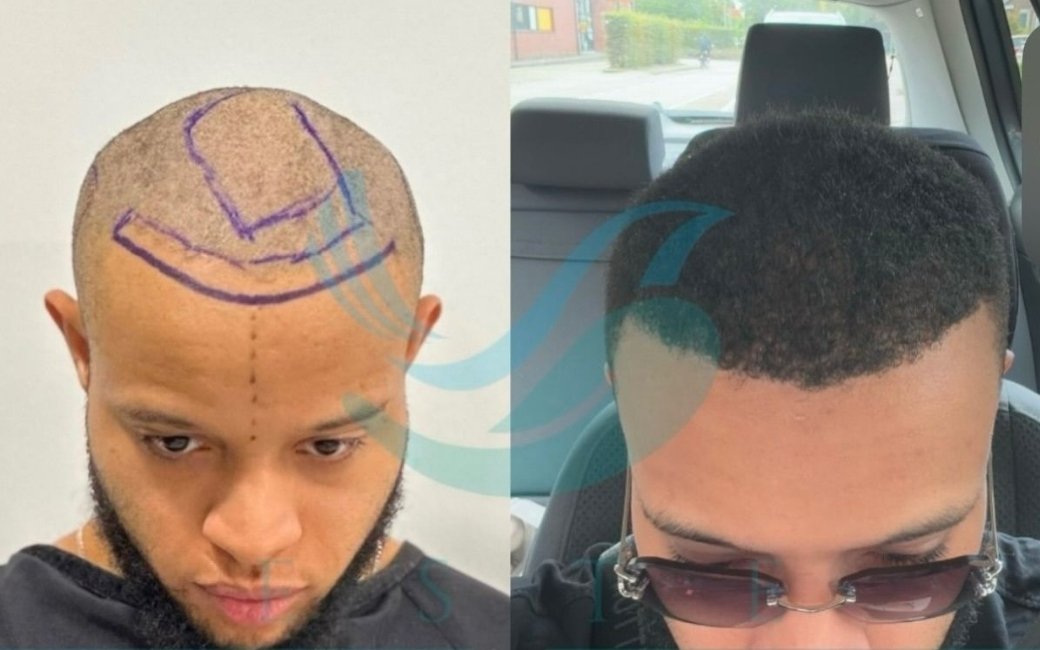
What a Bad Hair Transplant Looks Like
The signs of a poor hair transplant result are not always immediately visible. Some become apparent only as the hair grows in over the first twelve months; others are present from the first days after the procedure and do not resolve with time. Knowing what to look for helps patients distinguish between normal post-operative variation and genuine signs that something has gone wrong.
An unnatural hairline is one of the most common and most visible signs of a poorly planned or poorly executed transplant. A natural hairline is irregular, characterised by micro-irregularities in the placement of individual hairs, a gradual transition from the forehead skin to the hairline density, and a design that is proportionate to the patient’s facial structure, age, and the expected trajectory of future hair loss. A surgically created hairline that is placed too low, drawn too straight, or lacks the micro-irregularities of a natural hairline immediately reads as artificial. This is almost always a planning failure rather than a technical one.
Pluggy or doll-hair appearance describes the result of grafts being implanted in groups that are too large or too dense relative to the surrounding area, creating a pattern of hair that looks like rows of plugs rather than natural hair growth. This was more common with older techniques, but it still occurs in clinics that use oversized grafts, fail to break down multi-hair units appropriately, or implant at incorrect angles and directions. The result looks unnatural under any lighting and is immediately recognisable as surgical hair rather than natural growth.
Low density or patchiness in the transplanted area after the full twelve-month growth period indicates that a significant proportion of grafts did not survive the procedure. Some variation in density is normal and expected, but extensive patchiness suggests either that the grafts were mishandled between extraction and implantation, that the implantation technique was inadequate, or that the patient was given an unrealistic graft count relative to the area to be covered. In some cases, multiple factors combine.
A depleted or scarred donor area is a serious outcome that affects not only appearance but also the options available for any corrective procedure. Over-harvesting the donor zone, extracting grafts too close together, or using imprecise extraction tools can create visible thinning, scarring, or a moth-eaten appearance in the back and sides of the scalp. This is particularly damaging because the donor area is finite, and damage to it limits what can be done in any subsequent procedure.
Visible scarring in the recipient area, beyond the minimal scarring that any surgical procedure involves, suggests either inadequate technique during site creation or post-operative complications that were not properly managed. Linear scarring across the recipient area, while rare with FUE technique, can occur when incisions are made incorrectly or when healing is disrupted.

The Most Common Causes of Poor Results
Poor outcomes in hair transplantation cluster around a relatively small number of identifiable root causes. Understanding these causes helps patients evaluate clinics before the procedure and helps those already dealing with a poor outcome understand what happened.
Inexperienced or unsupervised technicians performing the critical surgical steps represent the most common cause of poor outcomes in the current hair transplant market, particularly in high-volume, low-price clinics. The extraction and implantation of grafts require precision, dexterity, and an understanding of the biological requirements of the follicle. When these steps are delegated to inadequately trained staff while the named surgeon is elsewhere in the building, the quality of execution suffers directly. The impact is felt in graft survival rates, implantation angles, and the naturalness of the final distribution.
Inadequate pre-operative planning is responsible for a different category of poor outcomes, particularly those involving unnatural hairlines or distribution patterns that look artificial. A hairline that has not been designed with reference to the patient’s facial proportions, age, ongoing hair loss trajectory, and long-term donor availability is a hairline that may look acceptable at the time of the procedure but increasingly problematic as the patient ages and surrounding natural hair continues to thin.
Excessive speed during the procedure reduces the care applied to each individual graft. When a clinical team is pressured to complete procedures quickly in order to process more patients in a day, extraction technique becomes less precise, grafts spend longer outside the body before implantation, and the attention to angle and depth during site creation diminishes. Each of these factors reduces graft survival and result quality.
Poor graft handling between extraction and implantation is a contributing factor that patients rarely consider. Extracted follicles are living tissue that must be maintained in appropriate conditions – correct temperature, appropriate storage solution, and minimal time outside the body – to maximise survival. Clinics that are careless about this aspect of the procedure produce lower graft survival rates even when the surgical technique itself is otherwise reasonable.
Failure to screen for contraindications or ongoing hair loss progression leaves patients vulnerable to outcomes that may look acceptable initially but deteriorate rapidly. A patient who receives a transplant while their hair loss is still actively progressing may find that the native hair around the transplanted area continues to thin, isolating the transplanted hair and creating an increasingly unnatural distribution over time.

How to Know If Your Result Is Genuinely Poor
Patients who are unhappy with their result often struggle to determine whether they are experiencing a genuinely poor outcome or normal post-operative variation that has not yet resolved. The timeline matters significantly in making this assessment.
At six weeks, almost all patients experience the shedding phase, during which the transplanted hair falls out. This looks alarming and is frequently misinterpreted as a sign of failure, but it is the normal biological response of the follicle and does not indicate a problem with the procedure. Anxiety at this stage is understandable but almost always premature.
At three to four months, early growth begins. This growth is often thin, irregular, and uneven in texture. It does not represent the final result and should not be evaluated as such. Comparing a three-month result to expected final outcomes is a common source of unnecessary concern.
At six months, a substantial portion of the transplanted hair will be visible, but the result is still incomplete. Texture, thickness, and evenness continue to improve beyond this point.
At twelve months, the result is sufficiently complete to be formally assessed. A result that still shows significant patchiness, unnatural distribution, or other problems at this point is unlikely to improve meaningfully with further time. This is the appropriate moment to consult with a specialist about corrective options.
If significant problems with the donor area, visible scarring, or clearly incorrect implantation angles are present, these can be assessed at any point after the procedure regardless of the growth timeline, as they are not time-dependent in the same way that density outcomes are.
‘Second Hair Transplant‘ – patients living with a poor result from a previous procedure will find a detailed discussion of what is required before pursuing a corrective transplant, including donor assessment and timing considerations.

Options for Correcting a Bad Hair Transplant
The options available to a patient with a poor transplant result depend entirely on the nature of the problem and the condition of the donor area. Not every poor result is correctable, and managing expectations about what is achievable in a corrective procedure is as important as in a primary one.
Corrective transplantation is the most comprehensive option for patients whose donor area retains sufficient supply. In this approach, a second procedure is used to add density to patchily covered areas, correct unnatural distribution patterns, refine an incorrectly designed hairline, or combine all of these elements into a single session. The planning of a corrective procedure is typically more complex than a primary transplant because it must account for the existing grafts, the scar tissue present in the recipient area, and the reduced donor supply relative to what was available before the first procedure.
Hairline refinement is a targeted form of corrective transplantation focused specifically on improving an unnatural-looking hairline. This involves adding single-hair grafts at micro-irregular positions along the existing hairline to create the gradual, natural transition that was absent in the original procedure. It is one of the most effective corrective interventions available because it directly addresses one of the most visible problems.
Camouflage with additional grafts involves strategically placing new grafts between existing pluggy or incorrectly angled grafts to break up the pattern and create a more natural overall appearance. This does not remove or alter the existing grafts but rather uses new grafts to disguise the pattern created by them. It is most effective when the existing grafts are not severely misplaced.
Surgical correction of pluggy grafts, involving the removal of oversized follicular units and their re-implantation as smaller units, is technically demanding and associated with a risk of further scarring. It is considered in cases where the pluggy appearance is severe and other options are insufficient, but it requires a surgeon with specific experience in corrective work and should not be undertaken lightly.
For patients whose donor area has been significantly depleted, body hair transplantation using follicles from the beard, chest, or other areas can supplement the available supply in limited circumstances. This approach has specific limitations in terms of hair calibre and growth characteristics, and it is not a complete substitute for scalp donor hair, but it extends the options available to patients who would otherwise have no corrective path.
‘Scalp Analysis Technology‘ – before any corrective procedure, a thorough scalp analysis generates the objective data needed to assess remaining donor supply, existing graft distribution, and the feasibility of the planned correction.
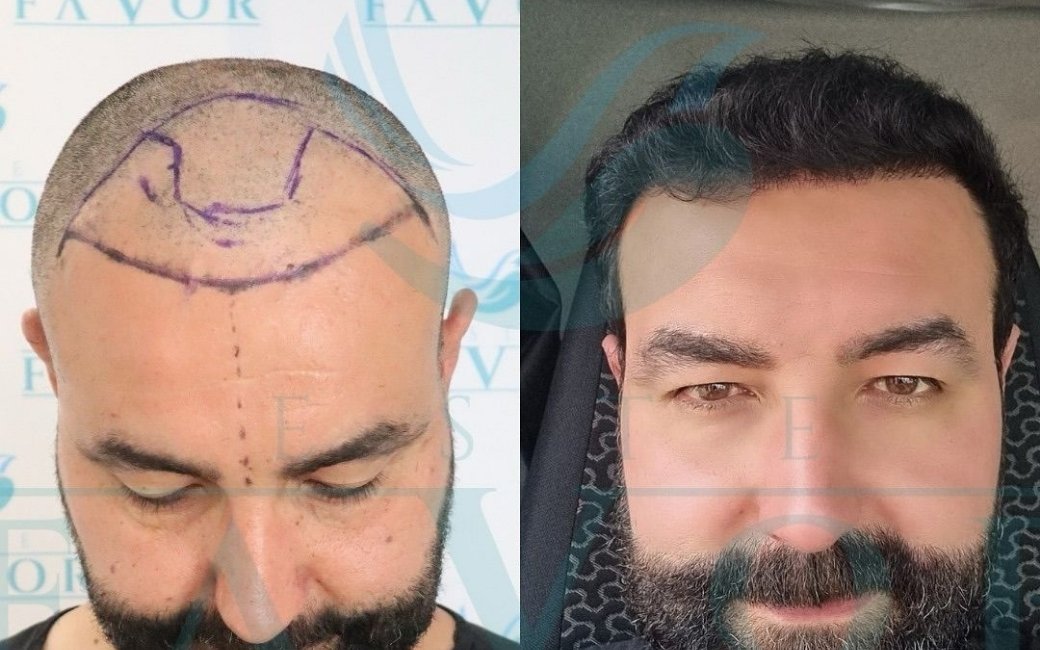
What to Expect from a Corrective Procedure
Setting realistic expectations for a corrective hair transplant is in some ways more difficult than setting them for a primary procedure. The conditions are less favourable: the donor area has already been used, the recipient area contains existing grafts and some degree of scar tissue, and the patient is already carrying the emotional weight of a disappointing experience.
A corrective procedure can achieve meaningful improvement in most cases where the donor supply is adequate and the problems are within the scope of what transplantation can address. It can add density to thinly covered areas, improve the naturalness of a hairline, and reduce the visibility of pluggy patterns. What it cannot do is produce results that are indistinguishable from a well-executed primary procedure in every respect. Some compromise is inherent when working in previously operated tissue.
The timeline for a corrective procedure is similar to that of a primary transplant: twelve months to full result, with the same shedding phase, early growth, and gradual improvement that characterise every transplant. The scar tissue in the recipient area can sometimes slow healing and alter the appearance of the immediate post-operative period, but this typically resolves without lasting effect on the final result.
The psychological dimension of a corrective procedure deserves acknowledgment. Patients who have already had a poor experience are understandably more anxious, more attentive to every post-operative development, and more prone to interpret normal variation as a sign of another failure. A clinical team that communicates clearly, maintains consistent contact throughout the follow-up period, and provides honest assessments at each review point makes a significant difference to the patient’s experience of this process.
How to Choose a Clinic for Corrective Work
The selection criteria for a clinic performing corrective hair transplantation are in some respects more demanding than for a primary procedure. Corrective work requires not only general expertise in hair transplantation but specific experience with the particular challenges that revised procedures present.
Ask directly whether the clinic has experience with corrective cases. Request to see examples of corrective work specifically, not only primary transplant results. The portfolio of a clinic that performs genuine corrective work will look different from one that only performs primary procedures: it will include cases with pre-existing scarring, cases where existing grafts have been incorporated into a refined design, and before-and-after documentation that shows the condition before the correction alongside the result after.
Ensure that the pre-operative evaluation for a corrective procedure is at least as thorough as it would be for a primary transplant, and ideally more so. The condition of the existing grafts, the degree of scarring in the recipient area, the remaining donor supply, and the feasibility of the proposed correction all need to be assessed with care. A clinic that offers a corrective procedure without a thorough evaluation of the previous work is not a clinic that takes the additional complexity of revised procedures seriously.
Discuss the limitations of the proposed correction honestly before committing. A clinic that promises to completely eliminate all evidence of the previous procedure, or that guarantees results indistinguishable from a natural transplant, is setting expectations that the biology of corrective work does not support. Honest communication about what is achievable and what is not is one of the most important markers of a trustworthy clinic in this context.
The Psychological Impact of a Poor Result
The emotional consequences of a hair transplant that goes wrong extend well beyond disappointment with an aesthetic outcome. Many patients describe feelings of regret, self-consciousness, social withdrawal, and a sense of having been deceived or exploited by a clinic that did not deliver what it promised. These feelings are valid and should not be minimised.
It is worth recognising that the psychological impact of hair loss and of a poor hair restoration outcome is disproportionate to how others typically perceive it. Most people are not looking at the top of your head with the same scrutiny you apply to it in the mirror. This does not eliminate the distress, but it provides useful context when considering the decision to pursue correction.
Patients dealing with the aftermath of a poor outcome benefit from connecting with others who have had similar experiences. Independent patient communities and forums dedicated to hair restoration provide a space to share information, find reputable corrective clinics, and receive honest perspectives from people who have been through the corrective process themselves.
Professional psychological support is a legitimate option for patients whose distress is significantly affecting their quality of life. The combination of the original hair loss experience, the subsequent poor outcome, and the prospect of another procedure can accumulate into a level of distress that warrants support from a mental health professional.
‘Psychological Impact of Hair Loss’ – the emotional dimensions of a poor transplant outcome are closely connected to the broader psychological experience of hair loss, including self-image, social confidence, and the process of making peace with an outcome that falls short of expectations.
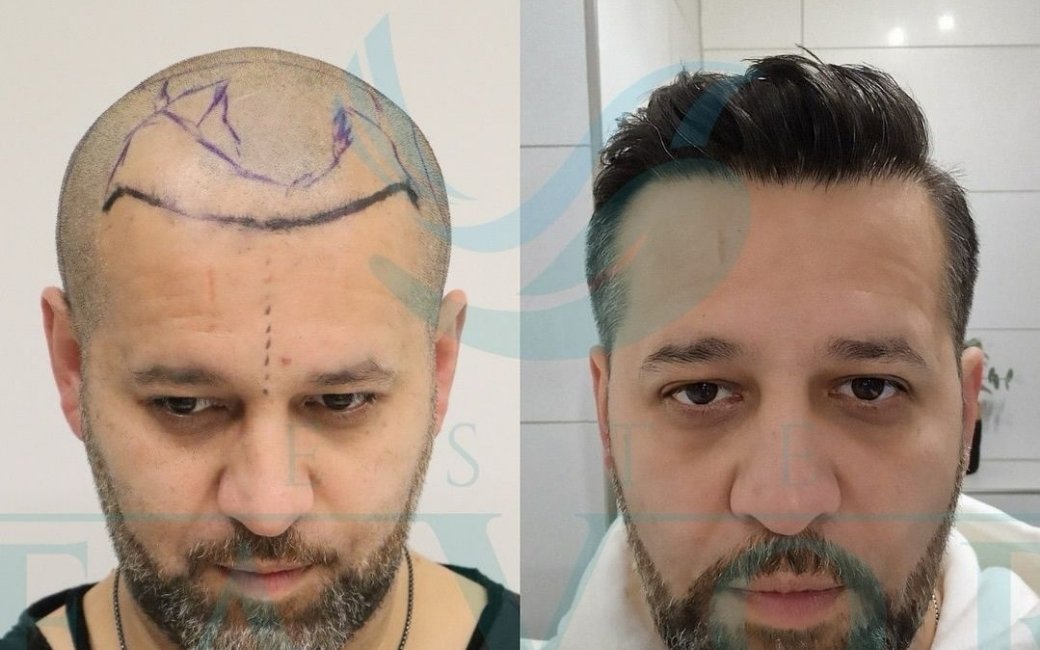
EsteFavor’s Approach to Patients with Previous Procedures
At EsteFavor, patients who come having experienced a poor result from a previous procedure represent a specific patient population that requires particular care, honesty, and clinical precision. The consultation process for these patients begins with a thorough assessment of what was done previously, what the current state of the recipient and donor areas is, and what is realistically achievable through corrective transplantation.
Every consultation at EsteFavor includes a detailed scalp analysis using advanced imaging technology, which is particularly valuable in the corrective context because it generates objective data about the existing graft distribution, donor density, and scar tissue that cannot be accurately assessed through visual inspection alone. This data forms the basis of an honest conversation about what corrective work can achieve.
Both Sapphire FUE and DHI are available for corrective procedures at EsteFavor, and the technique selection is made based on the specific requirements of the correction rather than a one-size-fits-all approach. The twelve-month follow-up programme that applies to all patients at EsteFavor is particularly important in the corrective context, where patients typically need more frequent contact and more detailed updates during the growth period.
For international patients pursuing corrective work in Istanbul, the all-inclusive package format, which covers four-star hotel accommodation, VIP transfer, and twelve months of structured follow-up within a single price between 2,000 and 4,500 USD depending on procedure scope, removes the logistical complexity that otherwise makes pursuing corrective work abroad more difficult than it needs to be.
