
Male pattern baldness affects approximately half of all men by the age of fifty and up to two thirds by seventy. Despite its prevalence, it remains one of the least clinically understood conditions from a patient’s perspective: men frequently know they are losing their hair but have little accurate information about why it is happening, what the eventual pattern is likely to be, and what the realistic options are for managing or reversing it. The gap between what is available and what patients actually know about it is wider than for almost any condition of equivalent medical and psychological significance.
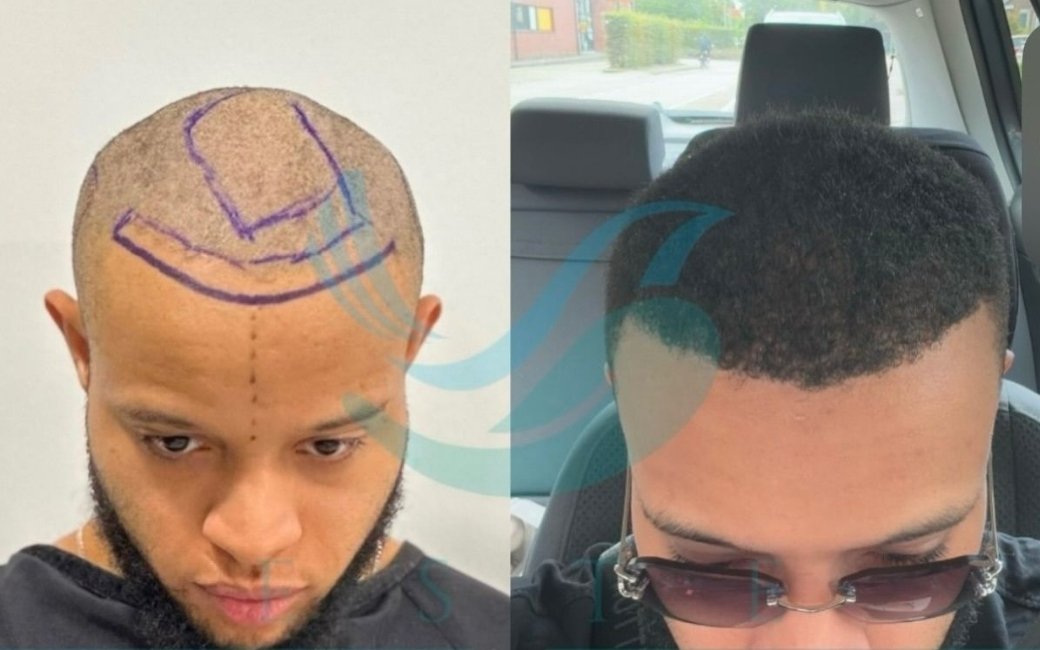
This article provides a complete overview of male pattern baldness: the genetic and hormonal mechanisms that cause it, the Norwood classification system that describes its stages, and an honest assessment of every treatment option from topical and oral medications through to surgical hair restoration. The aim is to give patients the clinical foundation needed to evaluate their own situation accurately and to engage with their treatment options from a position of genuine understanding rather than marketing-driven expectation.
What Causes Male Pattern Baldness
Male pattern baldness, known clinically as androgenetic alopecia, is caused by the progressive miniaturisation of genetically susceptible hair follicles in response to dihydrotestosterone, a hormone derived from testosterone. The condition is polygenic, meaning that multiple genes across both maternal and paternal lineages contribute to susceptibility, and it is androgen-dependent, meaning that the hormonal driver must be present for the genetic susceptibility to express itself. Men with low androgen activity, such as those with certain rare endocrine conditions, do not develop androgenetic alopecia regardless of genetic predisposition.
The mechanism of miniaturisation is well established. Dihydrotestosterone, formed from testosterone by the enzyme 5-alpha reductase in the skin and other tissues, binds to androgen receptors within the dermal papilla cells of genetically susceptible follicles. This binding triggers a progressive shortening of the anagen growth phase with each successive hair cycle, alongside a gradual reduction in the diameter of the hair shaft. Each cycle produces a thinner, shorter hair than the previous one. Over successive cycles, the follicle produces finer and lighter vellus hairs rather than terminal hairs, and eventually the follicle miniaturises to the point where visible hair production ceases entirely.
The geographic distribution of susceptible follicles is genetically determined and follows the characteristic pattern recognised by the Norwood classification: the frontal hairline, the temples, the vertex, and the crown are affected while the occipital and temporal fringe remains resistant to DHT. This resistance of the fringe zone is the biological basis of hair transplant surgery: follicles from the permanent zone retain their DHT resistance after transplantation to a susceptible area and continue to grow normally in their new location.

The rate of progression and the eventual pattern are both highly variable between individuals. Some men lose hair rapidly and reach an advanced Norwood stage in their twenties and thirties; others experience slow, gradual progression that does not reach an advanced stage until their fifties or later. Family history on both sides provides some predictive guidance, but the polygenic nature of the condition means that individual outcomes cannot be precisely predicted from family history alone. Trichoscopic assessment of the rate of miniaturisation at any given time provides more accurate information about current trajectory than family history alone.
The role of oestrogen and aromatase in androgenetic alopecia is worth noting as context. Aromatase converts testosterone to oestrogen, and areas of the scalp with higher aromatase activity are partly protected from DHT-mediated miniaturisation. This is part of the reason female pattern hair loss follows a different distribution from male pattern baldness and why the frontal hairline is relatively better preserved in women. In men, aromatase activity in the scalp is lower, contributing to the susceptibility of the frontal zone.
The Norwood Scale: Stages Explained
The Norwood-Hamilton scale, commonly referred to simply as the Norwood scale, is the standard classification system for male pattern baldness. It describes seven main stages, with some subdivisions, that represent the typical progression from a full hairline to advanced diffuse loss across the top of the scalp. Understanding your Norwood stage is practically important for several reasons: it informs treatment decisions, determines graft requirements for surgical planning, and gives context to the family history and progression rate assessment.
Norwood 1 represents a full hairline with no significant recession. This is the baseline from which the scale measures change and is not typically a stage at which any intervention is considered necessary.
Norwood 2 shows slight recession at the temples and in the frontal zone, creating a modest M-shaped hairline. The recession is noticeable but minimal. Many men in their late teens and early twenties present at this stage, and the most important clinical question is whether the recession is stable or progressing.
Norwood 3 is the minimum stage at which most surgical guidelines consider hair transplant candidacy. It shows deeper temple recession forming a clear M-shape, with the frontal zone either intact or beginning to thin. Norwood 3 vertex is a variant where thinning at the crown accompanies the frontal recession.

Norwood 4 shows more pronounced frontal and vertex thinning with a band of hair remaining between the two affected zones. The overall hair coverage is noticeably reduced and the difference between Norwood 4 and Norwood 3 patients is clearly visible to others.
Norwood 5 is characterised by advanced loss in both the frontal zone and the crown, with the separating band of hair significantly reduced. Norwood 5 represents a substantial proportion of the scalp affected and requires careful donor zone planning for any surgical intervention.
One practical implication of understanding the Norwood scale is that it allows meaningful comparison between patients and across time. When a clinician describes a patient as Norwood 3 vertex stable for two years, this conveys specific information about the pattern, the affected zones, and the trajectory that would take considerably more words to convey without the classification system. For patients, knowing their own Norwood stage allows them to research accurately, compare their situation to published clinical data, and communicate more effectively with clinicians.
Non-Surgical Treatment Options
Two medications have robust clinical evidence for slowing or partially reversing male pattern baldness: minoxidil and finasteride. Both are approved by major regulatory bodies for this indication, both have decades of clinical use and safety data, and both produce meaningful results in a substantial proportion of patients who use them consistently. Neither is a cure, and neither prevents progression indefinitely, but both are effective components of a management strategy.

Minoxidil was originally developed as an antihypertensive and was observed to cause hypertrichosis as a side effect. It is available over the counter as a topical solution or foam in two and five percent concentrations. The mechanism of action in hair loss is not fully understood but is believed to involve increased blood flow to the follicle, prolongation of the anagen phase, and stimulation of follicular growth factors. Topical minoxidil applied once or twice daily to the affected scalp produces measurable improvement in hair density in approximately 60 percent of men who use it consistently for at least twelve months. Results are most marked in the crown and mid-scalp; the frontal hairline responds less reliably. Results are maintained only with continued use: stopping minoxidil typically results in a return of loss within three to six months.
Oral minoxidil at low doses has emerged as a more convenient and in some studies more effective alternative to topical application. Doses of 0.5 to 2.5 milligrams daily produce systemic circulation of the active compound and more consistent follicular exposure than topical application. Low-dose oral minoxidil has a generally favourable safety profile at these doses, though fluid retention and an initial increase in heart rate are possible side effects that warrant discussion with a prescribing physician before starting.
Finasteride is a 5-alpha reductase inhibitor that reduces scalp dihydrotestosterone levels by approximately 60 to 70 percent. Taken orally at one milligram daily, it slows or halts progression in the majority of men who use it and produces measurable regrowth in a significant proportion. The evidence base for finasteride is among the strongest in dermatology: large randomised controlled trials consistently show superior outcomes to placebo over five years of use. Sexual side effects including reduced libido, erectile dysfunction, and reduced ejaculate volume are reported by a small percentage of users, typically 2 to 4 percent in clinical trials, though post-marketing reports suggest the true rate may be higher in some populations. These side effects are reversible in most patients after stopping the medication. Post-finasteride syndrome, a constellation of persistent sexual and cognitive symptoms claimed to continue after cessation, remains a subject of clinical debate.
Dutasteride inhibits both isoforms of 5-alpha reductase and reduces scalp DHT levels more completely than finasteride, typically by over 90 percent. It produces greater hair density improvements than finasteride in head-to-head studies but is not formally approved for androgenetic alopecia in all markets. It is used off-label by some clinicians for patients who do not respond adequately to finasteride. Its side effect profile is similar to finasteride, with the caveat that its longer half-life means side effects take longer to resolve after stopping.
Ketoconazole shampoo has modest evidence for reducing DHT at the scalp surface through its anti-androgenic properties and is sometimes used as an adjunct to other treatments rather than as a primary intervention. Low-level laser therapy devices have limited but positive evidence for mild to moderate hair loss and are most commonly used as a supplement to medical therapy rather than a standalone treatment.
Platelet-rich plasma therapy involves concentrating the growth factors from the patient’s own blood and injecting them into the scalp to stimulate follicular activity. The evidence base for PRP in androgenetic alopecia is positive but not yet conclusive: multiple small randomised controlled trials show improvements in hair density and thickness compared to placebo, but the optimal protocol, the appropriate patient selection criteria, and the duration of benefit have not been definitively established. PRP is most commonly used as an adjunct to medical or surgical treatment rather than as a standalone primary intervention.
Hair Transplant Surgery: FUE and DHI
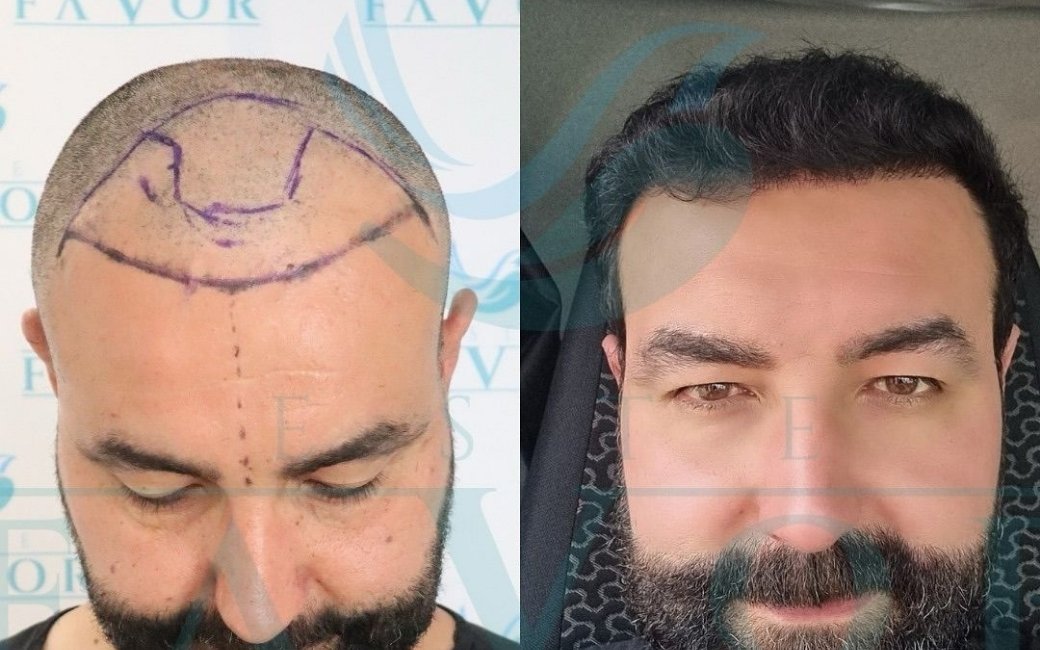
Hair transplant surgery is the only intervention that produces a permanent result in hair restoration. Medical treatments slow or partially reverse the process, but they require ongoing use to maintain results and do not add new hair to areas where follicles have already miniaturised to the point of producing no visible hair. Surgery physically relocates DHT-resistant follicles from the permanent donor zone to the affected areas, where they continue to grow permanently regardless of ongoing androgenetic progression in the surrounding native hair.
Follicular Unit Extraction is the dominant surgical technique in modern hair restoration. Individual follicular units are extracted one by one from the donor zone using a small punch instrument, then implanted into the recipient zone through pre-made micro-incisions. FUE leaves no linear scar in the donor zone, allows a faster recovery than its predecessor technique, and is suitable for patients who want to wear their hair very short. The technical quality of an FUE result depends heavily on the precision of the extraction, the quality of the graft storage and handling, the design of the recipient site incisions, and the angle and direction control during implantation.
DHI, or Direct Hair Implantation, is a variant of FUE in which grafts are loaded into a specialised pen-like device and implanted directly without pre-made channels. This approach allows more precise control of implantation angle and reduces the time grafts spend outside the body, which some evidence suggests may improve graft survival rates. DHI is particularly well-suited to the hairline zone where angle precision is critical for a natural appearance.
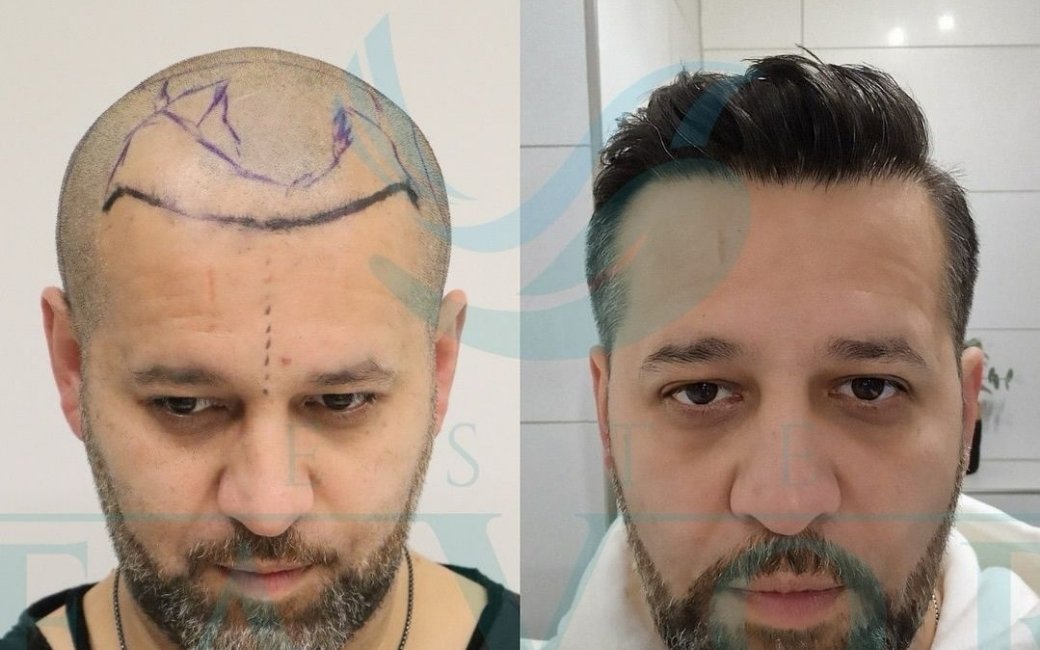
The surgical candidacy assessment for a hair transplant covers Norwood stage, pattern stability, donor zone quality, the lifetime donor budget, age and likely future progression, and the patient’s expectations. Not all patients who want surgery are appropriate candidates at the time of consultation, and a clinically rigorous process will identify cases where surgery should be deferred, supplemented with medical therapy first, or where the patient’s goals cannot be realistically met with the available donor supply.
Combining Treatments for the Best Long-Term Outcome
The most effective long-term approach to male pattern baldness for most patients is a combination strategy rather than reliance on any single intervention. Medical treatment and surgical treatment address different aspects of the condition and are genuinely complementary when used together appropriately.
Medical treatment slows the ongoing progression of androgenetic alopecia in the surrounding native hair, reducing the rate at which the transplanted result is undermined by continuing loss around it. A patient who has a hair transplant but does not use any medical therapy will experience progressive loss of their native hair around the transplanted zone, which can eventually make the result look increasingly isolated rather than integrated. A patient who combines surgery with ongoing finasteride or minoxidil use tends to maintain a more natural-looking result over a longer period.
The combination strategy also has implications for timing. Some patients benefit from starting medical therapy before surgery to stabilise progression, assess their response to medication, and reduce the extent of active thinning at the time of the procedure. Others begin medical therapy after surgery to protect the native hair around the transplanted zone. The optimal sequencing depends on the individual’s Norwood stage, age, rate of progression, and tolerance for the side effect profiles of the available medications.
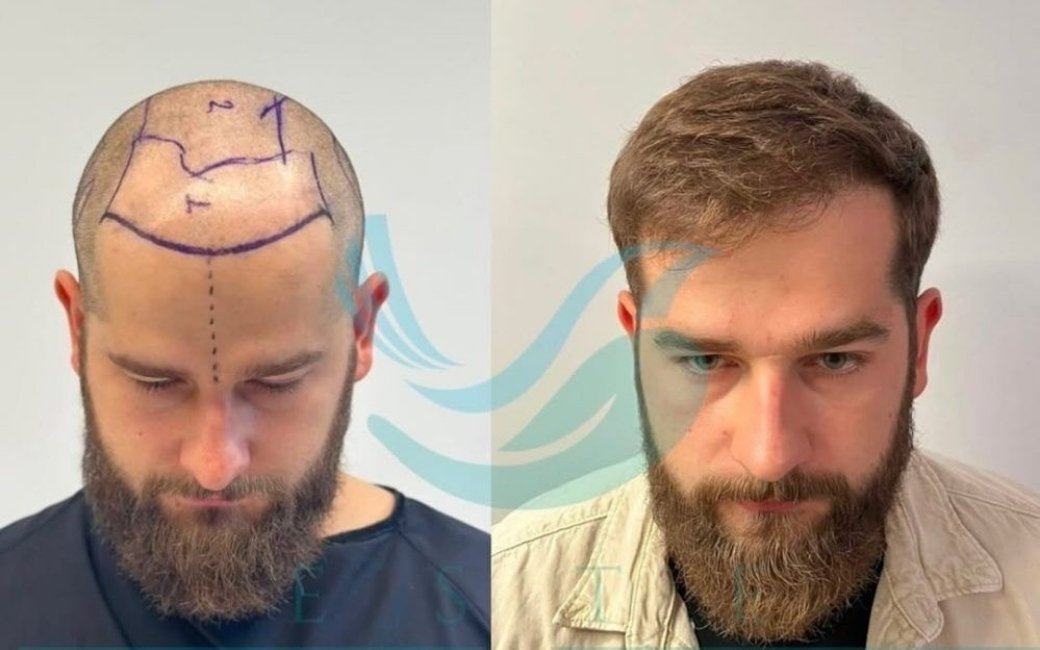
Patients who are not candidates for surgery, either because they are too young, because their pattern has not stabilised sufficiently, or because their donor supply is inadequate for their goals, can still achieve meaningful benefit from medical treatment alone while deferring the surgical decision. Medical therapy does not foreclose the surgical option; it simply manages the condition in the interim while the candidacy picture becomes clearer.’,
Patients who are undergoing or planning hair transplant surgery should discuss their current and planned medical therapy with their surgical team. Finasteride in particular can interact with the surgical assessment in ways that are clinically relevant: a patient who starts finasteride and experiences meaningful regrowth may find that their Norwood stage effectively changes, altering the graft requirements and hairline design for the planned procedure. The assessment at the time of consultation should account for whether the patient is already on finasteride and what effect, if any, it has had on their pattern.
Setting Realistic Expectations Across All Options
The single most important concept in male pattern baldness management is that no treatment option, surgical or medical, offers a permanent and complete solution to a progressive genetic condition. Each option offers specific, defined benefits within specific limitations. Understanding those limitations honestly, rather than approaching them with expectations shaped by marketing, is the foundation of a treatment decision that the patient will be satisfied with over the long term.

Medical treatments offer the prospect of slowing or halting progression and, in some patients, partial regrowth. They do not fully restore a significantly receded hairline, and they require indefinite continuation to maintain results. The patient who starts finasteride at Norwood 3 and uses it consistently will likely maintain their hairline at or near Norwood 3 for many years. The patient who stops finasteride after two years will typically return to progression.
Surgical treatment offers permanent restoration of density in the treated zone, a result that ages with the patient, and for most patients a genuinely significant improvement in appearance and quality of life. It does not stop the progression of androgenetic alopecia in the surrounding native hair, it cannot produce the density of an untreated full head of hair, and it consumes a finite donor supply that must be managed strategically across the patient’s lifetime.
The patients who achieve the best outcomes from whichever treatment path they choose are those who understand the nature of what they are managing, who set expectations grounded in clinical reality rather than optimal-case marketing, and who engage with their chosen treatment consistently and with a long-term perspective. Male pattern baldness is a chronic progressive condition with effective but non-curative management options. Approaching it with that framework consistently produces better outcomes than approaching it as a problem that can be definitively solved.

A Framework for Every Stage
Male pattern baldness can be effectively managed at every Norwood stage, but the appropriate management strategy differs significantly depending on where on the scale a patient sits, how old they are, how rapidly their pattern is progressing, and what their goals are. The twenty-four-year-old at Norwood 2 with a rapidly progressing pattern needs a different approach from the forty-five-year-old at a stable Norwood 4. Both have effective options; neither has options that are unlimited.
The most useful thing any patient with male pattern baldness can do is to get an accurate clinical assessment early, understand their Norwood stage and the trajectory of their progression, engage with the medical treatment options if they are appropriate, and make any surgical decision with the lifetime donor budget and long-term planning framework in mind. The condition is manageable. The management is most effective when it is informed, strategic, and realistic.
