
A second hair transplant is not a sign that the first one failed. In the majority of cases where a patient returns for a second procedure, the first procedure achieved exactly what it was designed to achieve : and the patient’s hair loss has since progressed beyond the area that was treated. This is the expected trajectory for most patients with androgenetic alopecia, and the possibility of a second procedure should be part of the planning conversation before the first one takes place, not a surprise discovery afterwards.
There are, however, cases where a second procedure is sought because the first result was genuinely inadequate: insufficient density, a poorly designed hairline, uneven growth, or a donor zone that was over-harvested in ways that complicate future work. These cases require a different kind of planning : one that begins not with what the patient wants but with an honest assessment of what the first procedure left behind and what can be reasonably built on it.

This article covers the full range of second hair transplant scenarios: the planned supplementary procedure that was anticipated from the outset, the density reinforcement that becomes appropriate as native hair continues to thin, the corrective procedure that addresses a genuinely poor first result, and the specific planning considerations that apply when working on a scalp that has already been operated on once. Understanding these distinctions allows patients to approach the second procedure with appropriate expectations and to evaluate their options with the same clarity they should have brought to the first.
Why Patients Return for a Second Procedure
Pattern progression is the most common reason patients return for a second hair transplant. Androgenetic alopecia does not stop at the point where the first procedure was performed. A patient who had frontal zone restoration at thirty may find that by thirty-eight, the mid-scalp and crown have thinned to a degree that creates a visible contrast with the restored frontal area. The transplanted hair is permanent and unchanged; the surrounding native hair has continued its trajectory. The second procedure addresses the new deficit created by that ongoing progression.
Planned staged treatment is a related but distinct scenario. Some patients and surgeons agree from the outset that the full coverage goal will require more than one session. A patient with a Norwood 5 pattern and a donor zone that supports 5,000 harvestable grafts over a lifetime may have a first session of 2,500 grafts addressing the frontal zone, with a second session planned for the crown once the first result has matured and the overall pattern has been re-evaluated. This is not a second procedure in the sense of a corrective one; it is the second instalment of a multi-session plan.

Density reinforcement without pattern progression is another category. Some patients achieve good hairline definition from their first procedure but find that the density behind the hairline is not sufficient for their hair characteristics : fine, straight hair requires higher graft density to achieve adequate visual coverage than coarse, curly hair. A second procedure to increase density in an already-treated area, using remaining donor supply, is technically and aesthetically different from a procedure that extends coverage into previously untreated territory.
Corrective procedures following a genuinely poor first result represent the most complex second-procedure scenario. The issues that drive these consultations include hairlines that were placed too low or too straight and now look obviously transplanted as the patient ages, areas of uneven or insufficient growth, graft misdirection where the angle of implanted hairs does not match the surrounding growth pattern, and donor zone depletion or visible scarring from aggressive first-procedure extraction. These cases require a surgeon experienced in revision work, an honest assessment of what is achievable with the remaining donor supply, and often a realistic acknowledgement that some elements of the first result cannot be fully corrected.
There is also a small category of patients who return for a second procedure not because of progression or inadequacy but because the first result exceeded expectations and they want to extend the coverage that worked so well. A patient who restored the frontal zone at thirty-two and is now thirty-nine with stable mid-scalp thinning may have the donor supply, the enthusiasm, and the realistic expectation framework to extend coverage further. This is a straightforward second procedure from a planning perspective, provided the donor zone assessment confirms adequate remaining supply and the patient understands the graft allocation arithmetic for their lifetime plan.
When to Have the Second Procedure
The minimum waiting period before a second hair transplant is twelve months from the first procedure. This is not arbitrary: the full result of the first transplant, including the final density, hairline quality, and integration of transplanted with native hair, is not visible until approximately twelve months post-surgery. Planning a second procedure before this point means planning around an incomplete picture. The density apparent at six months will increase; the growth pattern that looks slightly uneven at eight months will settle; the overall result at twelve months is the only reliable baseline for assessing what further work is needed.
For patients considering a second procedure because of pattern progression, the twelve-month waiting period should be combined with an assessment of whether the new thinning has stabilised. Adding grafts to an area that is still actively thinning creates the same problem as a poorly planned first procedure: the transplanted hair is permanent but the native hair around it continues to thin, requiring further intervention. Where progression is still clearly active, waiting another twelve to twenty-four months, or beginning medical management of the loss, is often more sensible than proceeding immediately.’,

For patients considering a corrective procedure after a poor first result, the timing question is more nuanced. Some elements of a poor result : low hairline, pluggy appearance, visible scarring : can be assessed and planned at twelve months. Others, particularly uneven growth or patches of low density, benefit from additional time because late-growing follicles can continue to add density up to eighteen months post-surgery. A corrective consultation at twelve months is appropriate for assessment; committing to the corrective procedure before fifteen to eighteen months is rarely necessary and may produce a plan based on incomplete information.
Donor Supply Assessment for the Second Procedure
The donor zone assessment for a second hair transplant is more complex than for a first. The scalp has already been harvested once, which means the follicular density in the permanent donor zone is lower than it was originally. The distribution of remaining grafts across the donor area is not uniform: extraction in the first procedure was typically concentrated in specific sub-regions, and these areas may show lower residual density than adjacent areas that were not used.
A precise trichoscopic or dermoscopic assessment of the donor zone is essential before planning a second procedure. This assessment should quantify the residual density in each sub-region of the donor zone, identify areas where a second round of extraction is feasible without creating visible thinning, and establish the total number of grafts that can be safely harvested. The extraction strategy for the second procedure should be designed to distribute harvesting across the donor zone in a way that avoids concentrating extractions in areas already depleted by the first procedure.’,
In cases where the first procedure used FUE, the follicles that were extracted are gone permanently, but the spaces between them remain. A second FUE extraction in the same zone is technically feasible provided the residual density is sufficient. The key metric is the combined extraction density across both procedures: if the first procedure extracted at a density of 12 grafts per square centimetre in a given area, and that area has a natural density of 70 follicular units per square centimetre, approximately 58 units remain. A second extraction can take an additional 8 to 10 per square centimetre without producing visible thinning, leaving adequate residual density for the donor area to appear naturally full.

For patients whose first procedure was performed at a clinic that over-harvested the donor zone, the options for a second procedure may be severely limited. Visible thinning or scarring in the donor area is both an aesthetic problem and a practical constraint: it reduces the total remaining grafts available and may restrict the extraction technique that can be used. In these cases, body hair transplant from the beard or chest, and in some systems scalp micro-pigmentation to camouflage donor zone thinning, are options that an experienced surgeon will discuss. These are supplement strategies, not replacements for a well-preserved conventional donor zone.
Body hair transplant deserves a specific note here. Beard hair, in particular, is the most commonly used body donor source for supplementary hair transplants, and in appropriate candidates it can meaningfully increase the total available graft count. Beard hair has different characteristics from scalp hair: the shaft diameter is typically larger, the growth cycle is different, and the hair tends to grow in a straighter pattern. For coverage of the crown or mid-scalp where hair texture differences are less obvious, beard grafts can blend well with scalp hair. For the hairline or frontal zone, where texture matching is critical to a natural appearance, beard grafts are generally not appropriate as primary grafts but can be used to increase density behind a scalp-hair hairline.
Planning the Second Result: Design Considerations
The design of a second hair transplant must account for both what was done in the first procedure and what the patient’s pattern looks like now. The hairline established in the first procedure cannot easily be moved significantly: it can be softened, made more irregular, or supplemented with additional density, but wholesale redesign of a well-executed first hairline is rarely either necessary or advisable. The second procedure builds on the first, which means the design logic of the first procedure constrains and contextualises the design options for the second.
For patients undergoing a planned second stage, the design should have been established conceptually at the time of the first procedure. The surgeon who performed the first procedure should have documented the hairline position, the density distribution, and the areas intentionally left for the second stage. Ideally, the same surgeon performs the second procedure, since they have the most complete understanding of what was done and why. Where this is not possible, comprehensive first-procedure documentation : graft distribution maps, hairline position records, donor zone assessment data : is the next best thing.
When the second procedure is driven by pattern progression into new areas, the design question is how to integrate the new coverage with the existing result. The transition between the transplanted frontal zone and a newly transplanted mid-scalp or crown must read as natural: density should graduate appropriately, and the direction of hair growth in the new area should harmonise with the existing transplanted and native hair. These are not automatic outcomes; they require the same quality of surgical planning and technical execution as the first procedure.

For corrective procedures, the design is more constrained. A poorly placed low hairline may be impossible to raise without removing grafts, which is a technically demanding micro-surgical process that not all clinics are equipped to perform. In some cases the most practical corrective strategy is not removal but camouflage: adding carefully placed single-hair grafts above the existing hairline to create a softer, more graduated transition that reduces the artificial appearance without the complexity of graft removal. An experienced surgeon will present the options honestly, including the option of accepting a result that cannot be significantly improved with the available donor supply.
Documentation from the first procedure is the most practically valuable asset a patient can bring to a second-procedure consultation. A record of the graft distribution: where grafts were placed, at what density, with what hairline position: allows the second surgeon to understand exactly what was done and to design the second procedure as a coherent extension rather than a disconnected addition. Patients who do not have this documentation should request it from their first clinic before consulting for a second procedure. A clinic that cannot or will not provide graft placement records is providing less complete care than is appropriate.
Realistic Goals for the Second Procedure
The expectations that are appropriate for a second hair transplant depend entirely on why the second procedure is being sought. For a planned second stage of a well-designed multi-session treatment, the expectations can be specific and well-founded: additional density in a defined area, or coverage of a specific zone that was intentionally left for the second session. The surgeon who planned both sessions should be able to describe exactly what the second procedure will add to the existing result.
For a density reinforcement procedure in a previously treated area, the expectations should be realistic about what additional grafts can achieve. Adding 500 to 800 grafts to an area that was already treated will produce a noticeable improvement in density, but it will not replicate the density of an untreated full head of hair. The benefit is incremental, and patients who approach the second procedure expecting a transformation rather than an improvement tend to be less satisfied regardless of the technical quality of the work.

For a corrective procedure after a genuinely poor first result, the expectations must be carefully managed at consultation, because the patient typically arrives with a high emotional investment in resolving a situation they find distressing. The honest framework is: what is technically achievable with the remaining donor supply, what elements of the first result cannot be significantly improved, and what is the realistic appearance outcome of the corrective procedure. A patient who understands these boundaries before the second procedure is much better positioned to find the result satisfying than one who expects the corrective procedure to completely undo the first.
One expectation that applies across all second-procedure scenarios is the growth timeline. The twelve-month wait for the full result applies to the second procedure just as it does to the first. Patients who have already been through the shock-loss phase, the patchy three-month phase, and the progressive density build of months six through twelve understand this timeline from experience. For some, the second cycle is psychologically easier because it is familiar; for others, the accumulated waiting time across two procedures is difficult. Acknowledging this honestly at consultation, and setting a clear milestone schedule for assessing the combined result, is part of good pre-operative care for the second procedure.
The cumulative cost of multiple procedures is worth acknowledging explicitly in the planning conversation for a second transplant. A patient who spent a significant sum on their first procedure and is now contemplating a second is making a second major investment in the same result. Understanding this as a single long-term investment, planned and executed in stages, rather than as the first result having failed to be worth what was paid for it, is the psychological reframe that allows the second procedure to be approached constructively rather than resentfully.
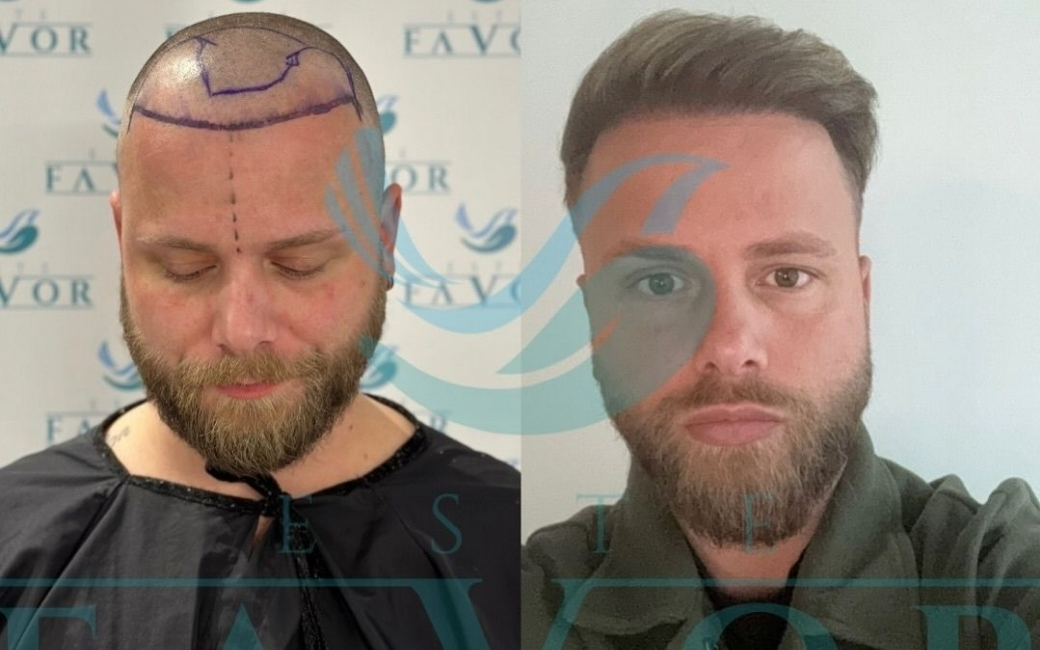
The Second Procedure as Part of a Lifetime Plan
The most important reframe for patients approaching a second hair transplant is to stop thinking of it as evidence of failure and start thinking of it as a planned phase of a long-term strategy. Most patients with androgenetic alopecia who undergo hair transplant surgery in their thirties or forties will, if they choose to maintain their result as their pattern progresses, require more than one session over their lifetime. This is not a defect of the surgical approach; it is the biological reality of a progressive condition being managed with a finite resource.
The clinics that produce the best second-procedure outcomes are those that planned for the second procedure at the time of the first. The graft allocation was conservative enough to leave meaningful donor reserve. The hairline was positioned appropriately for the patient’s age rather than for their preference at the time of the first consultation. The first-procedure documentation is complete enough to guide a second surgeon if needed. These are the practices that make the second procedure straightforward rather than complicated, and they are available at the first consultation : if the right questions are asked and answered honestly.
