
Few questions about hair loss generate more confusion than this one. A man notices his hairline receding in his twenties and immediately thinks of his grandfather, his father, his uncles. He may have heard that the gene comes from the mother’s side. He may have heard that if his maternal grandfather kept his hair, he will too. He may have heard that hair loss skips a generation. Almost all of these beliefs contain a grain of truth surrounded by significant misunderstanding, and the misunderstanding matters because it shapes the decisions people make about when to seek help, whether to act early or wait, and whether to believe that their hair loss is inevitable.
The honest answer to the question of whether hair loss is genetic is: yes, strongly, but not simply. Androgenetic alopecia, the form of hair loss that affects the vast majority of men and a substantial proportion of women, is a condition with a powerful genetic component. But it is not a single-gene condition with a predictable Mendelian inheritance pattern. It is a polygenic condition, influenced by dozens of genetic variants across multiple chromosomes, and the family history picture it produces is complex, probabilistic, and far more nuanced than the folk models most people carry.
This article explains what the science of hair loss genetics actually says, what your family history genuinely tells you about your own risk, what it does not tell you, and how to make practical use of this information in decisions about prevention, monitoring, and treatment.
What Androgenetic Alopecia Is and Why Genetics Matters
Androgenetic alopecia is the medical term for the most common form of progressive hair loss, known colloquially as male pattern baldness or female pattern hair loss depending on the sex of the person experiencing it. The name itself encodes the two essential factors: androgens, the hormones that drive the condition, and genetics, the inherited predisposition that determines whether those androgens trigger the process.
The central mechanism involves dihydrotestosterone, a potent androgen derived from testosterone through the action of an enzyme called 5-alpha reductase. In individuals who are genetically predisposed, the hair follicles on the scalp contain androgen receptors that are sensitive to dihydrotestosterone. When this hormone binds to these receptors, it initiates a process of follicular miniaturisation: the follicle progressively produces shorter, finer, less pigmented hairs with each growth cycle, until eventually the hairs become so fine they are effectively invisible and the follicle stops producing terminal hair altogether.
Critically, this process is site-specific. The same person who experiences progressive thinning on the top and front of the scalp will typically retain the hair at the back and sides for life. This is because the follicles in the occipital and temporal regions are genetically different from those on the crown: they do not carry the same androgen receptor sensitivity, and they do not respond to dihydrotestosterone in the same way. This is the biological foundation of hair transplantation, which uses these resistant donor follicles to repopulate the areas where sensitive follicles have miniaturised.
The genetics of this condition are therefore not simply about whether you lose hair. They are about which follicles on your scalp are sensitive to androgens, how sensitive they are, and at what age that sensitivity begins to produce visible change. These are questions that your genome answers in a complex way, drawing on contributions from many different genes.

The Polygenic Reality: Why Family History Is a Probability, Not a Prophecy
For decades, hair loss was popularly described as a trait controlled by a single gene located on the X chromosome, which would explain why the mother’s side of the family was thought to be the most relevant. This model was oversimplified to the point of being misleading. Contemporary genetic research has identified dozens, possibly hundreds, of genetic variants associated with androgenetic alopecia, distributed across multiple chromosomes including, but not limited to, the X chromosome.
The most significant single genetic locus identified so far is the androgen receptor gene, located on the X chromosome. Variants of this gene that produce androgen receptors with increased sensitivity to dihydrotestosterone are strongly associated with early-onset and severe hair loss in men. Because men have only one X chromosome, which they inherit from their mother, the variant of the androgen receptor gene a man carries is entirely maternally inherited. This is the biological basis for the common observation that a man’s maternal grandfather’s hair is a relevant predictor. It is a real signal, but it is only one signal among many.
Genome-wide association studies, which scan large populations for genetic variants associated with a trait, have identified numerous additional loci on other chromosomes that contribute to androgenetic alopecia risk. Some of these variants affect the regulation of hormone metabolism, some affect the biological sensitivity of follicles to androgens through mechanisms other than the receptor itself, and some appear to influence the rate at which follicular miniaturisation progresses once initiated. The cumulative effect of many small genetic contributions, distributed across a large portion of the genome, is what produces the observed heritability of the condition.
What this means in practice is that family history is a probabilistic signal, not a deterministic one. A man whose father, paternal grandfather, maternal grandfather, and multiple uncles are all significantly bald has a very high probability of experiencing significant hair loss himself. A man who has no family history of hair loss on either side has a lower probability, but is not protected: genetic variants in the general population are common enough that sporadic cases occur even without a strong family history. The signal becomes noisier the further back in the family history you look and the fewer affected relatives you identify.

What Your Maternal Grandfather’s Hair Tells You
The maternal grandfather has become the emblematic figure in popular understanding of hair loss genetics, and his hair is worth examining in detail as both a useful signal and an incomplete one.
If your maternal grandfather was significantly bald by his forties or fifties, this tells you that you have inherited a copy of the X chromosome carrying a variant of the androgen receptor gene associated with increased follicular sensitivity. This is genuinely informative and meaningfully raises your probability of experiencing androgenetic alopecia. Early onset in the maternal grandfather is an especially strong signal, because it suggests the variant you have inherited produces a pronounced response.
However, the maternal grandfather’s hair tells you nothing about the contributions from the other dozens of genetic loci associated with hair loss risk. A man can inherit a high-sensitivity androgen receptor variant from his mother and still experience less hair loss than expected if his other genetic contributions are protective. Conversely, a man can have a maternal grandfather with a full head of hair and still experience significant hair loss driven by variants inherited from his father or from other chromosomes.
The maternal grandfather is the most commonly cited figure because the androgen receptor gene, being X-linked, is the single genetic factor with the clearest inheritance path. But he is one chapter in a genetic story that has many authors.

The Father’s Side: More Relevant Than Commonly Assumed
A common misunderstanding is that the father’s genetics are less relevant to hair loss than the mother’s. The X-linked androgen receptor story has promoted this view, and there is a grain of truth in it: a man inherits his X chromosome from his mother, not his father. But the father contributes an entire autosomal genome that includes many of the other loci associated with hair loss risk.
The practical implication is that a man who is trying to assess his own risk by looking at family history should not discount the paternal side. A father who experienced early, significant hair loss is a meaningful predictor even though the contribution comes through autosomal rather than X-linked genes. Studies comparing the predictive value of family history on the paternal versus maternal side have found that both sides contribute meaningfully to risk, with neither side alone providing a complete picture.
Looking at the full spread of male relatives on both sides of the family, assessing the degree and pattern of loss they experienced and the age at which it began, provides a more complete picture than focusing exclusively on the maternal grandfather. A man with a bald father, a bald paternal grandfather, and a bald maternal grandfather has substantially more predictive information pointing in the same direction than one who has only one of these data points.
Pattern and Timing as Genetic Signals
The pattern and timing of hair loss within a family carry genetic information beyond the simple question of whether hair loss occurs. Two specific dimensions are worth understanding.
Age of onset within the family is one of the strongest predictors of an individual’s likely age of onset. Early-onset hair loss, beginning in the late teens or early twenties, has a stronger genetic loading than late-onset loss. A man whose father began losing hair at twenty-two has inherited a variant profile associated with early response; a man whose father retained his hair until his fifties and then experienced moderate loss has inherited a profile associated with later and possibly milder response. This is imperfect as a predictor because other factors influence timing, but it is the most reliable single family history indicator available for timing.
The distribution pattern of loss within the family is also informative. Male pattern baldness follows a recognisable sequence of receding hairline, crown thinning, and eventual confluence, but the specific pattern varies between individuals in ways that have a genetic basis. A family in which every affected male shows primarily frontal recession may be carrying genetic variants different from those in a family where diffuse crown thinning predominates. This information is imperfect for predicting an individual’s exact pattern, but it is worth noting when building a family history picture.
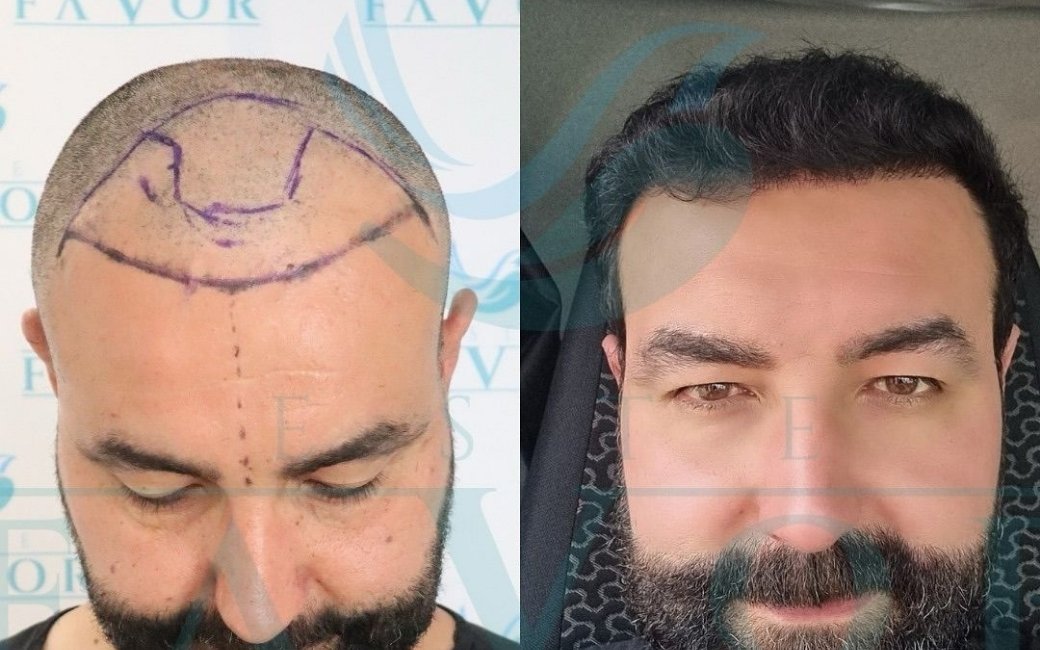
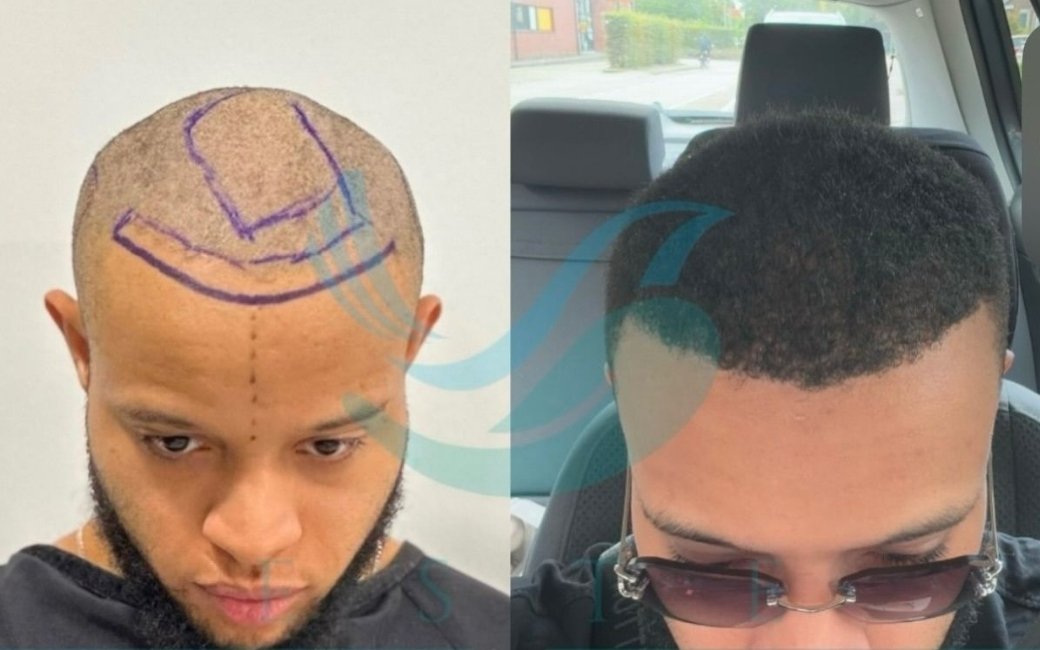
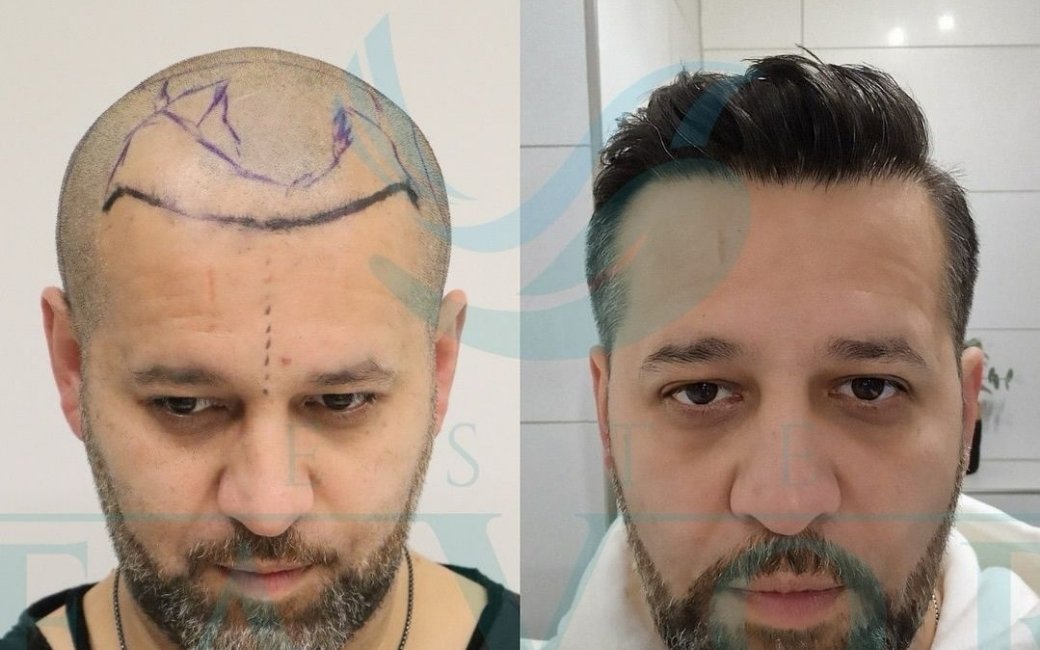
‘Male Pattern Baldness: Causes, Stages, Treatments‘ – the staged progression of androgenetic alopecia, from early hairline changes through to advanced loss, is directly shaped by the genetic sensitivity that family history helps to predict.
What Genetics Does Not Determine
Understanding what your family history does not tell you is as important as understanding what it does. Several dimensions of hair loss experience are less determined by genetics than commonly assumed.
The rate of progression is influenced by genetic factors but also by hormonal environment, age-related changes in hormone levels, overall health, medications, scalp conditions, and other variables that operate on top of the genetic predisposition. Two brothers with identical genetic predisposition may experience different rates of progression depending on these other factors.
The response to treatment is influenced by genetic factors but is not straightforwardly predictable from family history. Both of the primary medical treatments for androgenetic alopecia work on the same biological pathway regardless of the specific genetic variant driving the sensitivity, and the evidence for their effectiveness does not suggest that having a family history of severe loss means they will be less effective for a given individual.
The degree of donor resistance is relevant for anyone considering hair transplantation. The follicles in the occipital region of the scalp are resistant to androgenetic alopecia in virtually all individuals who experience the condition, and this resistance appears to be genetically stable: transplanted donor follicles do not subsequently develop the sensitivity of recipient area follicles even when placed in a hormonally rich environment. The size of the donor area and the density of grafts it can safely supply is, however, influenced by genetics.
Whether hair loss occurs at all is not fully determined by genetics. While androgenetic alopecia has a strong genetic component, it also requires the hormonal environment that comes with puberty and androgen production. Men with certain rare hormonal conditions do not experience androgenetic alopecia even with the genetic predisposition, and the relative contribution of androgen levels to the severity of loss in the normal range of hormonal variation is an area of ongoing research.
Can Genetic Testing Predict Hair Loss?
Commercial genetic tests that claim to predict hair loss risk have become available in recent years. They typically analyse a panel of genetic variants associated with androgenetic alopecia and generate a risk score. The scientific validity of these tests deserves careful consideration.
The tests that focus primarily on the androgen receptor gene variant provide genuinely informative data: knowing whether you carry a high-sensitivity variant is relevant and, combined with family history, adds to the risk picture. However, because the genetic architecture of androgenetic alopecia is so complex and the majority of associated variants have only been identified in studies of European populations, the current generation of commercial tests captures only a fraction of the genetic risk landscape and may be poorly calibrated for individuals of non-European ancestry.
The more clinically relevant assessment remains the family history combined with clinical examination of the current state of the scalp. A dermatologist or hair restoration specialist examining the scalp with trichoscopy or similar magnification tools can identify early signs of follicular miniaturisation that are not visible to the naked eye, providing a more direct assessment of whether the process is underway and how far it has progressed.
‘Scalp Analysis Technology‘ – advanced scalp imaging detects the early signs of follicular miniaturisation that family history predicts in probabilistic terms, providing objective evidence of whether androgenetic alopecia is active and at what stage.
What to Do with the Information: Acting on Family History
Understanding your genetic risk through family history is only useful if it translates into practical action. The key question is not simply whether you are at risk but what to do in response to that risk.
For men in their late teens or early twenties with a strong family history of early-onset hair loss, early clinical assessment is appropriate rather than waiting until loss becomes visually significant. The earlier the process is identified, the more options are available and the more of the existing hair can potentially be preserved. A scalp analysis at this stage can establish a baseline against which future assessments are compared, and if follicular miniaturisation is already detectable, medical management can begin before visible loss has advanced.
For men with a moderate or unclear family history, periodic monitoring rather than immediate treatment is often the appropriate response. Knowing that you have some risk without certainty allows you to watch for the early signs and act when the process begins rather than either ignoring it or treating it prematurely.
For men who are already experiencing visible hair loss in a pattern consistent with androgenetic alopecia, the family history provides context rather than direction: the loss is already underway, and the appropriate response is a clinical assessment of its current severity, likely trajectory, and the available options for management and restoration.
The most important conclusion to draw from family history is not a fatalistic acceptance of inevitable loss but a realistic assessment of risk that enables timely, informed decisions. Hair loss is not a condition where genetics determines everything. It determines the predisposition. What happens with that predisposition depends on when it is identified, how it is managed, and what choices are made in response to it.

Female Pattern Hair Loss and Genetics
The genetic basis of hair loss in women shares some characteristics with male pattern baldness but has distinct features that make the family history picture more complex.
Women experience a form of androgenetic alopecia characterised by diffuse thinning across the crown and top of the scalp, typically with preservation of the frontal hairline, rather than the receding hairline pattern seen in men. The same androgen-receptor sensitivity mechanism is involved, but the hormonal environment is different: oestrogen partially counteracts the effects of androgens on the follicle, which is why female pattern hair loss is typically less severe and later in onset than male pattern loss, and why it often accelerates at menopause when oestrogen levels decline.
The genetic contributions to female pattern hair loss are less well characterised than those to male pattern loss. The androgen receptor gene remains a relevant factor, but the polygenic architecture appears to differ somewhat from the male condition, and family history on both the maternal and paternal sides is relevant for women assessing their own risk. A mother, maternal grandmother, or paternal grandmother who experienced significant thinning provides meaningful risk information, as does a father with early-onset male pattern baldness.
Women with a strong family history of hair loss should be aware that other conditions, particularly thyroid dysfunction, iron deficiency, and certain hormonal conditions, can also cause or exacerbate hair thinning and should be ruled out before concluding that genetics alone is driving any loss they experience. This is a distinction that clinical assessment provides more reliably than family history analysis alone.

EsteFavor’s Approach to Genetic Risk and Planning
At EsteFavor, understanding a patient’s genetic risk forms an essential part of the pre-operative assessment for any hair restoration procedure. A patient’s family history, combined with a detailed scalp analysis using advanced imaging technology, allows the clinical team to assess not only the current state of the hair loss but its likely trajectory.
This matters for treatment planning because a hair transplant is not performed in isolation from the genetic process it is addressing. A patient with a strong family history of aggressive, early-onset loss requires a surgical plan that accounts for future progression: the grafts placed today must be distributed in a way that will continue to look natural as the surrounding native hair continues to thin in the years following the procedure. A patient with a family history of stable, moderate loss after a certain age requires a different planning approach.
The donor area assessment at EsteFavor evaluates the density and characteristics of the occipital hair in a way that accounts for the patient’s genetic profile, ensuring that the grafts available for transplantation are genuinely resistant to androgenetic alopecia and will behave as permanent hair in the recipient area.
Conclusion
Hair loss is genetic in a meaningful sense: the predisposition to androgenetic alopecia is substantially inherited, and family history is the most readily available tool for assessing that predisposition. But it is genetic in a complex way that simple folk models do not capture. The maternal grandfather’s hair is one informative data point among many. The father’s history matters. The pattern and timing of loss across the whole family picture add information that single data points cannot provide.
The most important thing your family history tells you is not whether you will lose your hair, but how much attention to pay to your scalp and when to seek clinical assessment. Used correctly, this information enables earlier identification of the process when it begins, more options for management and preservation, and better planning for any restoration procedure that becomes appropriate. Understanding your genetic inheritance is the first step toward making informed choices about what to do with it.
