
The question surfaces regularly in patient consultations, in hair loss forums, and in the popular science press: is hair cloning just around the corner, and will it make surgical transplantation obsolete? The short answer, as of 2026, is no — not yet, and not imminently. The longer answer is more interesting, because the science underlying hair multiplication research is genuinely advancing, the obstacles that remain are clearly identified, and understanding them gives patients a more accurate picture of what is actually available today versus what may become available in the future.
This article is written for patients who want a scientifically grounded account of where hair cloning research stands in 2026, stripped of both the dismissiveness that sometimes characterises clinical commentary and the breathless optimism that characterises popular science journalism. The goal is a clear picture: what has been demonstrated, what the remaining obstacles are, why those obstacles are difficult, and what the realistic timeline looks like from the perspective of current research trajectories.
The clinical implication of that picture matters too. Patients who are losing hair now and deciding whether to pursue a transplant face a real question: should they wait for something better, or is waiting likely to cost them donor resources and years of quality of life for a technology that remains further away than headlines suggest? That question deserves an honest answer, and this article attempts to provide one.
What Hair Cloning Actually Means
The term “hair cloning” is used loosely in popular media, and the imprecision matters because it conflates several distinct scientific approaches that are at very different stages of development. A more precise term — and the one used in the research literature — is hair follicle multiplication or follicular neogenesis. The core concept in all versions of the approach is the same: to produce new, functioning hair follicles from a patient’s own cells, overcoming the fundamental limitation of current transplant technology, which is that it redistributes existing follicles rather than creating new ones.
The most extensively studied approach involves the isolation and culture of dermal papilla cells — the specialised cells at the base of each hair follicle that regulate its growth cycle and determine the characteristics of the hair it produces. In laboratory conditions, these cells can be extracted from a small donor punch biopsy, multiplied in culture to produce far more cells than the original sample contained, and then reintroduced into the scalp in a form that, in theory, would induce the formation of new follicles. If this process worked reliably in humans, a small biopsy could theoretically provide enough cell material to cover any extent of hair loss, entirely eliminating the donor supply constraint that limits current transplant surgery.

A second approach involves the use of induced pluripotent cells reprogrammed into follicular progenitor cells — a more complex route to the same destination that has attracted significant research interest but faces its own distinct biological challenges. A third, less developed line of research involves three-dimensional bioprinting of follicular structures, which remains largely in the domain of proof-of-concept laboratory work.
Each of these approaches has shown genuine promise in laboratory and early animal studies. None has yet produced a reliably reproducible, clinically applicable result in human trials that would support its use as a treatment.
The Dermal Papilla Cell Problem
Dermal papilla cell culture is the approach that has been most actively developed in clinical research over the past two decades, and it is the one most likely to produce the first clinically viable hair multiplication technique — when and if the key obstacles are overcome. Understanding those obstacles is essential to understanding why the timeline remains uncertain.
The fundamental problem is that dermal papilla cells, when removed from their native environment and cultured in standard laboratory conditions, rapidly lose the specialised properties that make them capable of inducing hair growth. They dedifferentiate — reverting toward a more generic cell type — and lose what researchers call their inductive capacity. In animal models, implanted dedifferentiated dermal papilla cells produce at best weak, poorly structured hair follicles, and often produce none at all.

Restoring inductive capacity to cultured dermal papilla cells has been the central challenge of the field for years. Research teams have explored a range of approaches: three-dimensional culture systems that mimic the architecture of the native papilla, the use of specific growth factors and signalling molecules that maintain cell specialisation, co-culture with other follicular cell types, and various substrate materials designed to preserve the cell’s biological identity. Progress has been made. Several groups have demonstrated partial restoration of inductive capacity in laboratory settings, and some results have been compelling enough to advance into early human studies.
The results from those human studies, however, have been modest. Partial restoration in vitro has not translated reliably into robust new follicle formation in human scalp tissue. The biological signals required to coordinate the formation of a complete, cycling hair follicle — involving not just the papilla cells but the surrounding epithelium, the arrector pili muscle, the sebaceous gland, and the vascular supply — are more complex than current culture techniques can fully replicate. A follicle is not merely a cluster of specialised cells; it is a precisely organised micro-organ whose formation requires a cascade of molecular events that researchers have described and partially mapped but not yet fully controlled.
What Human Trials Have Shown
Several companies and research groups have advanced hair multiplication technologies to human clinical trial stages, and their results are worth examining carefully rather than through the lens of the press releases that accompanied them.
The most publicised results to date have come from trials using three-dimensional culture methods to improve dermal papilla cell inductive capacity. These trials have generally demonstrated safety — no significant adverse events related to the cell injection itself — and have shown some evidence of new hair growth in a proportion of trial participants. The new hair produced, however, has typically been sparse, variable across participants, and in some cases temporary rather than cycling in the way that permanent follicles do. No trial as of 2026 has reported the kind of consistent, dense, permanent new hair growth that would be needed to position the technology as a viable clinical treatment.
These results are not failures in the full sense. They are demonstrations that the biological mechanism is partially activatable in humans, which is a meaningful step forward from where the field was a decade ago. They also provide the data that researchers need to understand specifically what is not working — which cell populations are insufficiently activated, which signalling pathways are not being triggered, which aspects of the three-dimensional architecture are not being replicated adequately. This information is feeding directly into the next generation of experimental designs.
What the trials have not yet shown — and what remains the outstanding scientific challenge — is a reliable, reproducible protocol that produces new, permanent, cosmetically meaningful hair growth in a consistent proportion of patients. That threshold has not been crossed, and the distance between the best current results and that threshold remains significant.
Why the Scalp Environment Is More Complex Than It Appears
One aspect of hair multiplication research that receives less attention than it deserves is the role of the recipient environment — the scalp tissue into which new follicular cells would be introduced. The formation of a new follicle is not simply a function of what happens to the introduced cells. It depends equally on what the surrounding tissue does in response, and androgenetically affected scalp tissue is not a neutral or passive environment.
In areas of significant hair loss, the scalp has typically undergone changes that extend beyond the miniaturisation of individual follicles. The dermal architecture in affected zones shows altered collagen organisation, changes in the distribution and activity of fibroblast populations, and modifications to the local vasculature. These changes are consequences of the same androgenetic process that drives follicle miniaturisation, and they create a tissue environment that may be less receptive to new follicle formation than healthy scalp.
This is not an insurmountable problem — tissue conditioning approaches and co-treatments designed to normalise the recipient environment before or alongside cell introduction are active areas of investigation. But it adds a layer of complexity to the therapeutic challenge that is often absent from popular accounts of the technology, which tend to focus exclusively on the introduced cells and not on the environment in which they must function.
The immunological dimension also matters. Introduced cells must avoid triggering an immune response sufficient to destroy them before they have time to establish new follicular structures. Autologous approaches — using the patient’s own cells — substantially reduce this risk but do not eliminate it entirely, since the culture process itself may alter cell surface markers in ways that affect immune recognition. Managing this dimension is routine in research design but adds further complexity to the translation from laboratory result to clinical application.

‘AI-Assisted Hair Transplant Planning‘ – while hair cloning research addresses the donor supply constraint in transplant surgery, AI-assisted hair transplant planning is already improving how existing donor supply is allocated and used in procedures available today
The Regulatory Pathway and Its Timeline Implications
Even if a hair multiplication technique were to achieve convincingly positive results in clinical trials tomorrow, the path from those results to a widely available clinical treatment would take several additional years. Understanding the regulatory pathway is important for setting realistic expectations about when any new technology might actually become accessible to patients.
Cell-based therapies face a more demanding regulatory framework than device-based or pharmacological treatments. Regulators require not only evidence of efficacy but detailed documentation of manufacturing processes, quality controls at every stage of cell culture and preparation, long-term safety follow-up data, and in many jurisdictions proof that the product can be manufactured consistently at scale. These requirements are not bureaucratic obstacles — they reflect hard-learned lessons from the history of cell and gene therapy, where treatments that appeared promising in early trials produced serious adverse events in a small proportion of patients.
The practical implication is that a hair multiplication technique achieving compelling Phase 2 trial results in 2026 or 2027 would realistically face several years of further trials, regulatory review, and manufacturing scale-up before it became available as a licensed treatment in major markets. Earlier access through clinical trials or compassionate use programmes would be available to some patients, but at a cost — both financial and in terms of the uncertainty inherent in participating in a trial of a not-yet-approved therapy.
This regulatory reality is one of the reasons that clinicians tend to give more conservative timelines for the availability of hair multiplication therapies than technology journalists do. The science produces results that are reported as breakthroughs; the pathway from breakthrough to treatment involves a sequence of steps that each take real time to complete.
What This Means for Patients Deciding Now
The practical question for a patient experiencing hair loss in 2026 is whether to wait for hair multiplication technology or to proceed with established surgical options. This question deserves a direct answer: for the large majority of patients, waiting is not advisable.

The most optimistic credible scenarios in the peer-reviewed literature suggest that a first-generation hair multiplication treatment with clinically meaningful efficacy could become available in the early-to-mid 2030s, assuming current research trajectories continue and no significant unexpected obstacles emerge. Less optimistic assessments — which take into account the history of technologies that appeared close to clinical readiness and then stalled — would place the timeline further out. No researcher with a serious understanding of the field is predicting a widely available, fully validated treatment within the next three to five years.
In that time, a patient who delays treatment loses something real: hair that continues to thin, a donor supply that may diminish, and years of living with a changed appearance that a well-executed transplant could have meaningfully improved. The transplant is available now, it is technically sophisticated, it produces durable and natural results when performed well, and its limitations are well understood and can be planned around.
There is also an important nuance for patients at the edges of the transplant candidate spectrum. A patient with very limited donor supply who would be a marginal transplant candidate might reasonably factor the possibility of future hair multiplication technology into their decision — choosing to preserve donor resources rather than committing them to a transplant that achieves only partial coverage today. But this is a specific clinical calculus that should be made with an honest assessment of what current transplant technology can actually offer, not a general reason for all patients to delay.
The Honest Landscape of Unproven Treatments
The gap between the current state of hair cloning research and a clinical treatment has created space for a range of unproven or inadequately validated offerings that patients should be aware of. Some clinics in less regulated markets offer cell-based hair treatments that borrow the vocabulary of the research — dermal papilla cell injections, follicular progenitor cell therapies — without the clinical trial evidence, manufacturing controls, or regulatory oversight that characterise legitimate research-stage treatments.

These offerings are neither the same as the research-stage clinical trials being conducted by serious research institutions, nor equivalent to established surgical techniques whose safety and efficacy are well documented. They occupy an ambiguous space between experimental and commercial, and the evidence for their efficacy is at best anecdotal and at worst manufactured. Patients considering any cell-based hair treatment should ask specifically about the clinical trial data supporting it, the regulatory status of the treatment in the jurisdiction where it is offered, and whether the treatment is being conducted under an ethics board-approved protocol.
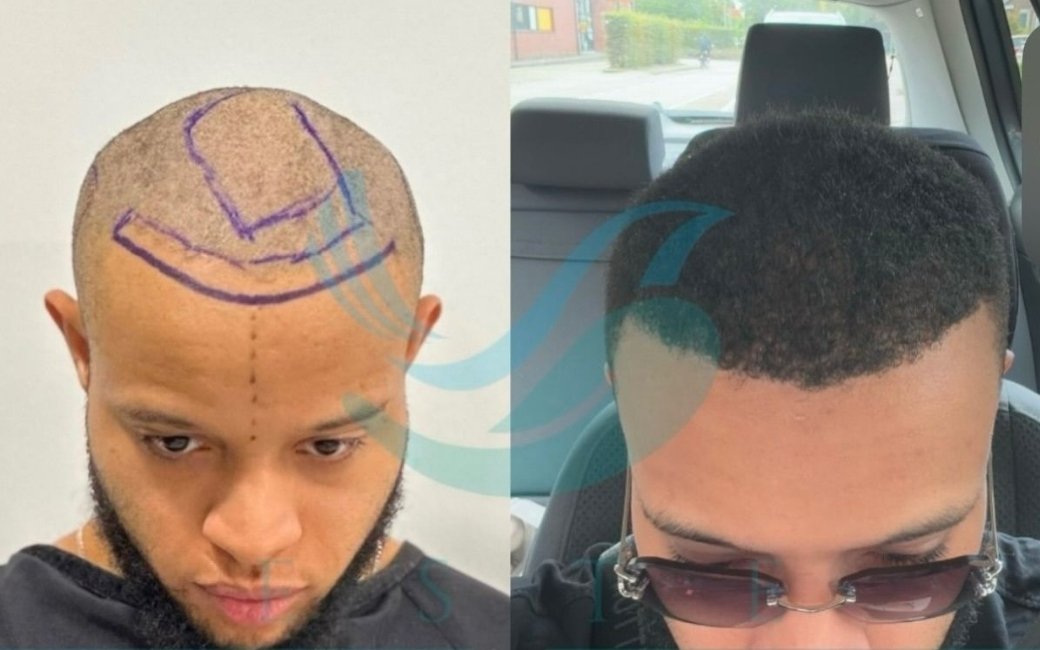
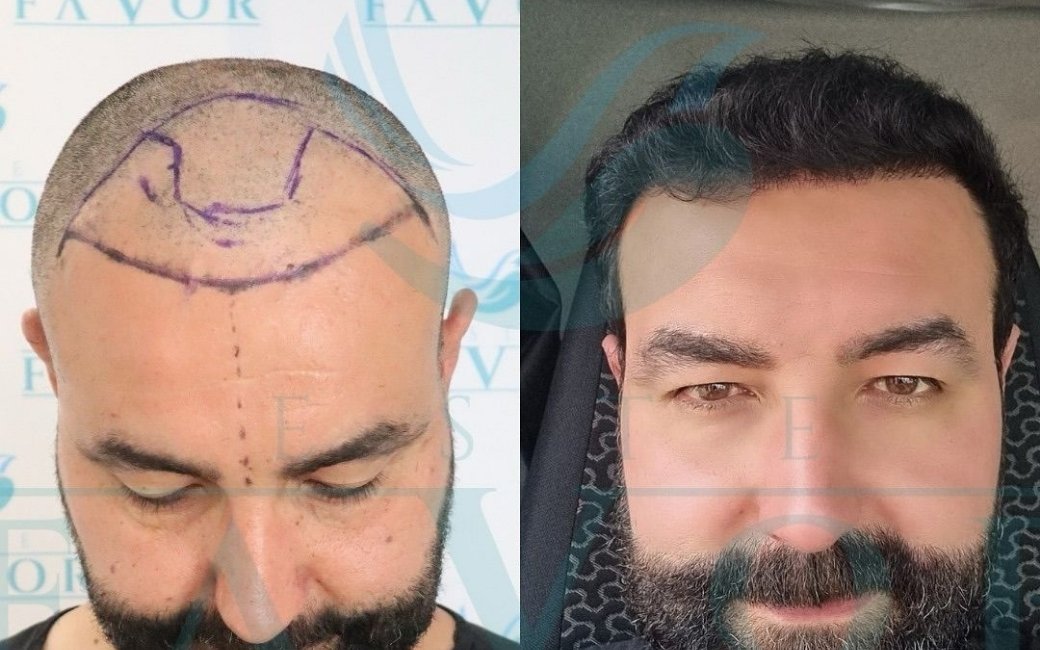
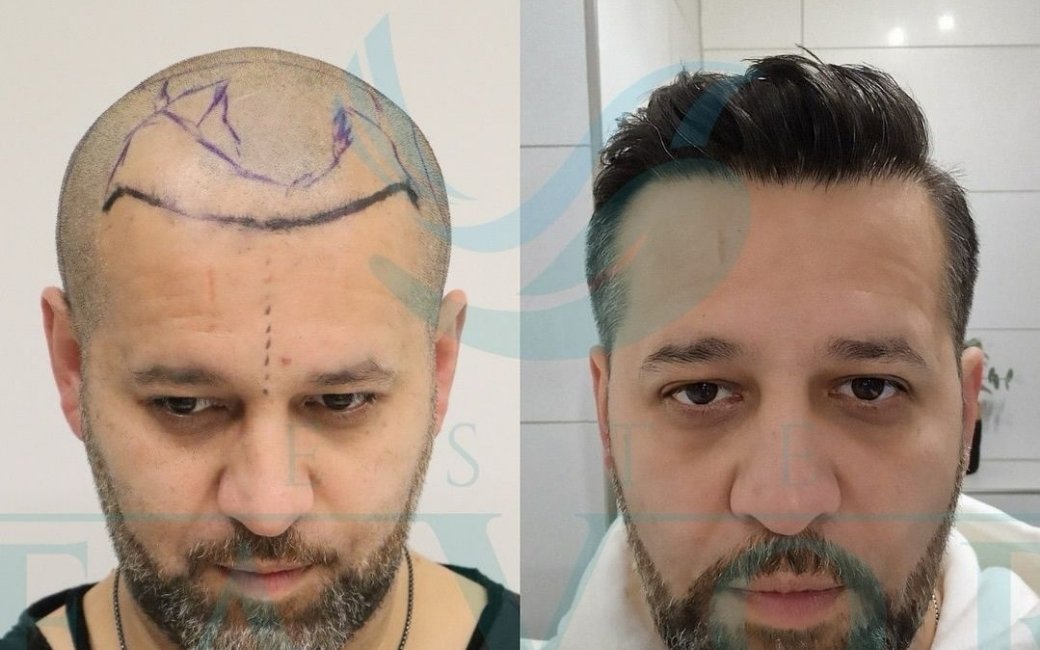
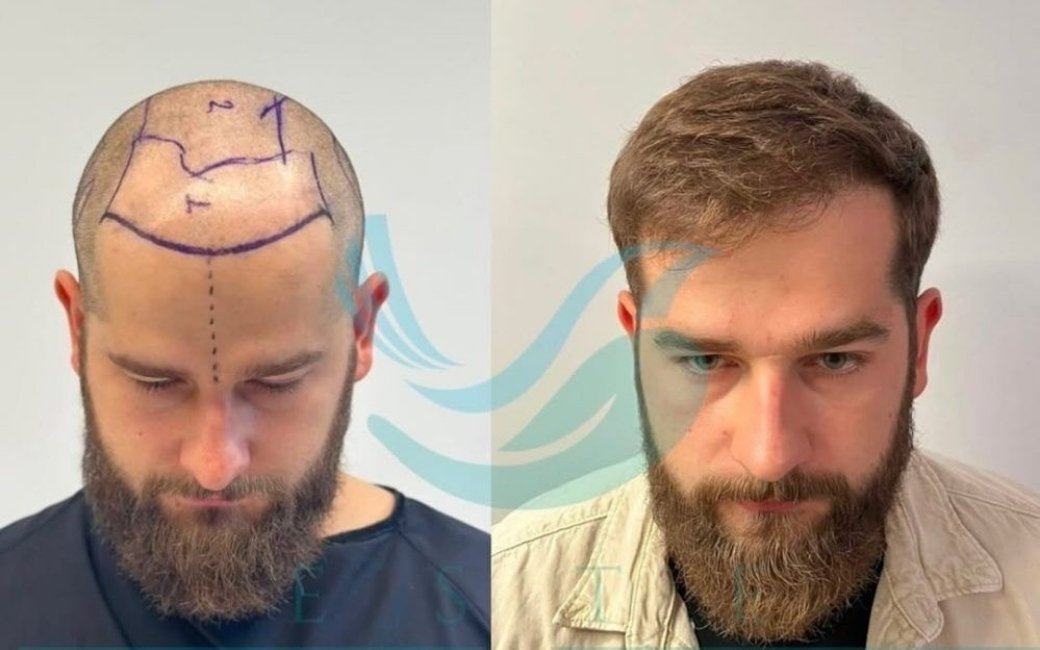
At EsteFavor, the clinical approach is grounded in techniques whose efficacy and safety are established and documented: Sapphire FUE and DHI, performed within rigorous clinical protocols, with follow-up structures that track outcomes over twelve months. The clinic does not offer experimental or unvalidated treatments, and does not position unproven approaches as equivalent to the established surgical techniques that form the basis of responsible hair restoration practice.
‘Male Pattern Baldness: Causes, Stages, Treatments‘ – understanding the biological mechanism behind androgenetic hair loss provides context for why both current treatments and hair cloning research follow the directions they do
Where the Research Is Most Promising
Despite the realistic timeline assessment above, it is worth being specific about the areas of hair multiplication research that represent genuine scientific progress rather than stalled aspirations.

Three-dimensional organoid culture systems — in which follicular cells are arranged in three-dimensional structures that better replicate the organisation of native follicles — have produced more promising results than earlier two-dimensional culture approaches. Several research groups have demonstrated that papilla cells cultured in these systems retain inductive capacity for significantly longer than in conventional culture, and the follicular structures they produce when implanted in animal models are more complete and more capable of cycling.
Advances in single-cell sequencing technology have dramatically improved researchers’ understanding of the molecular identity of different follicular cell populations, the signalling pathways that control the hair growth cycle, and the specific ways in which androgenetically affected follicles differ from healthy ones at the gene expression level. This knowledge is feeding directly into more targeted experimental designs and into a better understanding of which aspects of the culture environment need to be improved.
The convergence of organoid technology, single-cell biology, and advances in biomaterial scaffolding represents the most credible current pathway toward a clinically viable hair multiplication technique. It is a pathway with real scientific momentum, substantial investment from both academic and commercial research funders, and a growing body of peer-reviewed results. It is also a pathway whose final steps — reliable human efficacy, consistent manufacturing, regulatory approval — have not yet been completed and cannot be completed quickly.
The Future of Transplant Technology in Parallel
Hair transplant technology is not static while hair multiplication research develops. The advances in digital scalp mapping, AI-assisted planning, refined Sapphire FUE and DHI instrumentation, and evidence-based graft handling protocols that characterise the current state of the field mean that the transplant available in 2026 is substantially better than the transplant available ten years ago, and the transplant available in five years will likely be better still.

The donor supply constraint remains, and nothing in current transplant technology research is likely to eliminate it. But within that constraint, the precision with which donor resources are allocated, the naturalness of the results achievable, and the durability of well-planned outcomes continue to improve. The right comparison for a patient making a decision in 2026 is not between current transplant technology and an idealised future multiplication therapy — it is between current transplant technology and the realistic state of multiplication therapy at the time when it might actually be available.
When evaluated on that basis, the case for proceeding with a well-planned transplant for appropriate candidates remains strong. EsteFavor’s packages range from 2,000 to 4,500 USD including VIP transfer, four-star hotel accommodation, and a 12-month follow-up programme, structured around providing that standard of care to international patients in a medically supervised, outcome-focused environment. Further information is available at www.estefavor.com.
‘Scalp Analysis Technology’ – the digital scalp analysis tools in use at clinics like EsteFavor today apply follicular imaging and data analysis to optimise outcomes within the constraints of current transplant surgery, demonstrating how biological knowledge translates into improved clinical results even before multiplication technology becomes available
Conclusion
Hair cloning — more precisely, hair follicle multiplication — is a scientifically serious research programme with genuine momentum and real potential. It is not imminent, it is not available as a validated clinical treatment in 2026, and patients should be cautious about any offering that positions itself as delivering on the promise of the research before that research has completed the clinical trial and regulatory pathway required for a validated treatment.
For patients with hair loss today, the responsible course is to make a decision based on what is available and well-documented, with a clear understanding of its limitations, rather than deferring a decision in anticipation of a technology whose timeline remains genuinely uncertain. A well-planned transplant with realistic expectations, performed by a clinically rigorous team, remains the most reliably effective intervention available — and the one whose results can be predicted, documented, and built upon over time.
