
The fear of an unnatural result is the most common anxiety patients bring to a hair transplant consultation. It is reasonable. Bad hair transplants have a specific, recognisable look that was far too common in earlier decades and that remains visible enough in real life to generate justified wariness. A hairline of evenly spaced plugs, or a density so artificially uniform that it draws attention rather than disappearing into a normal head of hair, signals surgery rather than nature. Patients who have seen these results : on an older relative, a celebrity, a colleague : arrive at consultation wanting reassurance that the same will not happen to them.
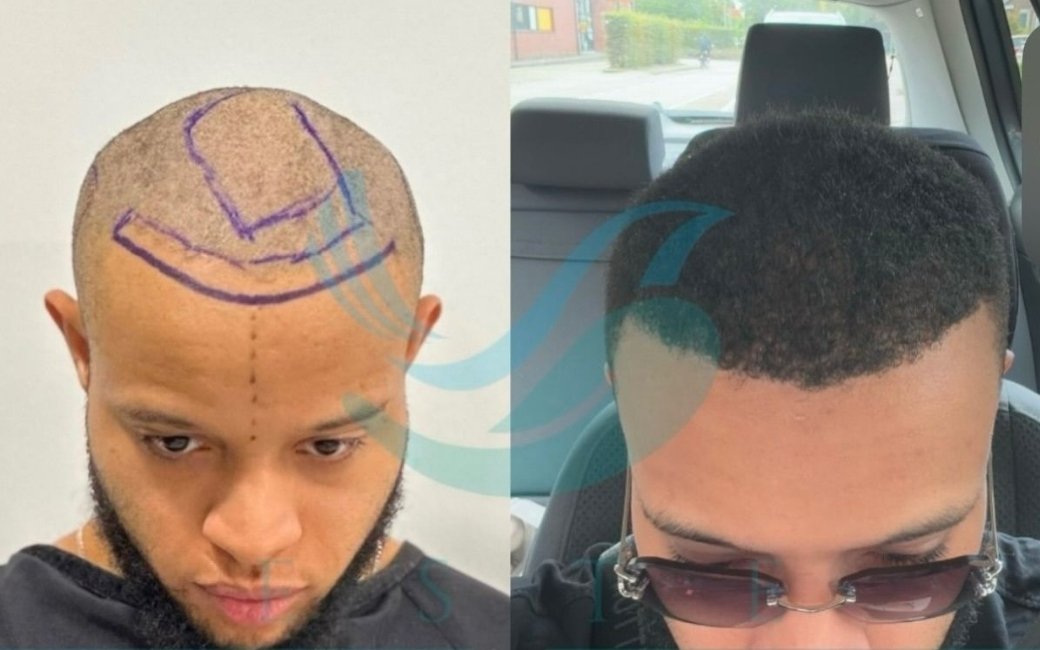
The reassurance is available and it is honest: modern FUE and DHI techniques, performed by an experienced surgical team with a thorough pre-operative assessment, routinely produce results that are genuinely undetectable as transplants. But the word ‘routinely’ carries conditions. Naturalness is not automatic. It is the product of specific decisions made at specific points in the planning and surgical process, and understanding what those decisions are gives patients the knowledge to evaluate whether the clinic they are considering is making them correctly.
This article explains what determines whether a hair transplant looks natural, why some results do not, what ‘natural’ actually means in different anatomical zones, how hairline design affects naturalness across a patient’s entire lifetime, what density and coverage targets are realistic and why, and what patients should look for in a consultation to assess whether they are likely to get the result they are hoping for.
What ‘Natural’ Actually Means in Hair Restoration
Natural, in the context of a hair transplant result, does not mean indistinguishable from a full head of untreated hair. It means indistinguishable from the hair that person would naturally have at their current age, given their degree of hair loss. These are different standards, and confusing them is the source of much of the disappointment that follows hair transplant surgery.
A natural result for a forty-eight-year-old man with a Norwood 4 pattern does not look like the hair he had at twenty-two. It looks like the hair of a forty-eight-year-old man who happens to have a full frontal zone and a defined part line, with some thinning elsewhere that is consistent with his age. The transplanted area should look like it belongs to him, not like it was added to him. The surrounding hair, the hairline position, the density, and the direction of hair growth all need to read as a coherent whole.
This distinction matters enormously for expectation management. Patients who arrive at consultation expecting to look as they did at twenty-five are approaching surgery from a framework that no surgical technique can satisfy. Patients who arrive wanting to look significantly better than they do now, in a way that is proportionate to their current face and age, are approaching it from a framework that skilled surgery can meet. The surgeon’s job includes helping patients understand the difference between these two goals before a commitment is made.

Hairline Design: The Foundation of a Natural Result
The hairline is the most visible determinant of whether a hair transplant looks natural. It is also the component most frequently compromised by inexperienced surgeons, aggressive patient requests, or both. A hairline that is placed too low, too straight, too sharp, or too dense will look artificial regardless of the technical quality of the graft placement behind it. The architecture of the hairline, not merely the execution of the extraction and implantation, determines naturalness.
Natural hairlines are not straight lines. They have an irregularity that comes from the way individual follicular units are distributed at the frontier between the scalp and the forehead. At the very leading edge of a natural hairline, individual single-hair grafts create a soft, slightly irregular boundary. Behind that transition zone, two and three-hair follicular units provide progressively increasing density. The visual effect is of a gradient rather than a border, and this gradient is what makes the hairline disappear into the face rather than sitting on top of it.
The position of the hairline must be appropriate for the patient’s age and facial proportions. This is one of the areas where the interests of the patient in the short term and the interests of the patient over a lifetime can diverge, and where a good surgeon needs to hold the line rather than simply agreeing with what the patient requests. A hairline placed at the position a patient occupied at twenty-two will look appropriate at twenty-eight. At forty-five, when the surrounding hair has thinned further and the face has aged, that same hairline will look incongruous : too low, too sharp, sitting on a face that has not remained the anatomy it was designed for.
The temporal and lateral hairline design matters as much as the frontal design. The temples and the corners of the hairline are areas where the transition from hair to bare scalp is most visible in everyday social interaction. A hairline that is well-designed across the frontal zone but neglects the temporal recession will look incomplete : the front looks natural but the sides make the surgery obvious. A thorough hairline design accounts for the full perimeter of the hairline, not just the most anterior point.

Density: Why the Goal Is Not Maximum
One of the most persistent misconceptions about hair transplant results is that more density is always better. In practice, the density target that produces the most natural result is not the maximum achievable density but the density that is consistent with the patient’s overall hair picture. Transplanting grafts at very high density into a zone surrounded by thinning native hair creates a contrast that draws attention to exactly the boundary between treated and untreated areas.
Natural scalp density is approximately 80 to 100 follicular units per square centimetre. A hair transplant can typically achieve 40 to 50 follicular units per square centimetre in the recipient zone. This is roughly half the natural density, which sounds inadequate until you consider what it actually looks like: because the hair shafts grow upward and splay outward from their follicular bases, 40 to 50 units per square centimetre produces a visual coverage that reads as significantly denser than the raw number suggests. Hair transplant density, properly designed, looks denser than it is.
The more important variable for natural appearance is the consistency of density across different zones of the result. A hairline that is very dense at the front and drops sharply to a sparse mid-scalp looks artificial because no natural hair loss pattern produces that distribution. A more natural distribution starts with moderate density at the hairline, increases through the frontal zone, and transitions gradually toward whatever native hair exists behind the transplanted area. This graduated approach requires careful graft allocation rather than concentration of grafts in the most visible anterior zone.
The density discussion also connects directly to the lifetime planning conversation. A twenty-six-year-old who requests maximum density in the frontal zone, using the bulk of their donor capital, creates a result that looks excellent at twenty-eight and increasingly incongruous at thirty-eight as the surrounding native hair continues to thin. Reserving enough donor supply for future sessions, and designing the initial density with the expectation of supplementation, produces a result that remains natural as the patient ages.

How Technique Affects Natural Appearance
The technical execution of graft placement directly determines whether the result looks natural. Three variables in particular have visible consequences: the angle of implantation, the direction of hair growth, and the depth at which grafts are placed.
Hair does not grow straight up from the scalp. In different zones of the scalp, hair shafts emerge at characteristic angles and in characteristic directions. The frontal hairline has hair that angles forward and slightly downward. The temporal zone has hair that angles toward the sides and downward. The crown typically has a circular or elliptical growth pattern around a central whorl. When grafts are implanted at angles that do not match the natural hair growth pattern of the zone they are placed in, the hair grows in a direction that does not match the surrounding native hair. The result is a zone that looks like a patch of hair that was transplanted rather than a seamlessly integrated part of the scalp.
The depth at which recipient sites are created affects graft survival and the surface quality of the result. Sites that are too shallow risk leaving grafts partially exposed during healing, which can affect the angle of growth and the cosmetic quality of the emerging hair shaft. Sites that are too deep can cause pitting, a visible depression in the scalp surface that creates a slightly cratered appearance in the recipient zone when the hair is short. Both of these are technical errors that affect naturalness in ways that are distinct from the design decisions discussed elsewhere.
DHI, in which grafts are implanted directly using a loading pen without prior channel creation, allows a degree of angle and direction control that can be particularly precise in the hairline zone where angle matching is most critical. FUE with manually created recipient sites, when performed by an experienced surgeon, achieves comparable results. The technique matters less than the skill with which it is executed, but the instrument used affects the workflow and the precision available at each step.
The Growth Timeline and Temporary Unnaturalness
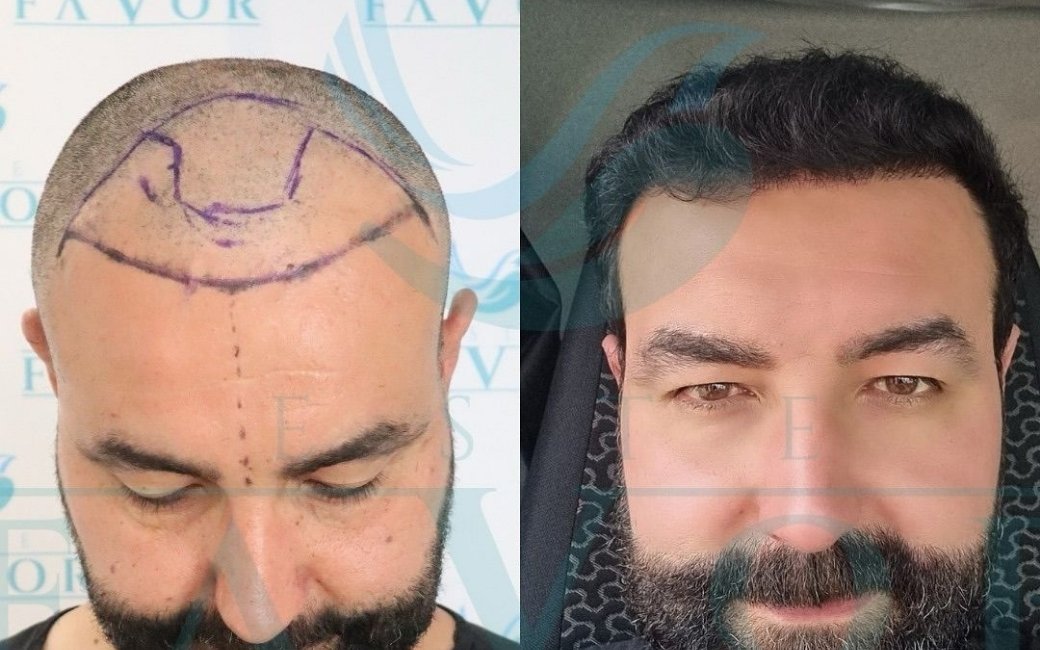
Every hair transplant patient passes through a phase in which the result looks worse than it did before surgery, and understanding this in advance is essential to realistic expectation management. The shock loss phase : in which transplanted hairs shed their shafts three to six weeks after surgery, leaving the scalp looking sparser than at the time of the procedure : is temporary, inevitable, and has nothing to do with graft failure. The follicles are intact; they are simply cycling through a telogen phase before re-entering active growth.
Visible regrowth typically begins around months three to four, with meaningful density apparent by month six. The full result, with the final hair calibre, density, and surface quality of the recipient zone, is not visible until approximately month twelve. Patients who assess their result at month five and conclude that it is poor are making an evaluation on an unfinished canvas. The most accurate assessment of a hair transplant result is made at twelve months, and patients who understand this timeline avoid the significant distress that premature evaluation generates.’,
The growth is also uneven across different parts of the recipient zone. Frontal grafts typically grow at a different rate from crown grafts, and within the frontal zone, central grafts may establish visible density before the temporal grafts behind them. This uneven progression can make the mid-point result look asymmetric or patchy in a way that resolves completely as all zones reach full growth. Patients who are aware of this pattern interpret the six-month result correctly as a stage rather than a final state.
What Realistic Expectations Actually Look Like
Setting realistic expectations is not about dampening enthusiasm or preparing patients for disappointment. It is about aligning what the patient is hoping for with what the biology, the donor supply, and the surgical technique can actually produce, so that the final result meets the expectations the patient had rather than failing expectations that were never achievable.
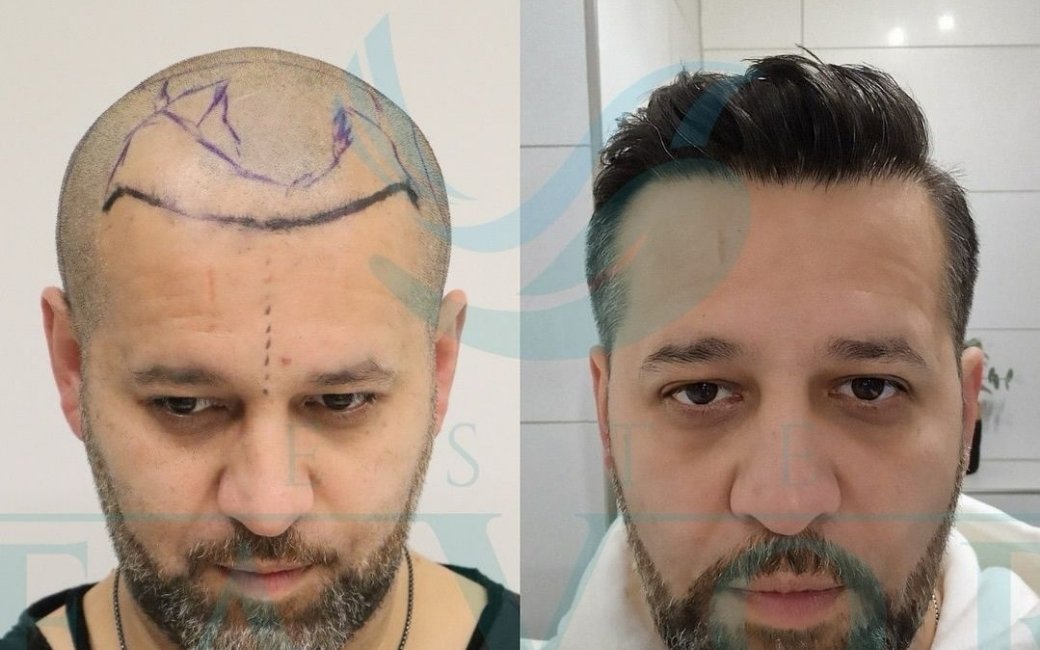
A realistic expectation for a patient with a Norwood 3 to 4 pattern, a good donor zone, and a conservative hairline design might look like this: the frontal recession is corrected to a position appropriate for their age, the hairline has a natural irregular quality rather than an obvious transplanted look, the density in the treated zone is sufficient to eliminate the visible scalp in the frontal area under normal lighting conditions, and the overall appearance reads as naturally good hair for their age and face. This is an excellent, life-changing result. It is also what good surgery routinely achieves.
An unrealistic expectation for the same patient would be: the hairline is positioned at the level it was at twenty-two, the density matches an untreated full head of hair, the crown is fully covered, and there is enough donor supply remaining to address any future progression. This expectation cannot be met by any surgical technique with the available donor capital, and surgery designed to try to meet it will compromise the result by using donor grafts in a way that leaves no reserve, produces contrast between the transplanted zone and the surrounding hair, and ages poorly.
The consultation is the correct place for this conversation, not the post-operative review at month twelve. A clinic that conducts a thorough consultation, shows the patient realistic comparator images, explains the density and hairline position that is being planned and why, and obtains genuine informed consent : not simply agreement : is performing an essential clinical service. The patient who understands what they are getting before surgery is the patient who is satisfied with it afterwards.

How to Assess a Clinic’s Likely Output Before Committing
Patients evaluating clinics can apply a straightforward test to assess whether a clinic’s standard results are likely to look natural. Request to see before and after photographs of patients at twelve months post-procedure, not at six months or immediately post-op. Look specifically at the hairline transition zone: does the leading edge have the soft, irregular quality of a natural hairline, or does it have a defined line that reads as implanted? Look at whether the density in the transplanted zone is consistent with the surrounding native hair or whether it creates a visible contrast.
Ask the clinic whether the hairline design is discussed and agreed before the procedure, and whether a digital representation of the planned hairline is provided. A clinic that proceeds directly from consultation to graft count and pricing without a documented hairline design discussion is making decisions that significantly affect the naturalness of the result without the patient’s explicit participation in those decisions.
Ask about the surgeon’s specific role during graft implantation. In many clinics, especially high-volume ones, the surgeon performs the extraction and then delegates implantation to technicians. The angle, direction, and depth of implantation : the technical variables that most directly affect naturalness : are determined during implantation. A surgeon who is not present for this phase is not in control of the variables that most affect whether the result looks natural.
The Honest Answer to the Question
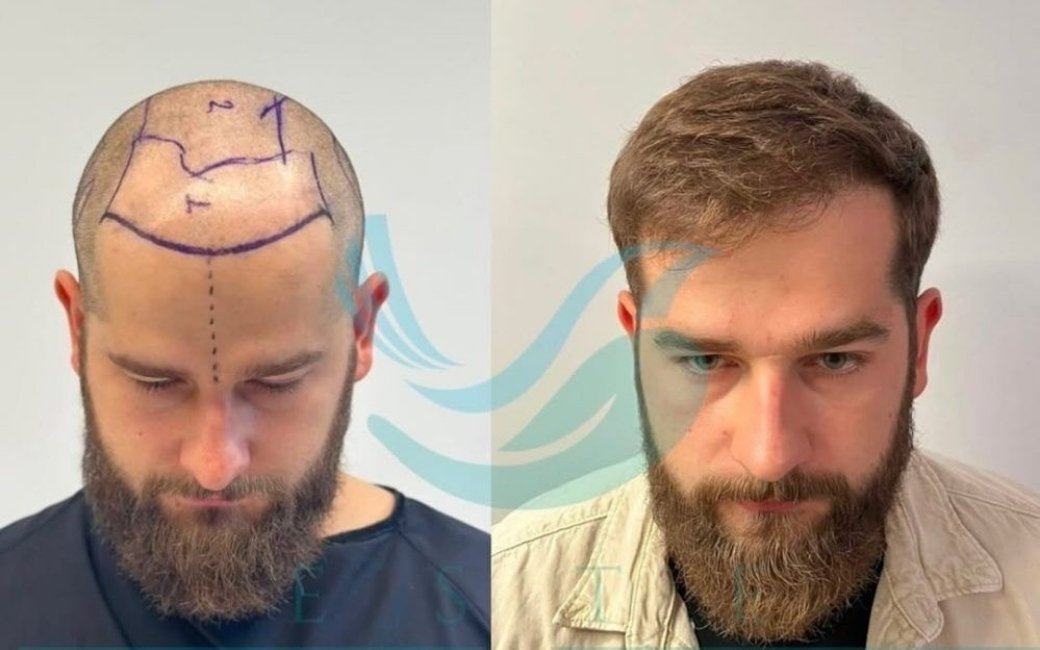
Will a hair transplant look natural? The honest answer is: it depends, in specific and identifiable ways, on the quality of the planning and the execution. A procedure with a well-designed, age-appropriate hairline, a density target consistent with the patient’s overall hair picture, technically precise graft implantation with correct angle and direction, and an expectation framework grounded in what good surgery actually achieves : that procedure will look natural. Most people who see the result will not know surgery occurred.
A procedure with an over-aggressive hairline, maximum-density planting regardless of the surrounding context, implantation angles that do not match the native growth pattern, or an expectation of full density restoration that drove the surgeon to use the entire donor supply in a single session : that procedure will not look natural in the medium term, regardless of how good it looks at month three. The difference between these two procedures is not the surgeon’s skill alone. It is the quality of the planning conversation that precedes the surgery, and the willingness of both the surgeon and the patient to prioritise the right outcome over the appealing one.
