
Most patients who regret their hair transplant result did not choose a bad clinic by accident. They chose it after a consultation that felt reassuring, that produced a confident graft count, and that offered a price that seemed reasonable. What the consultation did not produce was the information that would have allowed them to evaluate whether the clinic was likely to deliver the result they were hoping for. The questions were not asked, or were not asked in a form that produced useful answers.
The ten questions in this article are designed to produce useful answers. They are not intended as a confrontational checklist but as a framework for a productive consultation: one that moves the conversation beyond pricing and graft counts toward the specific clinical and technical factors that determine whether a hair transplant result looks natural, lasts well, and meets the patient’s expectations at twelve months and at ten years. Every reputable clinic should be able to answer all of them clearly and without hesitation.
1. Who performs the extraction, and who performs the implantation?
This is the single most important question a patient can ask, and it is the one most frequently left unasked. In many high-volume hair transplant clinics, the surgeon performs only the extraction, or only the incision phase, while trained technicians carry out the implantation. In some clinics, technicians perform both steps under indirect supervision. The legal and clinical standards governing what technicians may perform vary by country, and in Turkey, where many international patients travel for surgery, the regulatory framework permits a range of arrangements.
Why this matters: the implantation phase determines the angle, direction, and depth of every graft. These three variables control whether the hair grows in a direction that matches the surrounding native hair, whether the hairline transition zone looks natural or artificial, and whether the recipient zone surface heals without pitting or unevenness. When implantation is performed by technicians whose skill and consistency vary, the naturalness of the result varies with it. A surgeon who is present for, and directly responsible for, the entire procedure produces more predictable outcomes than a workflow in which the most technically consequential step is delegated.
What a good answer looks like: the surgeon performs or directly supervises the implantation, is present in the operating room for the duration of the procedure, and can explain the specific role division that occurs during the session. A clinic that becomes evasive or defensive when asked this question is providing information through its discomfort.
2. Will you show me twelve-month results for patients with a similar pattern to mine?
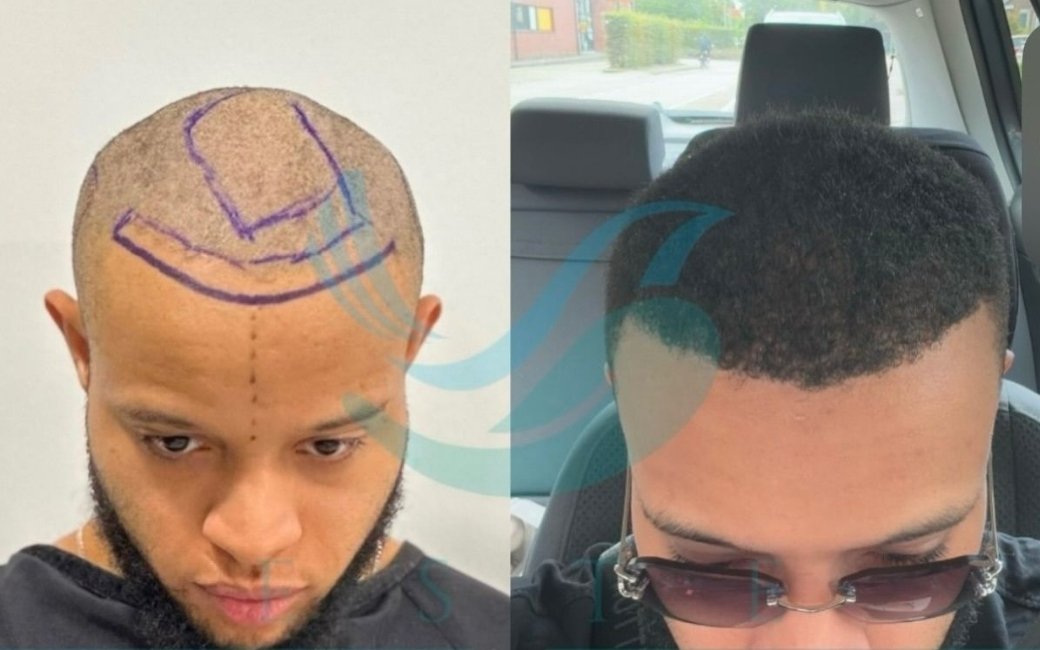
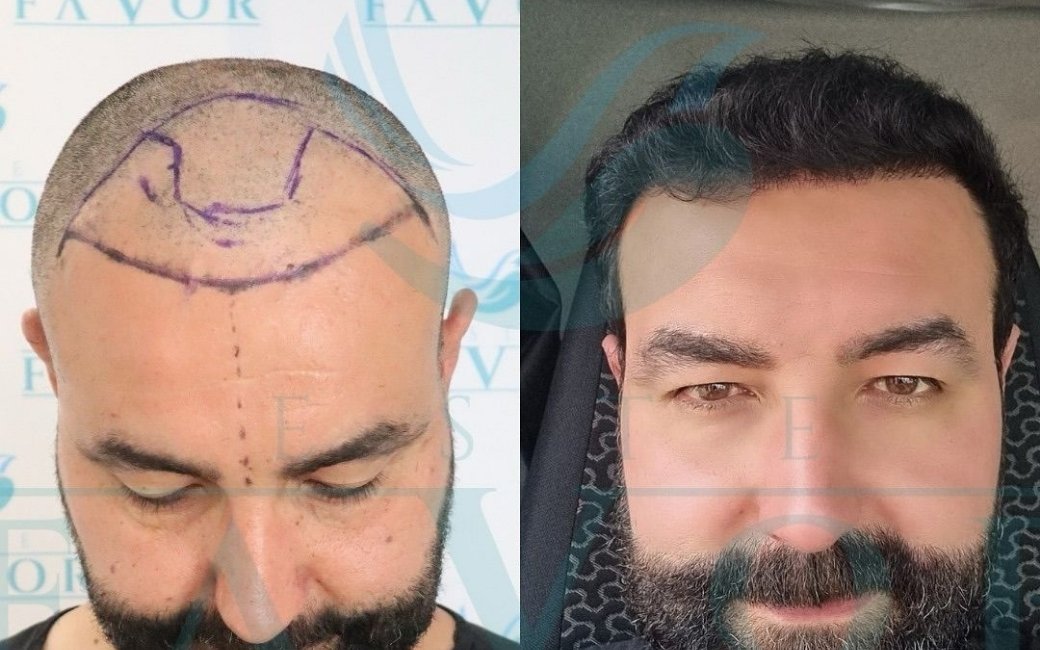
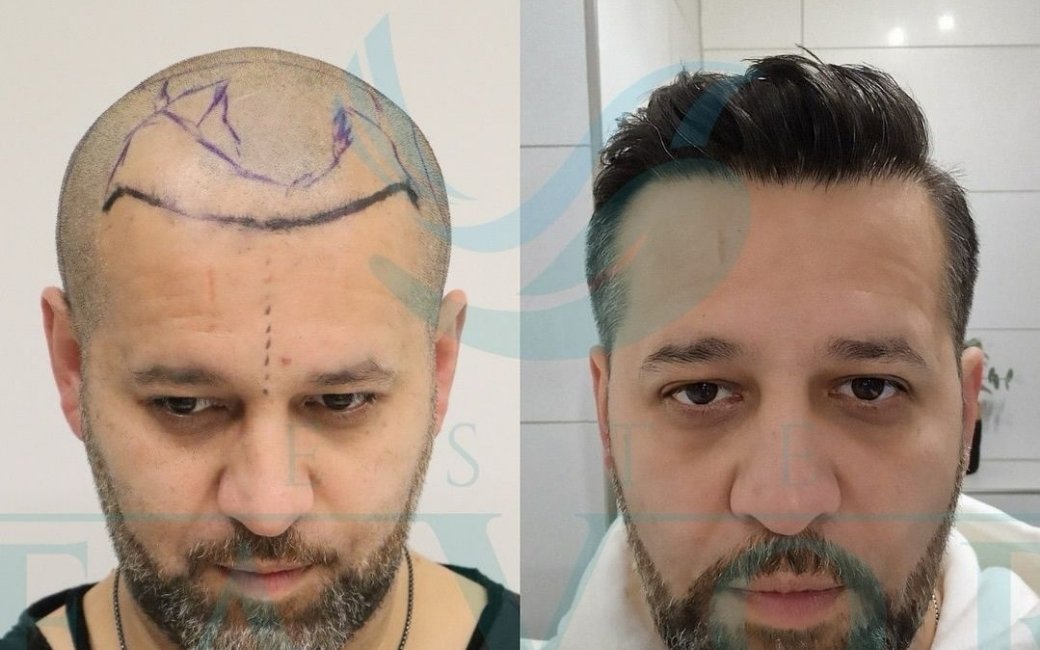
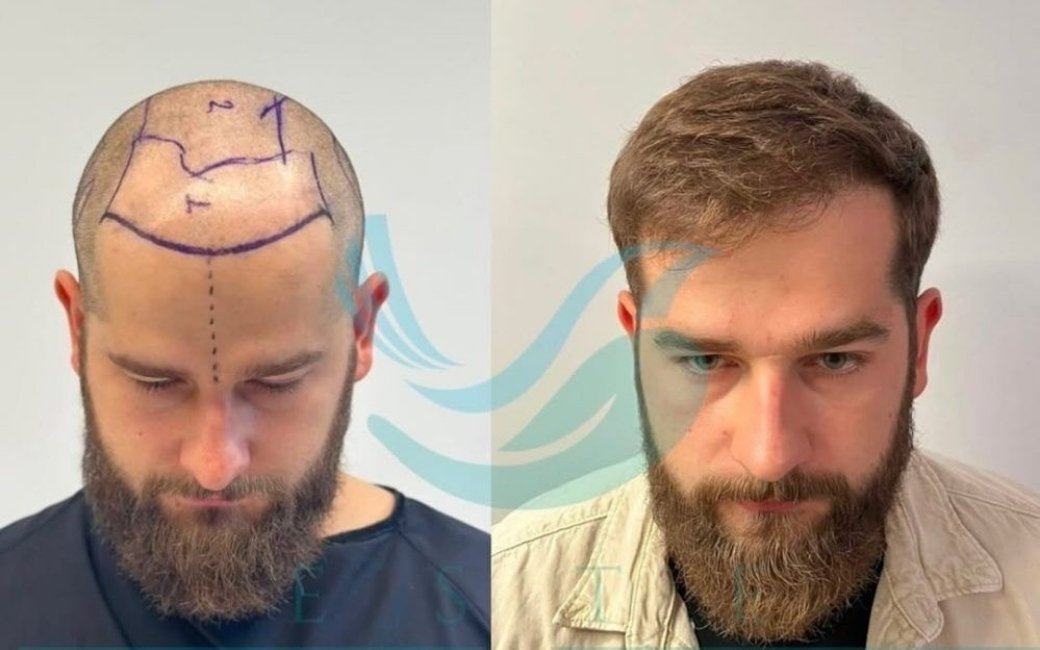
Before and after photographs are the most direct evidence available of what a clinic’s standard output looks like. The limitation is that any clinic can curate its best results for its website. The question is not whether the clinic has good photographs but whether it can produce comparable cases: patients whose Norwood stage, hair characteristics, and coverage goals are similar to yours, photographed at twelve months rather than three or six months.
Why this matters: a result that looks excellent at six months may look significantly different at twelve as the growth matures and the density settles. The final texture, density, and integration of transplanted hair with native hair is only visible at twelve months. Additionally, results for Norwood 3 patients tell you little about what to expect if you are a Norwood 5. The relevant comparison is between patients who started from a similar baseline and pursued similar goals.
What a good answer looks like: the clinic can produce a selection of twelve-month results for cases similar to yours, can explain the graft counts and hairline positions used, and does not attempt to substitute six-month or immediate post-operative photographs as evidence of the final result.

3. How is the hairline position determined, and who makes the final decision?
The hairline is the most visible determinant of whether a hair transplant looks natural. It is also the design decision most frequently compromised by patient preference overriding clinical judgment. Understanding the clinic’s process for hairline design : how the position is proposed, what anatomical principles guide it, and what happens when the patient requests something different : reveals whether the clinic prioritises natural long-term outcomes or patient satisfaction in the short term.
Why this matters: a hairline designed at the position the patient occupied at twenty-two will look appropriate at twenty-eight and increasingly incongruous at forty-five, as the surrounding hair continues to thin and the face ages around a hairline that does not age with it. A clinic that simply agrees to whatever hairline position the patient requests is not acting in the patient’s long-term interests. A clinic that explains why a specific position is anatomically appropriate, what the consequences of a lower design would be over time, and then proceeds with a design that reflects that conversation is doing its job correctly.
What a good answer looks like: the clinic uses a documented process for hairline design, proposes a position based on facial geometry and age-appropriate proportions, can show the patient a digital representation of the planned hairline before the procedure, and is willing to explain the long-term reasoning for any position that differs from what the patient initially requested.

4. What assessment of my donor zone will be performed before surgery?
The donor zone assessment determines how many grafts are safely available, whether the permanent zone is reliably identified, and whether any miniaturisation is occurring in areas that would compromise grafts if harvested. A clinic that estimates graft counts from visual inspection alone is working with significantly less information than a clinic that performs trichoscopic or dermoscopic examination of the donor zone before planning.
Why this matters: grafts harvested from a zone that is beginning to miniaturise will themselves progressively thin after transplantation, producing a deteriorating result over years that has nothing to do with surgical technique and everything to do with where the grafts were taken from. Identifying the true boundaries of the stable permanent donor zone is only reliably possible with magnified examination. For young patients in particular, where the lower margins of the permanent zone may not yet be fully established, this assessment is the difference between a plan that remains natural at forty and one that does not.
What a good answer looks like: the clinic performs dermoscopy or trichoscopy of the donor zone as a standard part of the pre-operative assessment, uses this data to define safe extraction boundaries, and can explain what miniaturisation, if any, was found and how it influenced the planned graft count.

5. What is my lifetime graft budget, and how does today’s plan fit within it?
Every patient has a finite number of follicular unit grafts available from their donor zone over a lifetime : typically between 4,000 and 7,000 for most patients, depending on donor density and scalp laxity. Every graft used in one session is unavailable for future sessions. A plan that uses a large proportion of the lifetime budget in a first session at twenty-five leaves very little reserve for the progression that is statistically likely to occur over the next two decades.
Why this matters: the most common cause of a hair transplant result that looks good at thirty and problematic at forty-five is not surgical technique : it is donor capital depletion at a stage of life when pattern progression had not yet completed. A clinic that discusses the lifetime budget explicitly, estimates the available total, shows the patient how the proposed session fits within it, and reserves appropriate capital for anticipated future sessions is planning for a result that lasts rather than a result that impresses at the first review.
What a good answer looks like: the surgeon can estimate the total available graft count from the donor zone assessment, explain what proportion today’s plan represents, describe what would be available for future sessions, and justify the proposed allocation in the context of the patient’s likely progression based on family history and current trichoscopic findings.
6. Will I receive a local anaesthetic and be awake, or is sedation used?
Hair transplant surgery is performed under local anaesthesia as standard. The patient is awake and positioned comfortably throughout the procedure. Sedation, where offered, is typically light and intended to reduce anxiety during the injection of local anaesthetic. Deep sedation or general anaesthesia for hair transplant surgery is not standard practice and carries risks that are not justified by the nature of the procedure.
Why this matters: the level of anaesthesia affects what the patient can observe and participate in during the procedure. A patient who is fully awake can confirm their comfort, report any concerns, and participate in final hairline position confirmation before implantation begins. More practically, a clinic that routinely offers deep sedation for a procedure that does not require it may be doing so to reduce patient awareness during the session, which should prompt questions about what the patient would otherwise notice.
What a good answer looks like: local anaesthesia with optional light sedation for comfort during the initial injection phase, a clear explanation of the anaesthetic protocol, and no pressure toward sedation levels that would significantly reduce the patient’s awareness of what is happening during the procedure.
7. What happens if I am not satisfied with my result?
This question reveals the clinic’s confidence in its own outcomes and the quality of the support it provides after surgery. A clinic that has a clear, documented policy for managing unsatisfactory results : what constitutes an unsatisfactory result, what assessment process is used, what remedies are available, and under what circumstances they are offered : is a clinic that has thought seriously about the long-term patient relationship rather than only about the transaction.
Why this matters: not every hair transplant result meets the patient’s expectations, even when the surgical execution was technically sound. Growth can be uneven. Density can fall short of what was planned. The hairline may not have healed exactly as designed. A clinic that has a structured follow-up process and a defined approach to addressing shortfalls is significantly less likely to abandon patients who encounter these situations. The terms of any dissatisfaction policy should be in writing before the procedure.
What a good answer looks like: a documented follow-up schedule at one month, three months, six months, and twelve months post-procedure; a clear process for photographic assessment of results at twelve months; a defined policy for how density shortfalls or growth issues are assessed and addressed; and the terms of any corrective procedure available to patients who experience documented shortfalls.

8. How many procedures does the clinic perform per day, and how long will mine take?
The number of procedures a clinic performs simultaneously in the same facility is a direct indicator of the level of individual attention each patient receives. A surgeon who is the operating physician across four simultaneous procedures in adjacent rooms is providing a different level of care than a surgeon who is present throughout a single procedure. The duration of the procedure is also relevant: a 2,500-graft session that takes four hours has been performed at a pace that differs from one that takes eight hours, and graft survival is affected by the time grafts spend outside the body.
Why this matters: graft viability decreases with time outside the scalp. Standard practice involves keeping grafts in a storage solution at controlled temperature, and the time from extraction to implantation should be managed carefully. High-volume clinics that run multiple simultaneous procedures create logistical pressure that can extend the time between extraction and implantation. The implantation pace also affects the precision with which each graft is placed: rapid implantation by fatigued technicians at the end of a long session produces less precise angle and direction control than careful implantation earlier in the session.
What a good answer looks like: a clear description of how many procedures are performed simultaneously, the expected duration of the session, the protocol for graft storage and the maximum time between extraction and implantation, and a realistic timeline for the day that accounts for preparation, anaesthetic administration, the procedure itself, and post-operative care.
9. What aftercare support is provided, and for how long?
The quality of the post-operative support a clinic provides reflects how it values the long-term patient relationship. International patients who travel to Istanbul for surgery and return home within a week face specific aftercare challenges: they cannot easily attend an in-person follow-up, they are managing the healing process independently, and they may encounter unexpected questions or concerns in the weeks and months after surgery.
Why this matters: the first wash, the management of crusting, the understanding of shock loss, the appropriate response to swelling, and the correct interpretation of the growth timeline all require guidance that not every patient will find reliably on general internet forums. A clinic that provides structured written aftercare instructions, a direct communication channel for post-operative questions, photographic review of progress at key milestones, and a twelve-month follow-up assessment is significantly better positioned to support patients through the full recovery than one whose post-operative engagement ends at discharge.
What a good answer looks like: written aftercare instructions provided before the patient leaves, a named contact for post-operative queries, a defined response time for questions, a protocol for photographic review at three, six, and twelve months, and a clear statement of what aftercare services are included in the procedure cost and which, if any, are additional.

10. Can you walk me through the full plan for my specific case right now?
The final question is also the most revealing. A clinic that can walk a patient through their specific case in real time : the proposed hairline position and why, the graft count estimate and its basis, the donor zone findings and what they mean for lifetime planning, the density targets by zone and why they were chosen, and the expected growth timeline : is demonstrating the kind of case-specific engagement that quality hair restoration requires. A clinic that responds with generic information, defers the detail to a later stage, or cannot connect the technical findings to the individual patient’s situation is signalling that its assessment was not thorough enough to support a genuine plan.
Why this matters: a hair transplant is not a standardised product. The factors that make a good result for one patient : hairline position, graft allocation, density distribution, coverage priority : are specific to that patient’s face, pattern, donor supply, age, and expectations. A plan that accounts for all of these factors can only be produced by a clinic that has assessed all of them. The consultation is the moment at which that assessment should become visible to the patient.
What a good answer looks like: a detailed, patient-specific walkthrough of the proposed plan that covers hairline design rationale, graft count basis, donor zone assessment findings, density targets, session structure, and growth timeline : all in terms that the patient can understand and that they can take home as a written record of what was planned and agreed.

Why These Questions Matter
The hair transplant market, particularly for international patients travelling to Istanbul and other major centres, includes clinics across a very wide range of quality. The price difference between a clinic that conducts thorough pre-operative assessment, has its surgeon present throughout implantation, produces documented natural-looking results, and provides structured twelve-month follow-up, and a clinic that does none of these things, may be smaller than patients expect. The clinical difference is not small at all.
These ten questions do not guarantee a good result. They do guarantee that the patient who asks them has the information needed to make an informed choice between clinics, understands the basis on which their specific plan was designed, and is not placing their trust in confidence and price alone. The clinic that answers all ten clearly and without hesitation is demonstrating something more valuable than any individual answer: it is demonstrating that it is used to having this conversation, which means it has it with every patient, which means its planning is grounded in the right priorities.
