/ General/ Accepting Baldness vs Getting a Transplant: A Non-Judgmental Guide
Accepting Baldness vs Getting a Transplant: A Non-Judgmental Guide
Few decisions in a man’s or woman’s life sit quite at this intersection: personal identity, physical appearance, medical intervention, and the question of what it means to be at peace with the body you have. The choice between accepting hair loss and pursuing a hair transplant is not a simple consumer decision, and it deserves to be treated as what it actually is — a deeply personal process that different people resolve in different ways, none of which is inherently more correct than another.
This guide is written without a presumption about which path is right. A hair restoration clinic has an obvious commercial interest in transplantation, and that interest is worth naming openly rather than pretending it does not exist. What EsteFavor can offer is clinical expertise, honest information, and a commitment to helping each person arrive at a decision that genuinely serves them — including the decision that no procedure is needed or wanted. A patient who chooses to embrace hair loss after a thorough consultation has made a good decision. So has a patient who chooses a well-planned surgical intervention with realistic expectations.
What this article offers is a framework for thinking through both paths clearly, with the clinical and psychological context that makes the comparison meaningful. The goal is not to nudge the reader toward any particular outcome, but to give them the information that makes their own conclusion more considered.
The Psychology of Hair Loss: Why the Decision Matters So Much
Hair loss is one of the most psychologically charged physical changes a person can experience. This is not vanity — it is biology and social conditioning operating together. Hair has been a marker of health, youth, and identity across virtually every culture in recorded history. Its loss is rarely experienced as neutral, particularly in the early stages when the change is still new and the gap between how a person looks and how they remember looking is most acute.
Research into the psychological impact of androgenetic hair loss consistently finds elevated rates of self-consciousness, reduced self-esteem, and social anxiety among those experiencing significant hair loss — particularly in younger patients and in women, for whom cultural expectations around hair tend to be more stringent. These findings do not mean that hair loss always causes psychological distress, but they do mean that distress, when present, is a real and legitimate clinical concern — not a superficial one to be dismissed.
The decision between acceptance and intervention sits directly in this psychological terrain. Neither path automatically resolves the distress. Acceptance requires genuine psychological work — a reorientation of self-image that not everyone finds easy or possible. Intervention requires realistic expectations and a clear-eyed understanding of what surgery can and cannot change. Both paths, pursued thoughtfully, can lead to genuine peace of mind. Both, pursued without adequate reflection or information, can lead to continued dissatisfaction.
Understanding where you are psychologically — not just where you are physically in terms of hair loss progression — is the appropriate starting point for any serious decision-making process.
What Acceptance Actually Means
Acceptance of hair loss is sometimes framed as passive — a resignation to something unwanted. That framing misrepresents what genuine acceptance involves. Psychological acceptance is an active process: it involves confronting the change, working through the feelings it produces, and arriving at a stable relationship with one’s appearance that does not require the change to be reversed in order to function well.
For many people, this process happens naturally over time. The initial distress of noticing significant thinning gradually gives way to adaptation, particularly when the people in one’s life respond without the catastrophism that hair loss anxiety can project onto them. Research on hair loss acceptance suggests that social context is one of the most powerful predictors of psychological adjustment: people in environments where baldness is normalised or associated with positive attributes adjust more readily than those in environments where it is stigmatised.
The visible representation of bald men in positions of authority, attractiveness, and social status has changed considerably over the past two decades. There is now a well-established cultural script in which a closely-shaved or completely bald head is read as a deliberate, confident aesthetic choice rather than a concession. For men whose hair loss has progressed to the point where transplantation would require multiple procedures and still produce modest coverage, this reframing is worth taking seriously as a genuine option rather than a consolation prize.
Acceptance does not require indifference. A person can be fully aware that they would prefer to have more hair while also being fully functional, confident, and at peace with the hair they have. The psychological target is not the elimination of preference but the elimination of suffering around a preference that cannot be fulfilled — or, in the case of transplantation, the realistic assessment of whether it can be fulfilled to a satisfying degree.
What a Hair Transplant Can and Cannot Achieve
A hair transplant is a surgical redistribution of existing hair follicles from areas of permanent growth to areas of thinning or absence. It does not create new hair — it relocates hair that already exists. This distinction is clinically significant because it defines both the ceiling of what is achievable and the importance of planning the redistribution carefully.
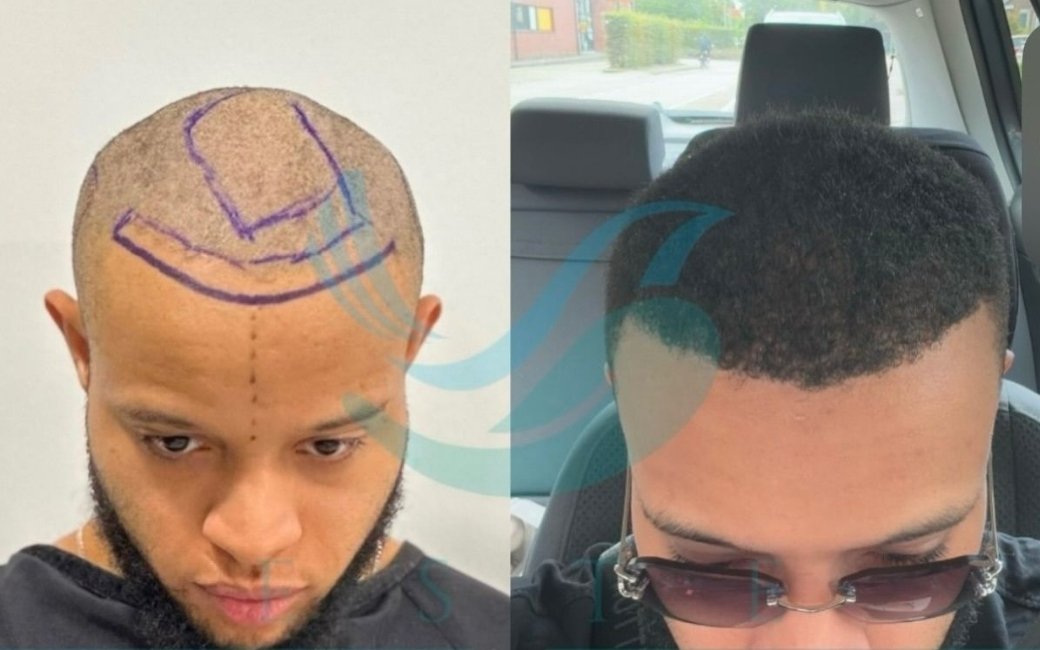
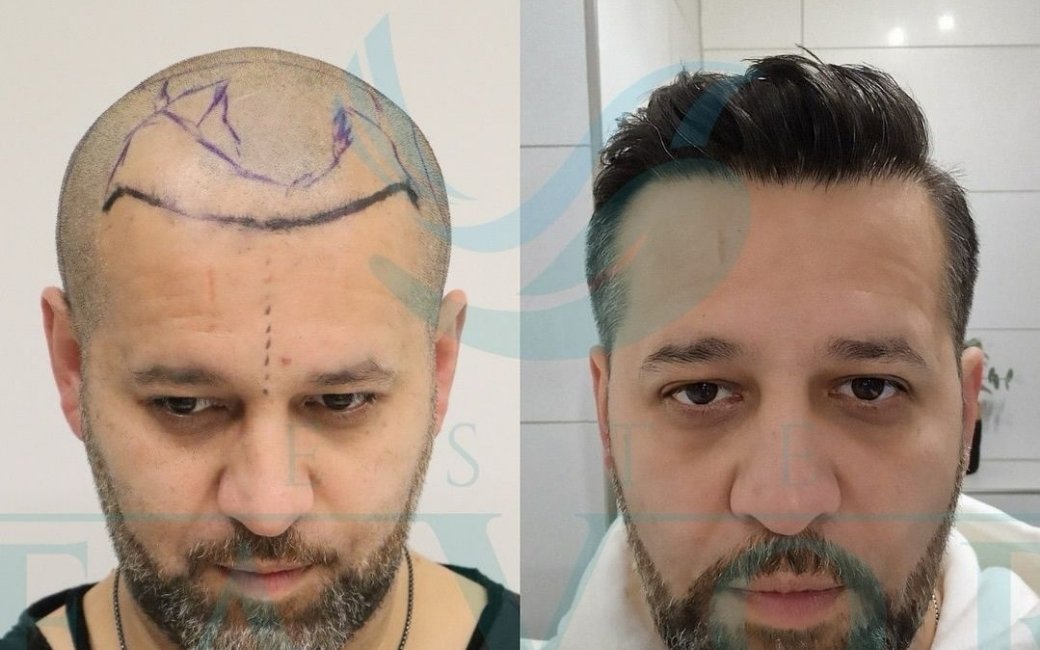
What a well-executed hair transplant can achieve is genuinely impressive. Modern techniques — Sapphire FUE and DHI in particular — allow surgeons to restore natural-looking hairlines, add meaningful density to thinning areas, and produce results that are, at their best, indistinguishable from the patient’s original hair. For patients with adequate donor supply, stable or manageable hair loss, and realistic expectations about density, a transplant can produce a significant and lasting improvement in appearance.
What a transplant cannot achieve is equally important to understand. It cannot stop the ongoing loss of native hair in areas that have not been transplanted. It cannot produce the density of a full head of original hair if the donor supply is insufficient. It cannot reverse a hair loss trajectory that has progressed to a point where the available grafts are too few to cover the affected area to a satisfying degree. And it cannot address the psychological aspects of hair loss that exist independently of the physical change — if self-image difficulties are rooted in something other than the hair itself, surgery will not resolve them.
The most predictably successful transplant patients are those who have moderate, stable, or medically managed hair loss; a healthy donor supply; realistic density expectations; and a specific, clearly defined area they wish to address. Patients at the extremes — those with very early-stage loss who may not need surgery yet, and those with very advanced loss who may not have enough donor hair to achieve a satisfying result — benefit most from a candid clinical assessment before committing to anything.
‘Will My Hair Transplant Look Natural‘ – the achievability of a natural result depends on the relationship between what the patient wants and what their donor supply can realistically provide
The Case for Acceptance: When It Is the Stronger Choice
There are clinical and personal circumstances in which acceptance is not merely a reasonable option but genuinely the stronger one. Being honest about these circumstances is part of what distinguishes a responsible clinical consultation from a sales process.
Very early hair loss in young patients is one such circumstance. A 22-year-old experiencing the first stages of hairline recession faces a situation in which a transplant today may look appropriate now but become problematic within five to ten years if hair loss continues. The donor supply available at 22 is finite, and allocating it to a hairline position that may need to be moved or supplemented later is a decision with long-term consequences that are difficult to fully anticipate. For many young patients, a period of watchful waiting — combined with evidence-based medical management of ongoing loss — is a more conservative and ultimately safer path than early surgical intervention.
Advanced hair loss, where the majority of the scalp is affected, presents a different version of the same challenge. The density that can be achieved with the available donor supply across a large affected area is often modest, and the result — while an improvement on the untreated baseline — may not meet the expectations that motivated the decision to pursue surgery. For patients in this situation, a realistic simulation of achievable density is an essential part of the decision-making process, and acceptance may emerge as the more satisfying long-term outcome once the realistic ceiling is clearly understood.
Psychological readiness also matters. Patients who are in acute distress about their hair loss — those for whom the change is recent and the emotional processing has not yet settled — may benefit from a period of stabilisation before committing to surgery. Decisions made in acute distress are rarely the most carefully considered, and the irreversibility of the surgical intervention warrants a degree of emotional calm that not every patient has at the moment they first seek a consultation.
The Case for Intervention: When Surgery Serves the Patient Well
The circumstances in which a hair transplant is genuinely the right choice are also specific and worth articulating clearly. Surgery serves patients best when the physical problem is real and tractable, the psychological motivation is stable, and the expected outcome is achievable.
Patients with moderate hair loss who have been losing hair for several years and are either stabilised or actively managing ongoing loss medically represent the most predictable surgical candidates. Their affected area is defined and manageable, their donor supply is typically sufficient, and the improvement achievable is meaningful and durable. For these patients, the transplant addresses a specific physical change that is causing real distress, with a realistic expectation of significant improvement.
Hairline recession in particular — the loss of the frontal hairline without extensive crown thinning — responds very well to transplantation. The graft count required is modest relative to larger procedures, the aesthetic impact is disproportionately significant because the hairline frames the face, and the results are among the most consistently satisfying in the field. Patients whose primary concern is a receded hairline, and who have adequate donor supply and stable loss, are strong candidates for whom the surgery-to-acceptance calculus tilts clearly toward intervention.
Psychological motivation also matters in the positive direction. Patients who have lived with hair loss for some time, who have reflected on how it affects their daily experience, and who have arrived at a stable conclusion that they would genuinely benefit from a change — rather than those in acute distress or responding to recent onset — are psychologically well-positioned for surgery. Their motivation is grounded rather than reactive, and their expectations are more likely to have been tested against reality over time.
‘Psychological Impact of Hair Loss‘ – understanding whether distress stems from the physical change itself or from deeper identity concerns helps determine whether surgical intervention addresses the actual source of difficulty
Medical Management as a Middle Path
Between full acceptance and surgical intervention lies a middle path that is often underutilised: evidence-based medical management of ongoing hair loss. For many patients, this path offers a meaningful improvement in hair density and loss rate without the commitment, cost, or irreversibility of surgery — and it is worth understanding clearly before any other decision is made.
The generic pharmacological options for androgenetic hair loss — oral 5-alpha reductase inhibitors and topical minoxidil in particular — have decades of clinical evidence behind them. When used consistently by appropriate candidates, they can slow or halt progressive loss and, in a meaningful proportion of cases, produce some degree of regrowth in areas of miniaturisation. They are not effective for everyone, and they require ongoing use to maintain their effect, but for patients whose primary concern is slowing further loss rather than restoring lost density, they represent a clinically sound and reversible option.
Medical management is also the most important complement to surgical intervention for patients who do choose transplantation. A transplant addresses the areas where hair has already been lost; medical management addresses the rate at which remaining native hair continues to thin. Together, they produce more stable and more durable results than surgery alone. Understanding this relationship — that surgery and medical management serve different functions and work best in combination — is part of the clinical picture that every patient considering either option deserves to have.
At EsteFavor, the clinical consultation process includes an assessment of whether the patient is a candidate for medical management, what their realistic expectations from that management should be, and how it relates to any surgical intervention being considered. The goal is a treatment plan that is matched to the patient’s specific situation — not a procedure sold in isolation from the other options available.
How to Think Through the Decision
For patients genuinely weighing both paths, a structured approach to the decision tends to produce more considered outcomes than an instinctive response to distress or a reactive response to marketing. Several questions are worth working through carefully before arriving at a conclusion.
The first is the stability question: has hair loss reached a point where it is stable or manageable? Surgery on actively progressing loss without medical management is likely to require additional procedures within years, and understanding this upfront changes the cost-benefit calculation significantly. The second is the supply question: does the available donor hair realistically cover the affected area to the density the patient actually wants? If the honest answer is no, acceptance or a modified expectation is a better starting point than disappointment after the fact.
The third is the motivation question: is the desire for surgery arising from a stable, considered assessment of how hair loss is affecting daily life, or from acute distress about a recent change? Both motivations can lead to good decisions, but they require different processes. Acute distress benefits from a period of reflection; stable, long-standing dissatisfaction is a more reliable foundation for an irreversible decision. The fourth is the realistic outcome question: having seen an honest simulation of what is achievable — not the best-case photographs, but a realistic assessment — does the likely outcome genuinely address the patient’s concern?
None of these questions has a universal answer. They are frameworks for honest self-assessment, not criteria with pass or fail thresholds. A thorough consultation with a clinically rigorous team, in which the patient’s honest answers to these questions inform the plan, is the most reliable path to a decision the patient will stand behind.
What the Consultation Process Should Look Like
Whether a patient ultimately chooses acceptance or intervention, the consultation process that precedes that choice should have certain qualities. These apply whether the consultation is with EsteFavor or with any other responsible clinical team.
The consultation should begin with objective data rather than visual impression. High-resolution scalp mapping that measures follicular density, miniaturisation rates, and donor zone characteristics provides a factual foundation for the discussion that cannot be produced by looking in a mirror or examining photographs. This data should be shared with the patient and explained in terms they can understand — not retained as the clinician’s proprietary assessment.
The consultation should include an honest discussion of what is and is not achievable given the patient’s specific characteristics. If the available donor supply is insufficient to achieve the density the patient wants, that should be said directly. If the patient’s hair loss is at a stage where watchful waiting is more appropriate than immediate surgery, that should be recommended. If the patient’s psychological state suggests that a period of reflection would be beneficial before committing to an irreversible procedure, a responsible clinician will say so.
The consultation should also cover ongoing hair loss management — whether the patient chooses surgery or not. The long-term quality of any result, surgical or otherwise, is influenced by how effectively ongoing loss is managed. A patient who leaves the consultation with a clear plan for managing their hair loss — whatever form that plan takes — is better served than one who leaves with only a procedure booking.
At EsteFavor, the consultation process is designed to serve these standards. Scalp mapping is a standard part of every consultation. The clinical team discusses the full range of options — including the option of not having surgery — as a matter of course. Patients who decide that acceptance is their preferred path leave with objective information about their hair loss and medical management options. Patients who decide that surgery is the right choice leave with a documented plan built on realistic data.
Living Well With Either Choice
Both paths can lead to a genuinely good outcome. The patients who do best — both those who have had transplants and those who have embraced hair loss — share certain characteristics that have more to do with psychological approach than with physical outcome.
They made their decision based on honest information rather than distorted expectation. They did not expect surgery to solve problems that were not caused by hair loss. They did not expect acceptance to be easy or immediate. They gave themselves the time and information needed to reach a stable conclusion. And they recognised that their relationship with their appearance is something they have agency over, regardless of which path they took.
The patients who struggle — on both sides — are those whose decisions were made reactively, whose expectations were not calibrated against reality, or whose sense of self-worth was tied too tightly to a specific physical outcome. These are not failures of character but failures of information and process. They are also preventable, which is why the quality of the pre-decision consultation matters so much.
EsteFavor’s packages range from 2,000 to 4,500 USD and include VIP transfer, four-star hotel accommodation, and a 12-month follow-up programme for patients who choose surgical intervention. For patients who complete a consultation and decide the timing is not right or that acceptance is their preferred path, the consultation remains a clinically valuable process — one that provides objective data, medical management options, and a clear picture of what surgery could offer if the decision changes in the future. More information is available at www.estefavor.com.
‘Hair Transplant at 25‘ – the timing of intervention relative to the stage and trajectory of hair loss is one of the most consequential variables in whether surgery produces a durable and satisfying result
Conclusion
The choice between accepting hair loss and pursuing a transplant deserves the same honesty, time, and quality of information that any significant personal decision deserves. Neither path is inherently superior. Both can be arrived at thoughtfully, and both can serve the person who makes them well. What makes the difference is not the choice itself but the process by which it is reached: the quality of clinical information available, the realism of expectations on both sides, and the degree to which the decision reflects a stable, considered assessment of what genuinely matters to the person making it.
If you are working through this decision, the most useful thing you can do is seek a clinical consultation that treats both paths as legitimate and gives you the objective data to evaluate them honestly. That is what EsteFavor is built to offer — not a sales process, but a clinical one. Visit www.estefavor.com to learn more.
Please fill in the information below for a detailed analysis
We use cookies so that we can give you the best experience on our website. If you continue to use this site, we assume that you accept it. Privacy Policy