/ General/ How to Spot Fake Hair Transplant Reviews Online
How to Spot Fake Hair Transplant Reviews Online
Choosing a hair transplant clinic is one of the most consequential decisions a person can make about their appearance and health. Unlike buying a product you can return, a poorly executed procedure can leave permanent, visible consequences. It is no surprise, then, that patients invest considerable time reading reviews before booking a consultation. The problem is that the review landscape for hair transplant clinics is heavily polluted with fabricated testimonials, artificially inflated ratings, and coordinated campaigns designed to mislead prospective patients.
Understanding how this manipulation works is not a cynical exercise – it is a practical skill. Fake reviews are not always crude or obvious. They are often written by professionals hired specifically to sound credible, and they are strategically placed on platforms where patients are most likely to search. Learning to read between the lines protects you from financial loss, physical harm, and profound disappointment.
This guide breaks down the specific signals that separate genuine patient feedback from manufactured praise. It covers the structural patterns of fake reviews, the platforms most vulnerable to manipulation, the verification steps anyone can take before committing to a clinic, and the characteristics of authentic testimonials from real patients. By the end, you will have a reliable framework for evaluating any hair transplant clinic online.
Why the Hair Transplant Industry Is Especially Vulnerable to Fake Reviews
The global market for hair restoration has expanded dramatically over the past decade, with Istanbul emerging as one of the world’s most active destinations for the procedure. High patient volumes, competitive pricing, and intense pressure to maintain online reputation have created fertile conditions for review fraud. Clinics that cannot compete on genuine outcomes sometimes compensate by engineering their perceived reputation.
Several structural factors make this industry particularly susceptible. First, results take six to twelve months to fully materialise, meaning patients cannot leave accurate outcome reviews quickly. This gap is exploited: clinics can accumulate dozens of five-star reviews before a single patient has seen their final result. Second, international patients often lack the social networks to cross-check recommendations, making them more dependent on online sources than domestic patients would be. Third, the procedure is expensive enough that clinics have a strong financial incentive to invest in reputation management, yet accessible enough that price competition is fierce and margins can be thin.
There is also a language dimension. Many clinics serving an international clientele operate primarily in their home language but receive reviews in English, German, French, Italian, and Dutch. Review farms can produce copy in all of these languages, and automated translation makes volume production trivial. A review that reads slightly unnaturally in English may have been written in a third language and machine-translated, or it may have been generated algorithmically with no human patient behind it at all.
The Structural Patterns of Fabricated Testimonials
Fake reviews tend to share recognisable structural characteristics, regardless of the language or platform they appear on. Once you know what to look for, patterns become visible across a sample of reviews rather than in any single one.
The first pattern is temporal clustering. When a clinic receives many reviews within a short window – particularly a burst of five-star ratings following a period of low activity – this often indicates a coordinated campaign. Genuine patient reviews accumulate gradually and unevenly, reflecting the real pace of consultations and recovery periods. A spike of twenty glowing reviews in a single week, followed by a return to sparse activity, is a strong indicator of purchased feedback.
The second pattern is textual similarity. Fabricated reviews from the same source often share vocabulary, sentence structure, or specific phrases, even when the claimed experiences differ. Reading ten reviews in sequence, rather than sampling randomly, can reveal this echo effect. Phrases such as “life-changing experience,” “professional from start to finish,” or “could not be happier” appearing across multiple reviews without variation are worth noting. Genuine patients describe the same procedure in very different terms because they each experienced it differently.
The third pattern is profile shallowness. On platforms that allow profile inspection, the accounts behind suspicious reviews often have minimal history: a single review, no profile photo, a generic username, and a registration date close to the review date. Real patients who leave reviews usually have some prior review history, even if it is modest. An account that was created on a Monday and left a glowing five-star review on a Tuesday has a high probability of being inauthentic.
The fourth pattern is missing specificity. Authentic reviews from hair transplant patients tend to include concrete details: the number of grafts, the technique used, the names of staff members they interacted with, the condition of the accommodation, how the donor area looked at specific time points. Fake reviews are almost always vague because the writer has no real experience to draw from. Phrases like “the whole process was great” and “everyone was so kind” are generic enough to apply to any service encounter.
Platforms Most Susceptible to Manipulation
Not all review platforms have the same level of fraud resistance, and understanding where manipulation is easiest helps calibrate how much weight to give different sources.
Google Maps and Google Business profiles are among the most heavily manipulated review surfaces for hair transplant clinics. Google’s verification systems have improved, but bulk account creation and review posting remain feasible at scale for determined actors. The sheer volume of Google reviews – and their prominence in search results – makes them a high-value target. This does not mean Google reviews are worthless, but it does mean they should be treated as one data point among many rather than a primary verdict.
Dedicated medical tourism platforms occupy a middle ground. Some are rigorous in verifying patient identity and surgical documentation; others are essentially pay-to-feature directories where clinics pay for prominent placement and review visibility is managed by the platform’s commercial interests. Before relying on any such platform, it is worth investigating how they verify reviews – specifically whether they require proof of treatment such as hospital records or booking confirmations.
Social media, particularly certain Facebook groups and Instagram comment sections, presents a different problem. Here, the manipulation often takes the form of clinic representatives posing as satisfied patients in group discussions, or of coordinated positive comments that arrive rapidly after a post goes live. The informal, conversational format of social media makes scripted responses harder to spot but not impossible – the same signals of vagueness, generic praise, and missing specificity apply.
Forums and independent patient communities tend to be harder to manipulate at scale because established members can identify and flag suspicious newcomers. Long-running communities where members have verifiable posting histories across time represent some of the most reliable qualitative information available. Even here, however, sponsored members and planted testimonials exist, which is why corroboration across multiple independent sources matters.
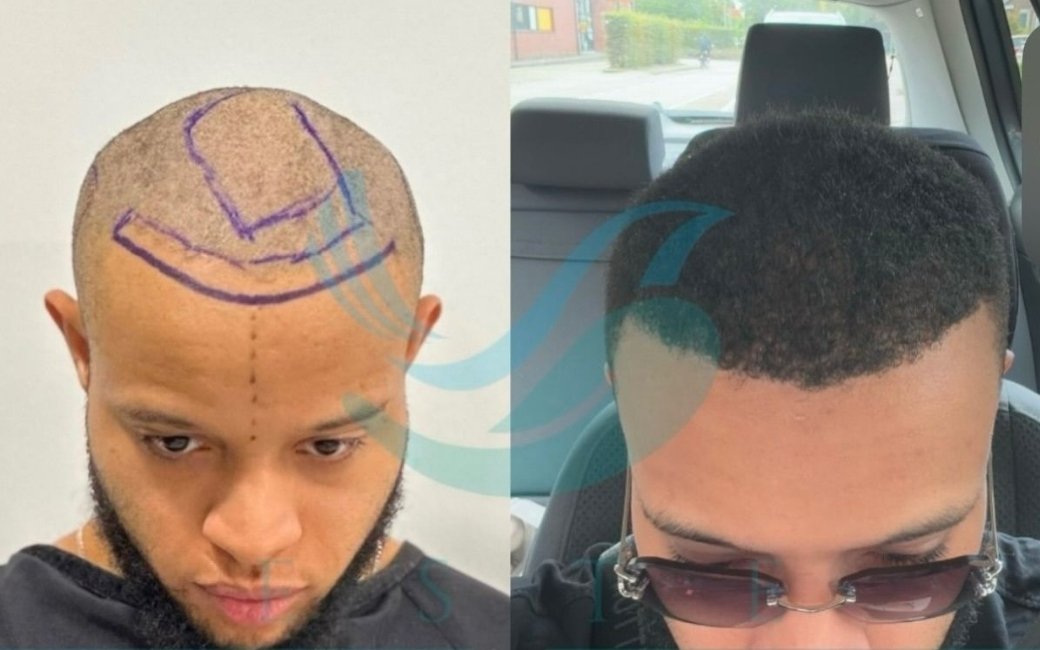
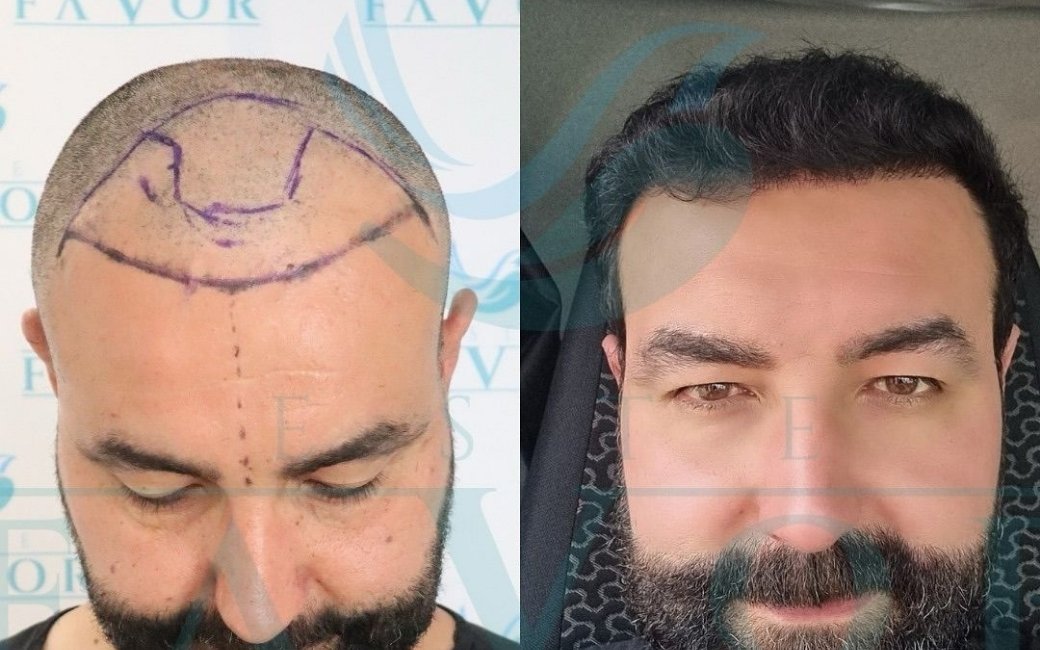
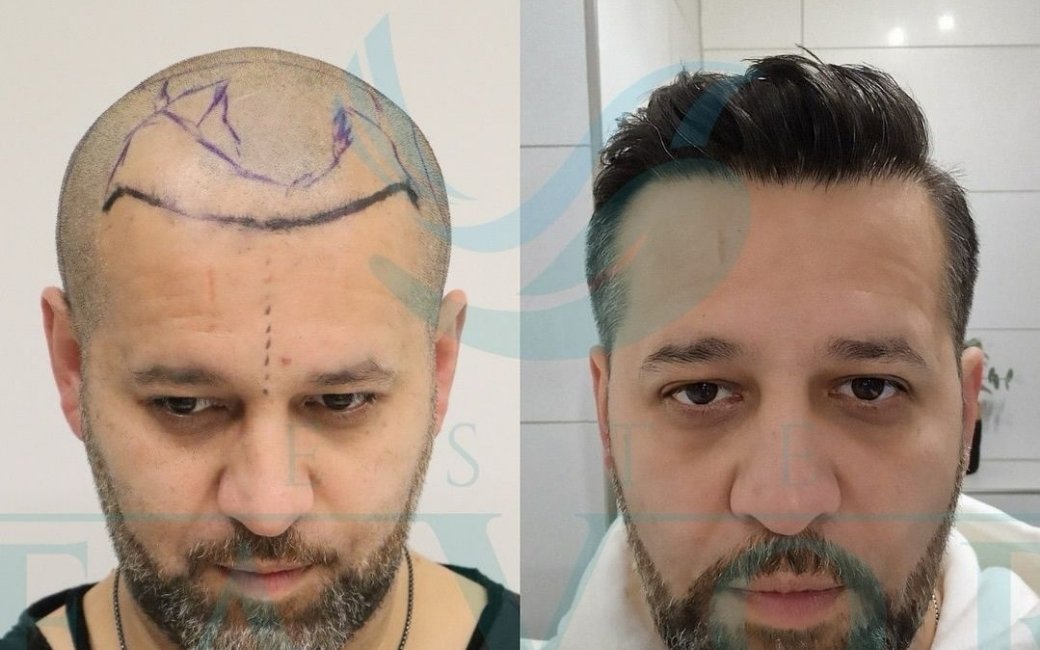
Before and after photos that accompany online reviews must be read with the same critical eye applied to the written testimonials themselves.
How to Verify a Review Before Trusting It
Passive observation of review patterns is a starting point, but active verification is more powerful. Several techniques are available to anyone with a browser and patience.
Reverse image search is one of the most effective tools. Hair transplant clinics frequently use before-and-after photos as supplementary material alongside reviews. Running these images through reverse image search tools reveals whether the same photos appear under different clinic names – a definitive sign of fabrication. Similarly, profile photos attached to reviewer accounts can be checked: stock images or photos borrowed from other social profiles are common in fake review accounts.
Cross-platform consistency is another powerful check. A clinic with 4.9 stars on one platform and 3.2 on another warrants investigation. Discrepancies this large are unlikely to reflect natural variation in reviewer populations – they more often reflect selective review management on one of the platforms. Searching the clinic’s name alongside terms such as “complaint,” “bad result,” or “warning” across multiple search engines can surface negative experiences that have been buried by volume on managed platforms.
Forum history search is time-intensive but rewarding. Searching a clinic’s name across independent hair loss forums over a multi-year timeframe reveals the texture of the conversation: whether concerns are addressed or ignored, whether the same positive reviewers appear across multiple threads, whether critical voices disappear or are attacked. Authentic clinics accumulate a real, messy, human-sounding record over time.
Video documentation represents one of the strongest verification signals available. A patient who has documented their journey with timestamped video content – showing the scalp before surgery, immediately after, at one month, at three months, at six months, and at one year – is providing evidence that cannot be fabricated without extraordinary effort. Clinics whose reviews are predominantly text-only, with no accompanying video journeys, are not necessarily fraudulent, but the absence of verifiable long-form documentation is worth noting.
Red Flags in Before-and-After Imagery
Visual evidence attached to reviews deserves its own analysis because photographic manipulation is nearly as common as textual fabrication. Several specific red flags in before-and-after imagery are important to recognise.
Lighting manipulation is the most common technique. A before photo taken in harsh overhead lighting that flattens the hair and exposes the scalp more than natural conditions would, paired with an after photo taken under soft, diffuse lighting that adds apparent volume, creates a misleading impression of results. This does not require digital editing – simple photography technique is sufficient. Genuine results look convincing under consistent lighting conditions, not just flattering ones.
Hairline framing is another common technique. Photos that crop tightly around the transplanted hairline area, excluding the crown and mid-scalp, may be presenting a favourable portion of the result while omitting areas where density is less successful. Authentic before-and-after documentation covers multiple angles: front, sides, top-down, and crown.
Timeline compression is a subtler manipulation. An after photo labelled “12 months post-procedure” that actually represents eight months of growth presents the result at a stage where improvement will continue, potentially misleading patients about the final outcome. Without independent timestamping – such as verifiable posting dates on a public forum or video channel – claimed timelines cannot be confirmed.
Digital alteration, while detectable by experts, is rarely identified by casual viewers. Hair density, hairline definition, and skin texture can all be subtly enhanced in post-processing. Examining images at high zoom for inconsistencies in texture around the hairline or at the edges of the hair mass can sometimes reveal manipulation, though this requires practice.
‘10 Questions to Ask Your Clinic‘ – direct sun on the healing scalp must be avoided, and any clinic whose representative cannot answer basic aftercare questions confidently deserves scrutiny before you commit.
What Authentic Reviews Actually Look Like
Understanding fabrication is only half the task. Knowing what genuine patient feedback looks like is equally important, and it has its own recognisable characteristics.
Authentic hair transplant reviews are specific in ways that cannot be easily manufactured. They name the surgeon or the clinical team. They describe the consultation process in detail – what information was provided, what questions were asked, what the planning session involved. They mention the number of grafts extracted and implanted, the technique applied, and the duration of the procedure. They describe the immediate post-operative period honestly, including discomfort, swelling, and the appearance of the transplanted area in the first two weeks.
Critically, genuine reviews acknowledge the timeline accurately. A review written at six weeks will note that the transplanted hair has shed – the normal shedding phase that occurs in the first six to eight weeks after surgery – and that visible growth has not yet begun. A review written at four months will note early growth with uneven density. A review written at twelve months or beyond will describe a more complete result. Fake reviews at any stage tend to describe instant transformation because the writer has no experience of the actual biological timeline.
Genuine reviews also include negative or neutral elements. Even the most satisfied hair transplant patients will mention something that was less than ideal: a longer wait time on the day of surgery, a communication gap during recovery, a period of anxiety during the shedding phase. Reviews that contain nothing but praise, with no texture, no complexity, and no minor complaints, are statistically unlikely to be genuine. Human experiences contain friction, and authentic accounts reflect this.
The emotional arc of a genuine review is also distinctive. Patients describe anxiety before the procedure, relief during, discomfort in the recovery period, concern during the shedding phase, and satisfaction as growth progresses. This narrative arc takes time to develop and requires real experience. Fabricated reviews often skip directly to a conclusion of satisfaction without any of the emotional journey that precedes it.
How EsteFavor Supports Transparent Patient Evaluation
Clinics that operate with integrity actively support patients in their evaluation process rather than obstructing it. At EsteFavor, this commitment takes several concrete forms.
Every patient consultation includes a detailed scalp analysis using advanced imaging technology, and the findings of this analysis are documented and shared with the patient. This creates a verifiable baseline against which results can later be assessed – a form of built-in transparency that protects both the patient and the clinic’s reputation. Clinics that rely on fabricated reviews tend to avoid this level of documentation because it creates accountability.
The follow-up programme at EsteFavor extends for twelve months after surgery, during which patients receive scheduled assessments and have direct access to clinical support. This extended engagement means that every patient’s journey is documented over time, and the feedback that emerges from genuine follow-up interactions reflects real outcomes. Long-term patient relationships are fundamentally incompatible with a fake review strategy, because the patients themselves become the most credible – and vocal – evaluators.
For international patients considering Istanbul for a hair transplant, the combination of all-inclusive packages, VIP transfer, and four-star hotel accommodation removes logistical uncertainty that can otherwise distort the patient experience and, consequently, the reviews patients leave. When the practical elements of the trip are managed well, patients can evaluate the clinical quality of their experience without conflating it with travel frustrations.
‘Scalp Analysis Technology‘ – the scalp analysis performed before a hair transplant procedure generates objective data that serves as a baseline for evaluating real results over time.
Building Your Own Verification Framework
No single check is definitive. The most reliable approach to evaluating hair transplant reviews combines multiple independent signals into a cumulative picture.
Begin with a broad scan: read thirty to fifty reviews across at least two platforms, noting the temporal distribution, vocabulary patterns, level of specificity, and profile characteristics of the reviewers. Flag anything that matches the fabrication patterns described above. Then move to active verification: run before-and-after images through reverse image search, search the clinic’s name across independent forums, and look for video documentation from verifiable sources.
Seek out negative reviews specifically. Platforms that show only positive reviews, or where negative reviews are systematically absent, are more suspicious than platforms with a realistic distribution of scores. A clinic with a hundred five-star reviews and zero reviews below four stars has either achieved the impossible or engaged in selective review management.
Request references directly from the clinic. Any reputable clinic should be willing to connect prospective patients with former patients who have consented to share their experience. The willingness to facilitate this connection – and the quality of the references provided – is itself diagnostic information.
Finally, trust the texture of the conversation rather than any single data point. A clinic with a slightly lower aggregate score but a realistic, detailed, time-distributed review history with a credible proportion of critical feedback is almost certainly a better choice than a clinic with a suspiciously perfect rating built on a narrow base of generic, undifferentiated praise.
Conclusion
The ability to distinguish genuine patient feedback from manufactured testimonials is a skill that protects your investment and your health. In an industry where results unfold over months and consequences are permanent, the stakes of being misled are exceptionally high. The patterns of fabrication are learnable, the verification tools are accessible, and the characteristics of authentic reviews are recognisable once you know what to look for.
EsteFavor’s approach to transparency – from detailed pre-operative scalp analysis to twelve months of structured follow-up – reflects a commitment to outcomes that do not require manufactured praise to attract patients. Real results, documented over real time, are the most effective marketing any clinic can offer. When you evaluate any clinic online, including EsteFavor, bring the same critical framework described in this guide. A clinic confident in its outcomes will welcome the scrutiny.
Please fill in the information below for a detailed analysis
We use cookies so that we can give you the best experience on our website. If you continue to use this site, we assume that you accept it. Privacy Policy