
In our extensive experience guiding international patients through their hair transplant recovery timeline, no stage produces more psychological distress than the shedding phase. It typically arrives just as the initial excitement of the Istanbul visit has faded. The patient is settling back into the routine of Australian daily life, and the scalp—which briefly showed promising early signs of newly transplanted hair—suddenly begins to lose it. The hair falls out, and to the untrained eye, the scalp visually regresses to its pre-procedure state. It is entirely natural for patients to interpret this abrupt loss as evidence of surgical failure.
However, clinically speaking, the procedure has not failed. This event is a scheduled biological necessity. It occurs in virtually every patient following a technically successful hair transplant, representing one of the most thoroughly documented mechanisms in dermatological science. Understanding the mechanics of this phase before it strikes is the difference between navigating your recovery with absolute confidence or spending weeks in unnecessary, isolated panic.
This clinical guide breaks down the shedding phase specifically for Australian patients managing their recovery remotely after traveling to Turkey: what triggers it, when it occurs, the visual symptoms, its duration, the strict protocols you must follow, and how to definitively distinguish normal biological shedding from actionable medical complications.

What Is the Shedding Phase and Why Does It Happen?
To understand shedding, you must understand the biological lifecycle of hair follicles. All hair, native or transplanted, cycles through three distinct phases: anagen (active growth), catagen (transitional), and telogen (resting). After completing the resting phase, the follicle inevitably re-enters the active growth phase, pushing out a new hair shaft.
During a FUE hair transplant, the extracted follicles undergo profound operational trauma. They are meticulously removed from their native donor zone, preserved outside the body, and implanted into newly created recipient incisions. This temporary disruption in blood supply forces the traumatized follicles to prematurely enter the telogen (resting) phase to protect their core structure. Consequently, the existing hair shaft is shed.
It is crucial to differentiate between the hair shaft and the hair follicle. The shed is strictly limited to the hair shaft. The living, microscopic root of the follicle remains securely anchored beneath the scalp, successfully establishing its new vascular connections. The hairs you see falling in the shower or on your pillow are simply the discarded output of the previous growth cycle; the root—the actual engine of all future growth—remains entirely safe.
Once the dormant phase concludes, the implanted follicle re-enters the anagen phase and generates a completely new, healthy hair shaft. This new transplanted hair is permanent. Shedding is merely a temporary interruption in visual progress, never a reversal of the surgical outcome.

When the Shedding Phase Starts
The clinical onset of shedding is highly variable, dictated by the specific characteristics of the harvested grafts and your individual biological rhythms. However, in standard cases, the majority of patients observe the beginning of hair shedding between two and six weeks post-operation.
For Australian patients who typically fly home a week after their procedure, this means the shedding phase will almost certainly begin while they are back in Australia. This geographic reality compounds the anxiety; you are no longer in Istanbul where you can simply request an immediate, in-person clinical review. The shedding happens while you are navigating ordinary social and professional environments, making the temporary hair loss feel much more exposed.
The manifestation of this phase varies. Some patients endure a concentrated, heavy shed over a few days, noticing dozens of hairs during their daily wash. Others experience a slow, gradual thinning over several weeks where the scalp simply appears to lose density day by day. Both trajectories are medically normal.
Additionally, the native, non-transplanted hair immediately surrounding the surgical zones may also temporarily fall out. This secondary phenomenon is known as shock loss (telogen effluvium). The localized trauma of the recipient site incisions temporarily stuns adjacent native follicles. Like the transplanted grafts, these native hairs will naturally regenerate and return to their normal density, typically within three to six months. It does not signify permanent damage to your existing hair.
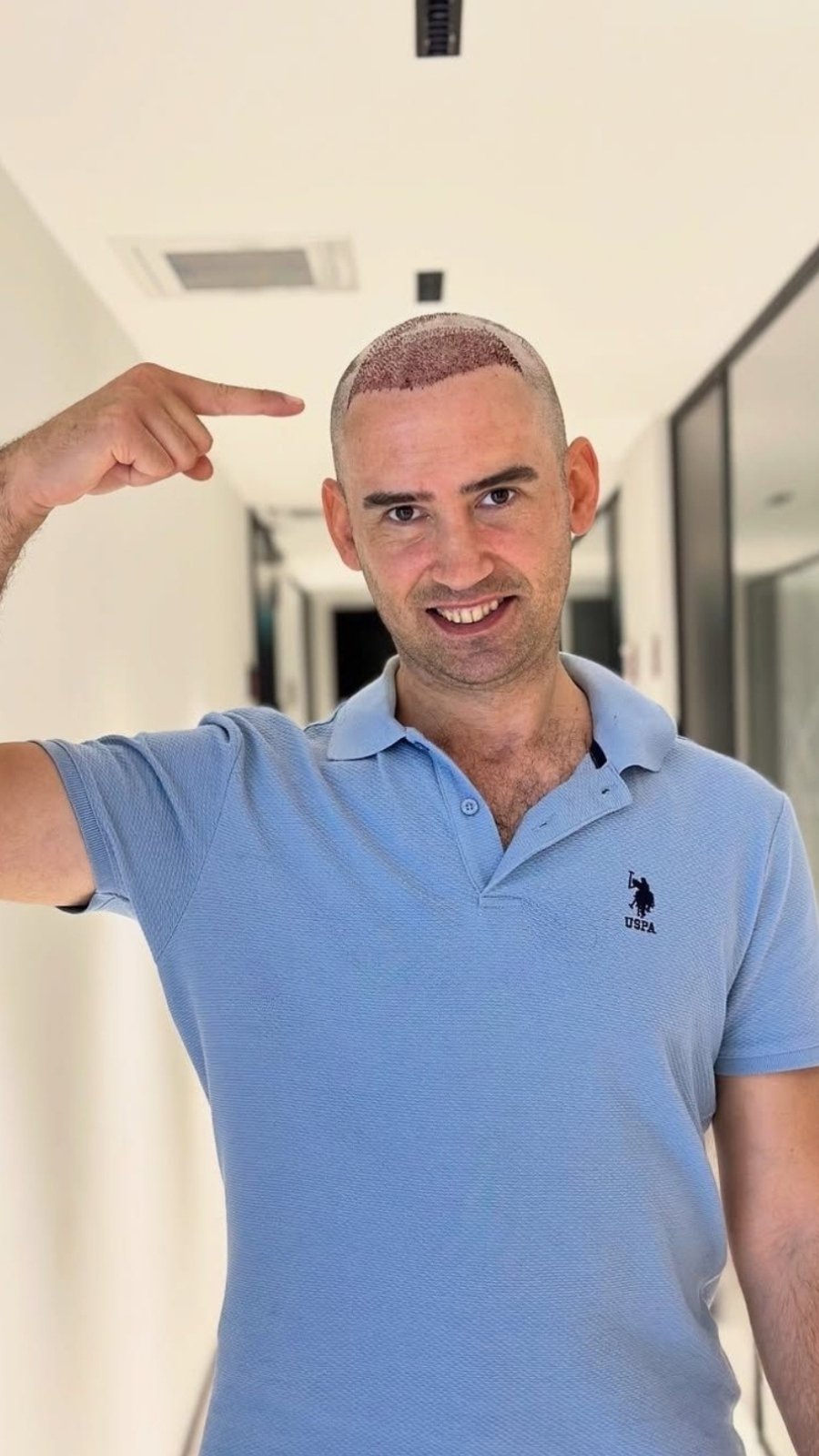
What the Shedding Phase Looks Like
At its absolute peak, the shedding phase creates a visual aesthetic that is remarkably—and frustratingly—similar to your pre-operative baseline. The recipient areas that proudly displayed tiny, newly planted hairs will return to a stark, sparse appearance.
This visual regression is the number one catalyst for patient panic. Those who fail to internalize the biological inevitability of shedding often convince themselves that their hair transplant failed. In an attempt to find answers, many turn to unmoderated online forums, where they are met with conflicting, highly inaccurate anecdotal advice that only deepens their distress.
When an anxious patient reaches out to the EsteFavor clinical team during this period, our operational response is swift and objective: we analyze the submitted photographs to confirm the shedding aligns with standard post-operative metrics, reiterate the biological science of the telogen shift, and outline the timeline for impending hair regrowth. Providing this exact, case-specific reassurance is the core function of our dedicated remote follow-up programme.

How Long the Shedding Phase Lasts
From its initial onset, the active shedding phase generally spans three to eight weeks. By the conclusion of this window, the vast majority of the transplanted shafts will have fallen, and the scalp transitions completely into the quiet, dormant phase that precedes actual regrowth.
It is important to note that a prolonged shedding timeline—where hairs fall sparsely over two months rather than a heavy three-week burst—is simply a biological variation in pace, not a clinical complication. Provided you are adhering to your sanitation protocols and the scalp remains free of infection, a slower shed has zero negative impact on ultimate graft survival rates.
Furthermore, the cessation of shedding is rarely an abrupt stop. Patients typically notice a gradual daily reduction in hair fall, seamlessly shifting into a period where the scalp exhibits no visible activity whatsoever.

What to Do During the Shedding Phase
The only medically sound response to the shedding phase is patience and strict adherence to your established post-operative care protocol. There is absolutely no clinical intervention, topical serum, or specialized shampoo that can bypass or accelerate this biological event. Attempts to intervene by utilizing unapproved local treatments or aggressively altering your washing routine are highly likely to inflict severe chemical or physical damage on the still-vulnerable follicles.
You must continue utilizing the exact washing methodology and medical products prescribed by EsteFavor. This protocol was engineered to support the scalp through the entirety of the healing arc, not just the initial surgical week. Maintaining optimal scalp hygiene during the shedding and dormant phases creates the necessary environment for robust future regrowth.
Submit your scheduled photographic updates to the EsteFavor medical team at the one-month and three-month marks. Do not hesitate to submit additional inquiries if a specific symptom worries you. Receiving direct confirmation from the surgical professionals who performed your procedure that your follicles are viable is infinitely more valuable than crowdsourced internet opinions.
Crucially, you must avoid unwarranted manipulation of the scalp. The roots are still anchoring deeply into the dermal tissue. While gentle washing is required, aggressive rubbing, scratching, or obsessive physical examination of the shedding zones is strictly prohibited.
How to Know If the Shedding Is Within Normal Range
While the overwhelming majority of shedding following a premium hair transplant in Turkey is entirely benign, international patients must know how to distinguish normal biological cycles from symptoms requiring clinical evaluation.
Normal shedding presents as: Hair falling gradually or in clusters, accompanied by a scalp that shows no severe redness, zero sharp pain, and no extreme localized tenderness. The hair loss is generally distributed across the entirety of the recipient zone.
Potentially concerning features present as: Widespread, aggressive inflammation; the sudden appearance of multiple painful pustules or lesions; significant localized pain; or shedding that leaves distinct, completely bald circular patches surrounded by otherwise intact transplanted hair. These symptoms demand immediate photographic submission to your clinical team.
The primary differential diagnosis we look for is distinguishing standard transplanted hair shedding from bacterial folliculitis or clinical infection. Infections announce themselves through throbbing heat, severe redness, and painful localized swelling—symptoms that standard shedding never produces. If you observe these specific warning signs, rapid communication with your clinic is essential.
‘Pimples and Bumps on Scalp After Hair Transplant: Should You Worry‘ – small bumps, pimples, and raised spots on the scalp during and after the shedding phase are a common and usually benign feature of the healing process; understanding which require clinical attention and which resolve naturally is particularly relevant for Australian patients managing recovery without in-person clinic access.

What Comes After the Shedding Phase
Once shedding concludes, the scalp enters the dormant phase. During this window—typically spanning from week six to month three or four—the follicles are resting beneath the surface, preparing for cellular regeneration. Visually, this is the quietest and most frustrating period of the hair transplant recovery, as the scalp looks bare and inactive.
The psychological turning point occurs between months three and four, when the very first fine, colorless hairs break through the scalp. As this early hair growth emerges, the biological logic of the preceding months suddenly becomes clear to the patient: the shedding was never a failure; it was the mandatory physiological reset required to yield new life.
This incoming growth is permanent. It will progressively thicken, darken, and mature over the subsequent months. Overall density will steadily increase as dormant follicles wake up at staggered intervals between months four and twelve. The final, definitive outcome of your surgical investment will be fully assessable at the twelve-month milestone.
Understanding this trajectory—shedding, dormancy, early growth, maturation—is the ultimate armor against recovery anxiety. A patient who recognizes shedding as merely Step Two in a four-step journey to permanent hair restoration operates from a position of power and calm.
‘Australia to Turkey Hair Transplant: A Week-by-Week Timeline from Research to Recovery‘ – the complete timeline of the Turkey hair transplant journey for Australian patients places the shedding phase within the broader sequence from research through to the twelve-month result, providing the full context that makes each stage easier to navigate.
Conclusion
The shedding phase after a hair transplant is an unavoidable, highly anticipated, and entirely temporary chapter of the surgical recovery arc. It is the direct biological result of traumatized follicles prioritizing their root survival by dropping their existing hair shafts and entering a protective resting phase.
For Australian patients managing this delicate phase from across the globe, success relies heavily on trusting the science. You must maintain rigorous adherence to your post-operative care instructions, actively utilize the EsteFavor remote diagnostic channels to validate your progress, and exhibit unwavering patience. You cannot rush biology, and unnecessary interventions will only cause harm. The hair will grow back. It is the scientifically proven outcome of a successful extraction and implantation. The shedding phase is not a dead end; it is simply the brief detour required to reach your final destination.
